
Commercial Site Development and the Machines We Use at Able Excavation to Get the Best Results for Our Clients
TL;DR
- Commercial site development and residential site development may both start with excavation, grading, and utility planning, but they do not follow the same code path, review burden, or site-performance demands.
- Residential projects usually have a narrower review scope focused on the home, driveway, drainage, utilities, and in some cases septic.
- Commercial projects usually add broader requirements for accessibility, stormwater control, parking, circulation, fire access, demolition coordination, trucking and hauling, compaction, and engineered site documentation.
- A current real-world example is Able Excavation’s work on the new City Market extension in Montrose, Colorado, where the team is actively handling grading, site development, demolition work, trucking and hauling, compaction, and site prep.
- The machines used on a project matter almost as much as the plan itself. The right equipment helps deliver better grades, cleaner trenching, better access, stronger compaction, faster hauling, and smoother project sequencing.
- If you understand the differences between commercial and residential site development early, and you work with a contractor that has the right fleet to support the job, you are more likely to control cost, avoid redesign, and keep the project moving.
If you are comparing commercial site development to residential site development in Colorado, the most important thing to understand is that the dirt work may look similar at first, but the rules, coordination, and performance expectations around that dirt work often are not. You may still need site preparation, grading and homesite work, utility installation and repair, drainage work, hauling, and road prep or subdivision work in either case. The difference is that commercial projects usually carry more code-driven requirements, more agency review, more moving parts, and more coordination between the site and the public realm. A current example is the new City Market extension in Montrose, where Able Excavation is actively performing grading, site development, demolition work, trucking and hauling, compaction, and site prep as part of an ongoing commercial project.
Why the Difference Matters Before You Ever Break Ground
If you are a homeowner, landowner, builder, ranch owner, property manager, or developer, you can save a lot of time and money by understanding which path you are actually on before the excavator arrives.
A residential project is often centered on one primary use. You are usually preparing land for a house, driveway, shop, barn, or another supporting structure. That means the site work is often focused on access, pad prep, utility runs, drainage, and sometimes septic installation.
A commercial project usually has a broader operational footprint. Even when the building itself is not massive, the site may also need parking, compliant pedestrian access, service circulation, delivery access, drainage infrastructure, and stronger coordination with public utilities and local review agencies. That broader scope affects almost every phase of the job, starting with clearing and grading.
The Code Difference in Practical Terms
Residential site development usually follows a narrower code path
On a residential project, your site work usually has to satisfy local zoning, setbacks, driveway access, utility routing, drainage, and any applicable on-site wastewater rules. That can still be complicated, especially on sloped sites or rural parcels, but the code path is often more direct.
In practical terms, you are less likely to deal with public accessibility layout, large parking fields, employee or customer circulation, or formal off-site improvement requirements. Your grading plan still matters, but it is usually focused on protecting the house, the driveway, and the usable outdoor areas around the structure.
Commercial site development usually adds more code layers
Commercial work usually brings more than one review track into play. In addition to local zoning and building review, commercial projects often have to satisfy accessibility standards, stormwater obligations, more formal site circulation requirements, and sometimes fire access or public improvement standards.
That becomes important very quickly. A commercial pad is not just a pad. It often has to connect correctly to parking, sidewalks, drainage systems, access points, service areas, and utility infrastructure. That means the site contractor has to think beyond excavation and start thinking about how the finished site must function when the project is complete.
The Main Differences on the Ground
Site clearance and access planning
Residential site clearance is often about opening the homesite, driveway corridor, utility path, and septic or sewer alignment. Commercial site clearance is usually broader. You may be clearing for the pad, parking, sidewalks, service access, stormwater features, and future expansion at the same time.=
That changes how you think about the site. You are not just asking where the building goes. You are asking how the entire property needs to function after the project is done.
Grading and drainage
Both residential and commercial work depend on grading and drainage, but commercial drainage is often more demanding. On a house site, your main concern may be keeping water away from the foundation, driveway, and yard. On a commercial site, you may also need to account for large paved areas, concentrated runoff, pedestrian circulation, and regulated erosion control during construction.
That is why experience with drainage and landscape matters so much. Water management is not just a finish issue. It is a site-development issue from the very beginning.
Utility trenching
Residential utilities are often simpler in layout and scale. Commercial utilities are often heavier in coordination. You may have larger services, more trench crossings, more inspection points, and more coordination with utility providers or public infrastructure. If the project includes extensive utility installation and repair, commercial review often adds another layer of timing and documentation to the same trenching work you would do on a house site.
Roads, parking, and circulation
A residential driveway is one thing. A commercial entrance, parking area, pedestrian route, and service circulation system is another. Once accessibility, turning movement, drainage, and public access are part of the picture, your site work becomes more precise and less forgiving.
That is one reason subdivision and road excavation often overlaps more naturally with commercial site development than with a standard residential build.
A Current Able Excavation Job in Montrose
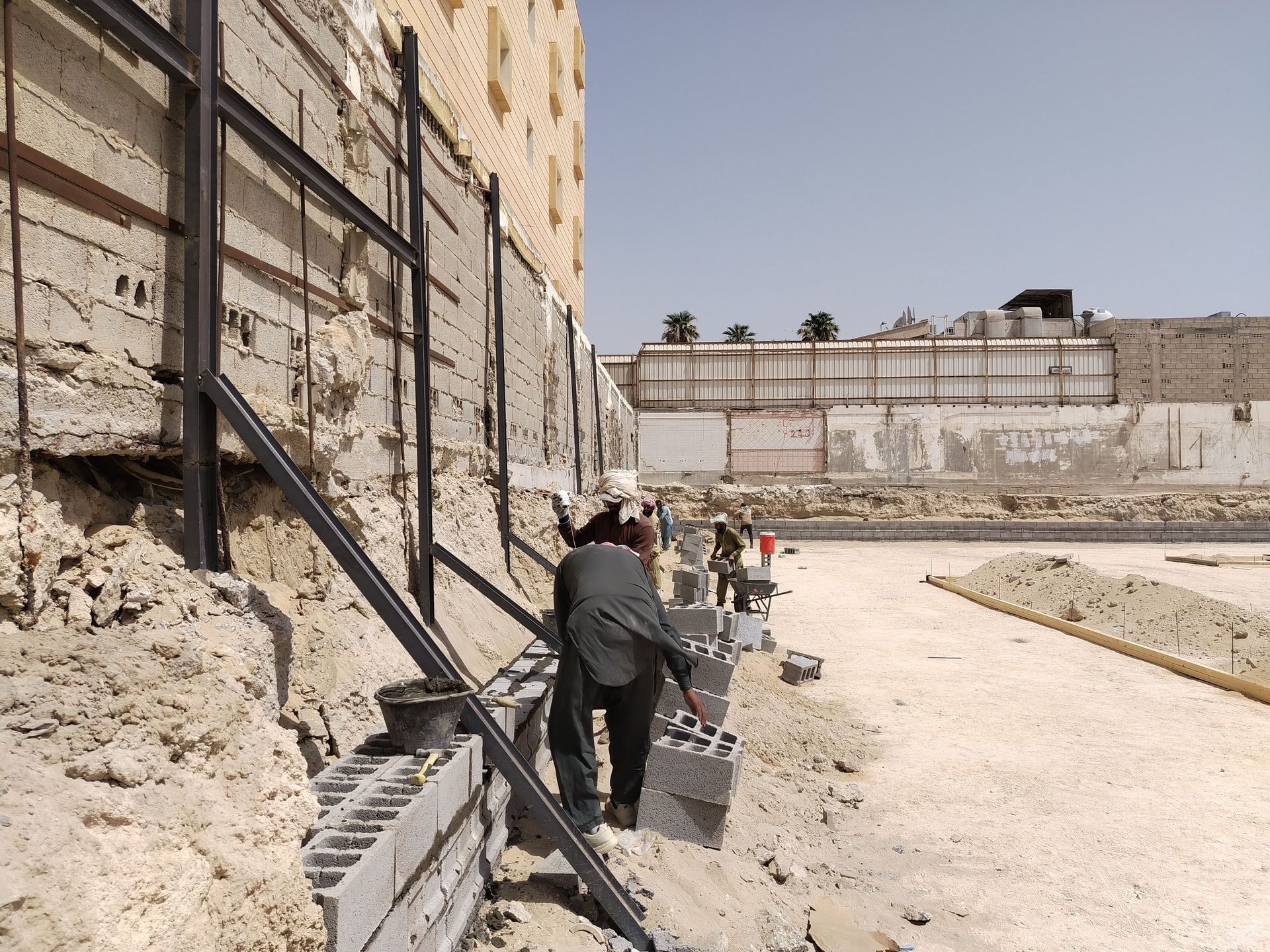
One of the clearest ways to understand the difference between commercial and residential site development is to look at real work happening in the field right now. Able Excavation is currently involved in the new City Market extension in Montrose, Colorado, and it is a strong example of what commercial site development actually requires.
On a project like this, the work goes far beyond simply moving dirt for a building pad. The scope includes grading, site development, demolition work, trucking and hauling, compaction, and site prep, all of which have to be coordinated carefully so the next phase of construction can move forward cleanly. That is one of the biggest distinctions between residential and commercial work. Commercial jobs usually require more sequencing, more equipment coordination, more planning around access and material movement, and more attention to the way one scope affects the next.
For example, demolition on a commercial site is not just about removing what is there. It also has to tie into the grading plan, haul routes, safety, staging, and what the finished site needs to support afterward. The same is true for compaction. On a residential project, compaction is still important, but on a commercial site it becomes even more critical because the pad, access areas, and supporting surfaces often need to perform under heavier use and tighter tolerances.
The trucking and hauling side matters too. On a project like the City Market extension, hauling is not just support work. It is a key part of keeping the schedule moving. Material has to come off the site efficiently, new material has to come in on time, and the entire site has to stay workable for crews, equipment, and follow-on trades. That is why in-house trucking and hauling capacity can be such an advantage on commercial work.
This current job also shows why commercial site development often demands a broader fleet and a broader skill set than a typical residential job. The work may involve demolition, rough grading, precision grading, compaction, hauling, and site prep all happening in close coordination. That is a very different rhythm than preparing a single homesite or rural driveway, even if some of the same categories of equipment are used.
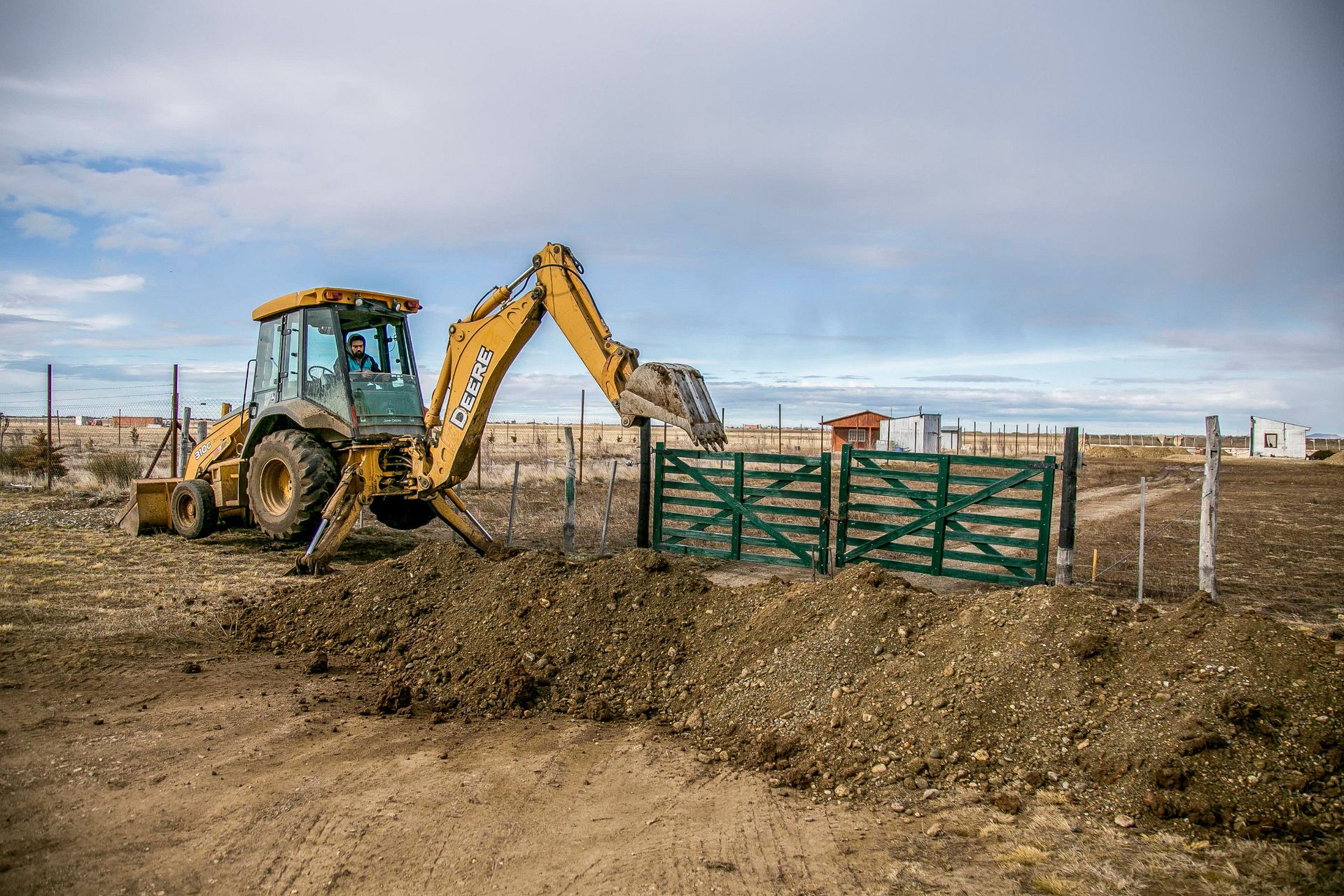
Used for digging, trenching, foundation excavation, septic installation, drainage work, demolition support, and general site excavation.
You have 45 days to return items for a full refund, with or without a receipt. Items must still have their original tags.
You have 45 days to return items for a full refund, with or without a receipt. Items must still have their original tags.
Used for precision grading, smoothing surfaces, shaping roads and driveways, and improving drainage flow.
Used for compacting soil, gravel, and base material to create stronger, more stable pads, roads, and work surfaces.
You have 45 days to return items for a full refund, with or without a receipt. Items must still have their original tags.
Used for loading trucks, handling stockpiles, moving aggregate, and supporting larger material-handling tasks.
Used for dust control and moisture conditioning during compaction and site prep.
Why the Machines Matter Almost as Much as the Plan
A site-development plan only goes as far as the equipment behind it. The right machine helps you excavate more accurately, move materials more efficiently, compact better, shape cleaner grades, and protect more of the surrounding property. The wrong machine can slow the project down, disturb too much ground, or create extra cleanup and correction work.
This is especially important on a commercial project like the City Market extension, where demolition, grading, site prep, hauling, and compaction have to stay coordinated. You are not just trying to get one machine on site. You are trying to keep the whole site moving in the right order.
As Able Excavation puts it, “a well-prepared site makes every subsequent trade’s job easier and protects your investment for decades.” That principle applies directly to machine choice. The right fleet helps create that well-prepared site.
The Machines We Use at Able Excavation and What Each One Does
Dozers and grading support
B1-700K Bull Dozer, John Deere 700K
This machine is used for rough grading, pushing material, balancing cuts and fills, shaping large pads, and establishing the early site profile. On the City Market extension, this kind of machine supports the broader grading and site-development scope by helping shape work areas, move bulk material efficiently, and create the early layout for the next phases.
Demolition and small support tools
Demo Saw
This is used for cutting asphalt, concrete, and hard surfaces where clean demolition or tie-in work is needed. On the City Market extension, it supports demolition-related tasks and cleaner transitions where existing surfaces need to be cut before removal or modification.
Dump trucks and hauling equipment
DT-4 Dump Truck, Kenworth T800
DT1-Dump Truck, Kenworth T800
DT2-Dump Truck 379, Peterbilt Dump
DT3-Dump Truck 359, Peterbilt Dump
These trucks are used to haul spoils off site, bring in base material, move aggregate, and support constant material flow. On the City Market extension, these types of dump trucks directly support trucking and hauling, demolition cleanup, grading support, and keeping the site clear and productive.
Excavators for different scopes and access conditions
E1-E85 Excavator, Bobcat E85
E2-E88 Excavator, Bobcat E85
E3-E88 Excavator, Bobcat E88
These mid-size excavators are good for utility trenching, more precise site excavation, drainage shaping, and detailed pad work. On the City Market extension, this size of excavator would be a practical fit for controlled excavation, trenching, site prep support, and working in areas where production matters but precision still counts.
E4-210 Excavator, John Deere 210
E5-225 Excavator, Hitachi 225
These larger excavators are built for heavier production, deeper excavation, larger-scale trenching, demolition support, and broad commercial site work. On the City Market extension, they are the kind of machines that help with bulk earthmoving, demolition-related excavation, and larger site-development tasks where speed and reach matter.
E6-145 Excavator, Link-Belt 145
This is a versatile machine that bridges the gap between tighter site work and larger production. It works well for trenching, site excavation, and drainage work. On the City Market extension, it fits well into medium-scale excavation and utility or grading support.
E7-E20 Excavator, Bobcat E20
E8-E35 Excavator, Bobcat E35
E9-E60 Excavator, Bobcat E60
These smaller excavators are useful in tighter-access work, more controlled trenching, and detailed excavation. On a commercial project, they are especially helpful where larger machines would be too disruptive or too large for the work area.
Wheel loader
FL1-150ZW Wheel Loader, Hitachi 150
This loader is used for moving stockpiles, loading material, managing aggregate, and supporting heavier production sites. On the City Market extension, it helps with material handling, loading trucks, and keeping grading and hauling operations supplied.
Jumping jacks and small compaction tools
JJ1 through JJ8 Jumping Jacks
These compactors are used for trench compaction, tighter-area compaction, and utility backfill support where larger rollers are not practical. On the City Market extension, they support compaction in smaller or tighter areas where the finish still needs to meet project requirements.
Plate Compactors
These are used for surface compaction and smaller-area finish work. On the City Market extension, they support compacting smaller disturbed areas, tie-ins, and tighter site-prep zones.
Motor grader
MG1-140-13 Motor Grader, Cat 140-13
This machine is used for precision grading, roadway shaping, finish grading, and establishing smoother surfaces with the right crown and drainage flow. On the City Market extension, the grader supports fine grading and site shaping where finish quality and drainage control matter.
Rollers and compaction equipment
R1-Roller, Bomag Roller
R2-Roller, Vibromax Smooth Drum Roller
These rollers are used to compact pads, roads, aggregate bases, and broader site surfaces. On the City Market extension, they directly support compaction and site prep by helping stabilize the ground for whatever comes next in the build sequence.
Rock hammers and attachments
RH1-E85 Rock Hammer, Bobcat Rock Hammer for E85
RH5-225 Rock Hammer, Hitachi Rock Hammer
RH7-E20 Rock Hammer, Bobcat Rock Hammer for E20
These attachments are used when excavation runs into rock, hard material, or demolition conditions that require controlled breaking. On a commercial job, they provide flexibility if hard ground or tougher demolition conditions show up.
Skid loaders and track machines
S1-T750 SKID, Bobcat T750
S2-T870 SKID, Bobcat T870
S3-T770 SKID, Bobcat T770
S4-T770 SKID, Bobcat T770
S5-T770 SKID, Bobcat T770
S6-T770 SKID, Bobcat T770
S7-333, John Deere 333-SL7
These machines are some of the most versatile in the fleet. They are used for backfilling, material movement, fine grading, cleanup, support work, loading, and shaping smaller or intermediate areas. On the City Market extension, they support grading, site cleanup, material handling, demolition support, and the constant transition between rough work and finish work.
Sewer camera
Sewer Camera
This tool is used for diagnosing underground pipe issues and locating or verifying sewer-related conditions before targeted excavation or repair. It is especially useful where underground unknowns need to be reduced before digging.
Semi trucks and trailers
ST1-Red Semi Truck, Peterbilt 379
ST2-Blue Semi Truck, Peterbilt 379
These semis are used for heavier hauling and moving equipment or materials efficiently between yard and jobsite.
TR1-Lowboy, Load King Lowboy Trailer
Used to transport large equipment such as excavators, dozers, and graders.
TR2-Side Dump, Smithco Side Dump SX2 40-34
TR3-Side Dump, Smithco Side Dump SX2 40-34
These are used for high-volume material hauling where fast unloading matters.
TR4-Belly Dump
Used for efficient aggregate spreading and bulk material placement over longer runs.
TR5-T14 Towmaster
TR6-Trailmax - Grey
These trailers support equipment movement and site logistics.
On the City Market extension, this group of trucks and trailers helps keep heavy equipment mobilized, material moving, and the commercial job running with fewer outside dependencies.
Vac trailer
VT1-Vac Trailer, Ring-O-Matic 850
This unit is used for more controlled material removal and support work where a less invasive excavation method is useful. It can be valuable around utilities and more sensitive work zones.
Water trucks
WT1-Water Truck, Kenworth W900
WT2-Water Truck, Freightliner Cascadia
These trucks are used for dust control and moisture conditioning for compaction. On the City Market extension, they support both site conditions and compaction performance, which makes them important to grading and site-prep quality.
What This Means for You as the Client
The main takeaway is simple. A contractor with the right fleet can do more than just dig. They can sequence the site better, keep material moving, support compaction, adapt to changing conditions, and carry more of the project in-house.
That matters whether your project involves commercial excavation, home and building sites, septic installation, utility installation and repair, drainage and landscape work, trucking and hauling, or subdivision and road excavation.
Final Takeaway
If you are planning a project in Colorado, the clearest way to think about this is simple. Residential site development is usually narrower and more direct. Commercial site development is usually broader, more regulated, more equipment-intensive, and more dependent on coordinated site management.
The excavation equipment may be similar from project to project, but how that equipment is used, how many moving parts it has to support, and how much coordination it takes usually increases on the commercial side.
And if you want a current example of that difference, look at Able Excavation’s work on the new City Market extension in Montrose. That active job brings together grading, demolition, trucking and hauling, compaction, site prep, and commercial site development under one coordinated scope. It is a clear reminder that strong site work takes more than excavation alone. It takes planning, sequencing, and the right machines in the right hands.
Share this article
Recent Posts