Demolition Contractors near me | Demolition in Colorado what it takes

Admin • July 10, 2026

TL;DR


  • When you search for Demolition Contractors near me, look for a contractor who can manage planning, structural risk, utilities, debris, hauling, foundation removal, grading, and site restoration, not just the teardown itself.
  • Do you need a permit? Most demolition projects require advance approvals. In Colorado, demolition generally requires an asbestos inspection by a Colorado-certified inspector and a state-issued demolition permit. Your city or county may also require separate local permits.
  • What happens before demolition? The structure and surrounding site must be reviewed, utilities must be located and controlled, hazardous materials must be addressed, and equipment and truck access must be planned.
  • Does demolition include foundations? Only when the scope says it does. Ask whether slabs, footings, basement walls, piers, abandoned utilities, and underground structures are included.
  • What happens to the debris? Materials may be sorted for recycling, reuse, or disposal. Concrete, asphalt, metal, wood, roofing, and mixed debris often require different handling.
  • How much does demolition cost? Cost depends on structure size, construction type, access, asbestos or other hazardous materials, concrete removal, hauling distance, disposal charges, and the condition in which the site must be left.
  • How long does demolition take? A small outbuilding may move quickly once approvals are complete, while a house, commercial building, or complex redevelopment can take considerably longer because of permitting, utility coordination, abatement, hauling, and site restoration.
  • A full-service contractor can often move directly from demolition into site preparation, commercial excavation, trucking and hauling, and utility installation and repair.


When you search for Demolition Contractors near me, you are not simply looking for someone with an excavator who can knock down a building. You need a contractor who understands how to remove the structure safely, control utilities, handle debris, manage trucking, remove foundations, compact disturbed areas, and prepare the property for whatever comes next. In Colorado, demolition also requires planning around asbestos, local permits, underground utilities, dust, access, and disposal. The teardown may be the most visible part of the job, but much of the work happens before and after the structure comes down.


Professional Demolition Is a Construction Process


Demolition is controlled construction in reverse. Instead of assembling a structure in sequence, you dismantle or remove it in a planned order while managing the risks created at each stage.


A professional demolition scope may include:

  • Structural and site assessment
  • Asbestos inspection and hazardous-material coordination
  • Utility locating, shutoff, capping, or relocation
  • Selective removal or complete structural demolition
  • Concrete, slab, footing, and foundation removal
  • Debris sorting, loading, hauling, and disposal
  • Backfill, compaction, drainage correction, and final grading


The finished product should not be a rough lot full of fragments and unstable holes. It should be a safe, usable site prepared to the condition defined in your contract.

What Must Happen Before Demolition Begins


Structural review and demolition planning


Before workers begin demolition, the condition of the structure needs to be understood. Fire, water, age, previous alterations, foundation movement, or partial collapse can change how a building must be approached.

OSHA states:


“An engineering survey shall be made, by a competent person, of the structure.”

That survey considers framing, floors, walls, adjacent structures, and the potential for an unplanned collapse. If you are demolishing a fire-damaged building, an old commercial structure, or a partially failed barn, this review is especially important.


Asbestos inspection and state requirements


You should not assume a building is too new to contain asbestos. Asbestos has appeared in flooring, mastics, roofing, siding, insulation, textured coatings, cement products, pipe insulation, and other materials.


Colorado guidance says demolition projects require an asbestos inspection by a Colorado-certified asbestos building inspector and a state-issued demolition permit before work begins. If regulated asbestos-containing materials are identified, they must be handled through the proper abatement process before ordinary demolition proceeds.

This step can affect your schedule, so it should happen early rather than after equipment is already booked.


Utility locating and disconnection


Electric, gas, water, sewer, communications, irrigation, and other services must be identified and controlled. OSHA requires utility service lines to be shut off, capped, or otherwise controlled before demolition starts, unless a service must remain and is properly protected.


Colorado 811 locates public underground utilities, but privately owned lines may not be included. Private electric feeds, irrigation lines, propane systems, septic components, yard lighting, and lines beyond a meter may require separate locating.


A safe demolition plan distinguishes between three tasks:

  1. Locating the utility
  2. Confirming it has been disconnected or protected
  3. Verifying the site is ready for excavation and demolition


Types of Demolition Services


Full-structure demolition


Full demolition removes an entire house, commercial building, garage, shop, barn, or other structure. Depending on the contract, this may include the roof, walls, framing, slab, foundations, and underground components.


This service is common when a property is being redeveloped, a structure is unsafe, or repairing the existing building no longer makes financial sense.


Selective demolition


Selective demolition removes only part of a structure. You may need it for an addition, loading area, damaged wall, concrete section, or portion of a commercial building.


This work can require more precision than full demolition because the contractor has to protect the components that remain. Temporary support, saw cutting, limited-access equipment, and careful sequencing may all be necessary.


Concrete and asphalt removal


Concrete demolition can include slabs, foundations, footings, sidewalks, curbs, parking areas, retaining structures, and driveways. Reinforcement, thickness, access, and the volume of material all affect the equipment and hauling required.


Breaking the concrete is only part of the work. It still has to be sorted, loaded, transported, and disposed of or recycled appropriately.


Barn and outbuilding removal


Rural demolition may involve barns, sheds, garages, corrals, agricultural structures, and old utility buildings. These sites can contain buried lines, tanks, old electrical connections, machinery, or materials requiring special handling.

A contractor familiar with ranch and agricultural properties is better prepared to consider access, livestock areas, septic systems, wells, and future property use.

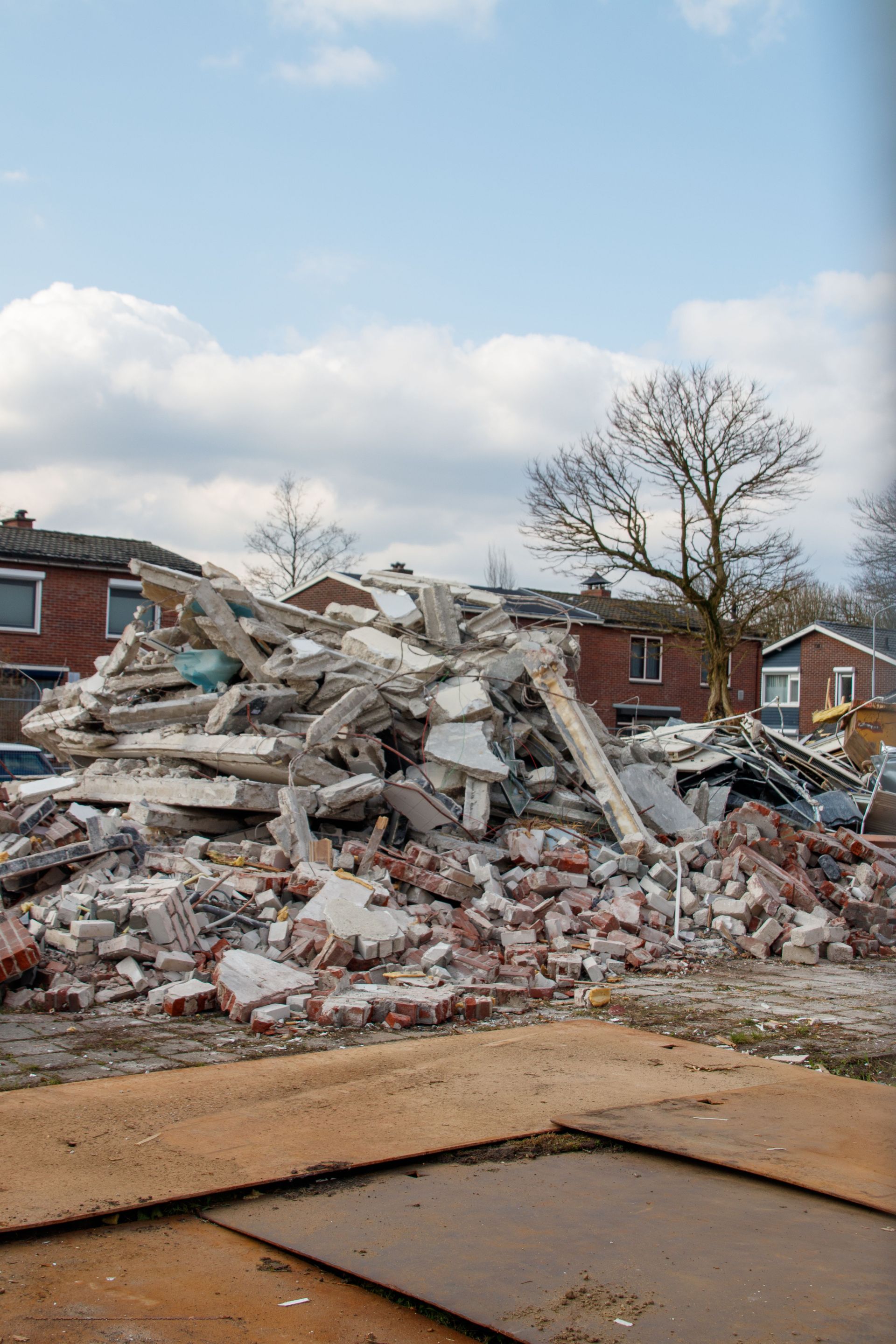
Collapsed brick building rubble in a residential neighborhood under a cloudy sky

The Demolition Process Step by Step


1. Define the final result


Before pricing the project, decide what you want left when the contractor finishes. Do you need only the structure removed, or do you need a compacted building pad ready for new construction?


Clarify whether the scope includes:

  • Slabs and foundations
  • Basement walls
  • Utility abandonment
  • Debris hauling and disposal fees
  • Imported backfill
  • Compaction
  • Rough or final grading
  • Driveway and access restoration


2. Complete inspections, permits, and utility coordination


The asbestos inspection, state demolition permit, local approvals, utility controls, and disposal planning should be completed before structural removal begins.


Permit requirements vary by jurisdiction, so your contractor or project team should verify the current requirements for the city or county where the property is located.


3. Prepare and secure the site


The contractor establishes work boundaries, equipment access, truck routes, debris-loading areas, dust-control measures, and protected zones.


Good logistics matter. A demolition site can slow down quickly if trucks cannot enter, load, turn, and leave without interfering with equipment or surrounding traffic.


4. Perform controlled demolition


The demolition method depends on the structure. Excavators may pull down framing, separate materials, remove concrete, and load debris. Skid steers and loaders handle cleanup and material movement. Saws, breakers, and rock hammers help with concrete and hard materials.


The goal is not uncontrolled destruction. The goal is a predictable sequence that keeps material contained and the site manageable.


5. Sort and haul materials


Demolition debris can include concrete, steel, asphalt, wood, drywall, roofing, glass, and mixed waste. Some materials may be recycled or reused when suitable facilities and clean material streams are available. Other materials must go to approved disposal locations.


This is why trucking and hauling can represent a substantial part of the project. The number of loads, material weight, disposal fees, and travel distance all affect cost.


6. Remove foundations and underground components


Once the visible structure is gone, the contractor may still need to remove slabs, footings, piers, foundation walls, abandoned utilities, or tanks included in the scope.


This phase is where demolition transitions into excavation. Hidden concrete, deeper foundations, and unknown underground conditions can create legitimate changes in scope, so the estimate should explain how those conditions will be handled.


7. Backfill, compact, and grade the site


Foundation and basement removal leaves voids that need suitable backfill. Material should be placed and compacted in a controlled manner rather than dumped into a deep hole all at once.


Final grading should support drainage, access, safety, and the next planned use. If you are rebuilding, the demolition contractor may transition directly into pad preparation, utility trenching, drainage work, or road improvements.


What Demolition Usually Costs in Colorado


There is no responsible universal price for demolition because two buildings with the same square footage can require completely different work.


Your estimate is affected by:

  • Building size and number of stories
  • Wood, masonry, steel, or concrete construction
  • Structural condition
  • Asbestos abatement or other regulated materials
  • Slab, footing, and foundation removal
  • Basement depth
  • Equipment and truck access
  • Debris type, weight, and volume
  • Disposal or recycling fees
  • Hauling distance
  • Backfill requirements
  • Compaction and final grading
  • Permit and inspection costs


A low estimate may cover only the visible teardown. A complete estimate should identify hauling, disposal, concrete removal, foundations, backfill, compaction, grading, and exclusions.


Ask what happens if the crew discovers an undocumented basement wall, buried slab, tank, contaminated material, or significantly more concrete than expected.


A Current Able Excavation Project in Montrose


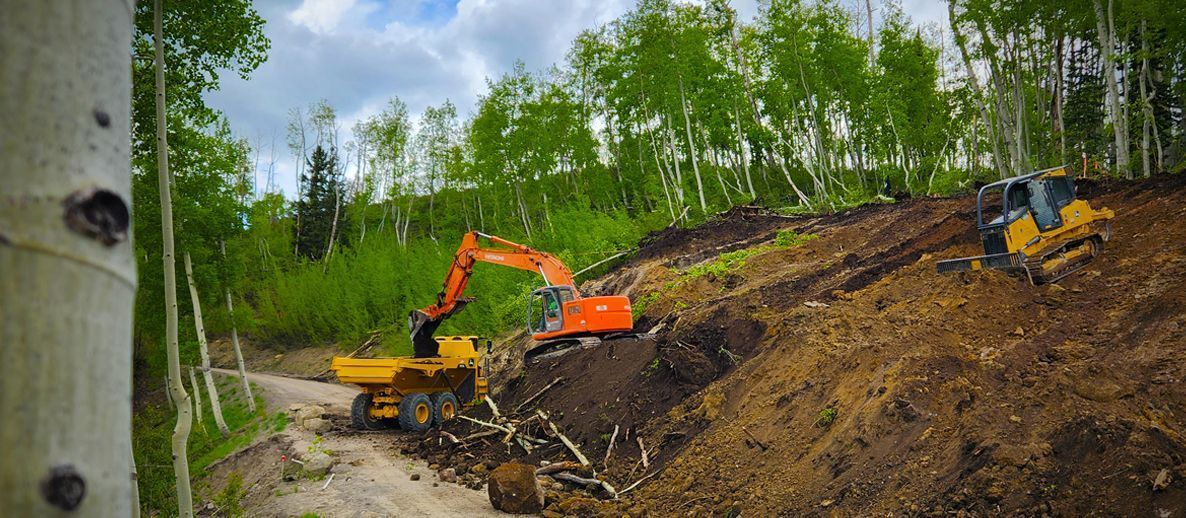
Able Excavation is currently performing demolition and site-development work connected to the new City Market extension in Montrose, Colorado. The scope includes demolition, grading, trucking and hauling, compaction, and site preparation.


This project shows why demolition should be viewed as the beginning of redevelopment rather than the end of an old structure.


Materials have to be removed efficiently. The ground has to be reshaped. Disturbed areas need compaction. The site must then be prepared for the next construction phase. When one contractor can coordinate demolition with commercial excavation, hauling, grading, and site prep, there are fewer handoff points and less opportunity for one scope to interfere with another.


What to Look for in Demolition Contractors near You


Look beyond the size of the excavator in the company’s photos. You need a contractor with the planning, equipment, hauling capacity, and site-development knowledge to finish the whole scope.


Ask these questions:

  • Is the contractor insured and bondable for the project?
  • Who coordinates permits and asbestos documentation?
  • Are foundations and slabs included?
  • Are debris hauling and disposal charges included?
  • Can the contractor locate and coordinate private utilities?
  • What will the finished grade look like?
  • Is imported fill included?
  • How will compaction be handled?
  • Can the team perform the next phase of site development?


Able Excavation provides commercial, residential, and agricultural excavation across Western Colorado, along with hauling, utility work, homesites, roads, drainage, septic installation, and broader site preparation. That full-service capability is useful when demolition is only the first stage of a larger plan.


Final Thoughts


Professional demolition is not simply knocking something down. It is a controlled process that includes assessment, permits, asbestos compliance, utility management, equipment planning, debris handling, hauling, foundation removal, compaction, and grading.


When you compare demolition contractors, define the finished site before you compare the price. A bid that stops at debris removal is not equivalent to a bid that leaves you with a compacted, graded, construction-ready property.

The right contractor helps you remove the old structure while preparing the land for what comes next. That is what demolition in Colorado really takes.

Share this article

Recent Posts

Peaceful pond with lily pads and green reeds surrounded by lush trees.
By Admin July 11, 2026
Learn what to know before installing a preformed pond liner or plastic pond in Colorado, including excavation, drainage, costs, utilities, and site prep.
Backhoe and workers at a house construction site with brick homes and a dirt yard
By Admin June 28, 2026
Pool Digging in Colorado involves excavation, drainage, utility locating, hauling, and site prep. Learn what affects cost and why proper excavation matters.
Yellow excavator working on a rocky construction site with dirt piles and trees in the background
By Admin June 28, 2026
Septic system repair in Western Colorado starts with signs like slow drains, odors, wet spots, and backups. Learn when your septic system may need repair.
Yellow Hyundai excavator digging in a rocky quarry under a blue sky
By Admin June 25, 2026
Earth Worx in Colorado starts with smart excavation. Learn why site prep, drainage, utilities, septic, hauling, and road prep matter for long-term results.
Construction site with parked equipment, cones, and a partially built commercial building under a blue sky
By Admin June 16, 2026
See what machines Able Excavation uses for commercial site development, grading, hauling, compaction, trenching, and site prep across Western Colorado.
Archaeological excavation site with concrete pillars, dirt pits, and overcast sky
By Admin June 9, 2026
Learn the key differences between commercial site development and residential site development, including codes, costs, drainage, utilities, and site prep.
Aerial view of a new housing development beside green farmland and open fields
By Admin June 1, 2026
Learn why site clearance in construction is critical for safety, access, drainage, excavation, utility trenching, and road prep on Colorado building sites.
Worker in blue overalls and yellow boots in a wet concrete pit with rebar mesh and pipes.
By Admin May 26, 2026
Learn how dewatering works, why it matters for Colorado construction projects, and how it helps protect excavation, utility trenching, pads, roads, and schedules.
Rows of gray pebbles separated by vertical metal bars, viewed from above
By Admin May 20, 2026
How deep to dig a French drain in Colorado depends on slope, soil, and drainage goals. Learn when you need one and how proper excavation helps protect your project.
Archaeological excavation site with trenches and exposed earth under a cloudy sky.
By Admin May 18, 2026
Professional land clearing contractors in Western Colorado offering site prep, drainage, septic prep, utility trenching, hauling, road prep, and excavation services.
Show More