
Detention Pond vs Retention Pond: What you Need to Know in Colorado
TL;DR
- What is a detention pond? A detention pond, often called a dry detention basin, temporarily collects runoff during storms or snowmelt. It then releases the water through a controlled outlet and normally drains between storm events.
- What is a retention pond? A retention pond, also called a wet pond, maintains a permanent pool of water. It has additional storage above that normal water level so it can collect runoff during a storm and release excess water at a controlled rate.
- What is the difference between a retention pond and a detention pond? The clearest difference is the permanent pool. A detention pond is normally dry between storms. A retention pond normally contains water throughout the year, although its level may rise during storms and fall during drought or heavy evaporation.
- Which pond is better for flood control? Both can reduce peak runoff when properly engineered. Detention ponds are commonly selected when temporary storage and controlled release are the primary goals. Retention ponds can also provide flood storage above their permanent water level.
- Which option provides better water-quality treatment? Retention ponds generally provide more opportunity for sediment settling and biological treatment because water remains in the permanent pool. Extended detention basins can also improve water quality when they hold runoff long enough for suspended material to settle.
- Does a detention pond always stay dry? It should normally drain between storms, but low areas may remain wet because of groundwater, poor grading, clogged outlets, sediment buildup, or irrigation runoff. Persistent standing water may indicate that the basin needs inspection.
- Can you use water from a retention pond for irrigation? Do not assume that stored stormwater can legally be used. Colorado water law regulates storage and beneficial use. Any irrigation, pumping, or reuse plan should be reviewed by the project engineer and the appropriate water-resource authorities.
- How much does pond construction cost? The cost depends on engineering, surveying, excavation volume, rock, hauling, embankments, outlet structures, spillways, liners, groundwater, access, erosion control, and restoration. Long-term sediment removal and maintenance should also be included in your budget.
- Related Able Excavation capabilities include drainage and landscape excavation, commercial excavation, trucking and hauling, utility installation and repair, and site preparation.
Detention pond vs retention pond is an important comparison when you are planning a development, correcting drainage, managing runoff from a commercial property, or improving land in Western Colorado. Both facilities collect stormwater and reduce the rate at which it reaches downstream roads, pipes, channels, and properties. The primary difference is that a detention pond normally drains after a storm, while a retention pond maintains a permanent pool of water.
That distinction affects more than the appearance of the property. It influences excavation depth, outlet design, water-quality treatment, safety, maintenance, evaporation, land use, and potentially Colorado water-law requirements.
What Is a Detention Pond?
A detention pond temporarily stores runoff and releases it gradually. It acts as a buffer between rapidly arriving stormwater and the downstream drainage system.
When rain falls on roofs, pavement, compacted soil, and roads, the water moves much faster than it would across undisturbed land. The detention basin receives that concentrated runoff, allowing the water level to rise temporarily. A restricted outlet then releases the water at a rate the downstream system is designed to handle.
The U.S. Environmental Protection Agency explains the distinction clearly:
“The difference between a detention basin and a retention basin, is the presence or absence of a permanent pool of water, or pond.”
U.S. Environmental Protection Agency
Because the outlet of a dry detention basin is normally positioned near the bottom, most or all of the stored water drains after the storm. The basin then regains its available storage capacity before the next event.
A detention basin may look like a landscaped depression, grassy open space, or large dry pond. Some are designed for compatible recreational or open-space use between storms. That use must not interfere with the outlet, emergency spillway, storage volume, maintenance access, or drainage function.
What is extended detention?
Extended detention is a variation that intentionally holds runoff longer before releasing it. The longer holding period allows more suspended sediment to settle.
An extended detention basin still normally drains between storm events, so it is not the same as a permanent wet pond. It simply provides more treatment time than a basic basin designed primarily to reduce peak flows.
What Is a Retention Pond?
A retention pond maintains a permanent pool between storms. When runoff enters, the water level rises above the normal pool elevation. The additional stormwater is stored temporarily and discharged through an engineered outlet.
The permanent water creates more time for sediment to settle and allows physical, biological, and chemical processes to improve water quality.
The EPA describes wet detention ponds this way:
“Wet detention ponds provide both retention and treatment of contaminated storm water runoff.”
U.S. Environmental Protection Agency
A retention pond may look like a natural landscape feature, but it remains engineered stormwater infrastructure. Its outlet, storage area, shoreline, embankment, spillway, and access routes all serve specific purposes.
Decorative landscaping cannot block maintenance access or reduce required storage. Fountains, fish, docks, trails, irrigation withdrawals, or recreational uses may also require additional engineering, maintenance, safety, and regulatory review.
| Feature | Detention Pond | Retention Pond |
|---|---|---|
| Normal condition | Usually dry between storms | Maintains a permanent pool |
| Primary purpose | Temporary storage and controlled release | Storage, controlled release, and water-quality treatment |
| Flood-control ability | Reduces peak flow when properly designed | Provides temporary storm storage above the permanent pool |
| Water-quality potential | Improved when extended detention or treatment features are included | Often greater because water remains in the pool longer |
| Evaporation concern | Usually limited | Can be significant in Western Colorado |
| Typical maintenance | Mowing, sediment removal, outlet inspection, and erosion repair | Sediment removal, shoreline management, vegetation control, and outlet inspection |
| Main safety concern | Rapid filling, steep slopes, and outlet structures | Permanent water, changing depth, and shoreline access |
| Common setting | Subdivisions, roads, commercial sites, and industrial properties | Larger developments, campuses, parks, and commercial properties |
Terminology can vary among engineers and reviewing jurisdictions. Some plans use terms such as wet detention pond, extended detention basin, retention basin, or water-quality pond. You should rely on the approved plans and specifications rather than assuming the name alone explains how the facility works.
How Both Types of Ponds Reduce Flooding
The pond provides temporary storage. The outlet controls how quickly that storage empties.
You can think of the basin as a large container and the outlet as a valve. Stormwater may enter quickly, but it leaves more slowly. This lowers the peak flow moving into downstream culverts, storm drains, channels, roads, or neighboring properties.
A larger hole does not automatically provide better protection. The engineer must coordinate the storage volume with the outlet size and elevation. If the outlet releases water too quickly, the basin may not sufficiently reduce peak flows. If it releases too slowly or becomes blocked, the pond may remain full when the next storm arrives.
The role of the emergency spillway
Storms can exceed the primary design event, and outlets can become obstructed by trash, sediment, ice, vegetation, or debris. An emergency spillway provides a planned overflow route.
Without a stable spillway, excess water may cut through the embankment, cross a road, flood a building, or enter neighboring property. That is why spillway elevation, width, stabilization, and discharge location matter as much as the main outlet.
The spillway must also remain clear. Landscaping, fences, stockpiles, structures, and parked equipment should not obstruct the overflow path.
How Water-Quality Performance Differs
Retention ponds generally provide more continuous settling because they maintain a permanent pool. As new runoff enters, sediment can settle and some pollutants may be reduced through biological or chemical processes.
Detention basins can also provide treatment, particularly when they use extended detention, vegetated areas, sediment forebays, or additional filtration features.
A forebay is a smaller storage area near the inlet. It captures heavier sediment before runoff enters the main basin.
Concentrating sediment in an accessible location makes removal easier than excavating the entire pond bottom.
Neither type removes every pollutant. Dissolved salts, nutrients, metals, hydrocarbons, and other contaminants may require additional treatment or source control. Runoff from a parking lot presents different challenges than runoff from a hillside, livestock area, construction site, or wildfire-affected watershed.
Colorado Conditions That Influence the Decision
Intense rainfall and rapid runoff
Western Colorado’s dry climate does not eliminate flood risk. Intense thunderstorms can release a large volume of water over a short period. Dry, compacted, steep, or fire-damaged ground may shed that rainfall rapidly.
A detention or retention facility provides space for that concentrated flow to collect before it reaches downstream infrastructure.
Snowmelt and winter maintenance
Snowmelt can create a longer period of inflow than a short summer storm. Commercial ponds may also receive runoff from snow storage areas containing road sand, sediment, salts, litter, and other material collected from parking lots.
Spring inspections are important because snowmelt can expose erosion, sediment buildup, outlet blockages, and damage that occurred during winter.
Evaporation and the permanent pool
Retention ponds must maintain enough water to support their intended function. Western Colorado’s heat, dry air, and wind can produce substantial evaporation.
A pond that depends on an unrealistic inflow may develop low water levels, exposed sediment, concentrated pollutants, odors, algae, or stressed vegetation. The design needs a realistic water balance based on drainage area, climate, seepage, evaporation, and outlet operation.
Soil, rock, and groundwater
Soil conditions affect excavation, embankment construction, seepage, and whether a permanent pool can be maintained. Highly permeable material may allow water to escape unless the pond includes compacted clay, a geosynthetic liner, or another approved seepage-control system.
Clay, cobble, shale, bedrock, unstable fill, and groundwater can also change the construction method and cost. Soil that is easy to excavate is not automatically suitable for building a stable embankment.
Groundwater should be evaluated early. Discovering it after the basin excavation begins can create dewatering, stability, permitting, and design complications.
Colorado Water-Law Considerations
A stormwater pond is not automatically a private reservoir you can pump from whenever you need water.
The Colorado Division of Water Resources states:
“Ponds, like any water source in Colorado, must be in compliance with Colorado water law.”
Colorado Division of Water Resources
Many qualifying stormwater detention and infiltration facilities receive specific treatment when they satisfy statutory criteria. Those criteria may involve avoiding unauthorized beneficial use, not exposing groundwater, following approved design requirements, and completing required notifications.
Using stored water for irrigation or another beneficial purpose can change the legal analysis. Before including irrigation, livestock watering, pumping, or reuse in the plan, you should consult the project engineer and the appropriate Colorado water-resource professionals.
These issues should be resolved before excavation. The permitted operation of the pond affects its depth, outlet elevation, permanent storage, infiltration, landscaping, and maintenance.
How Detention and Retention Ponds Are Constructed
Engineering and site evaluation
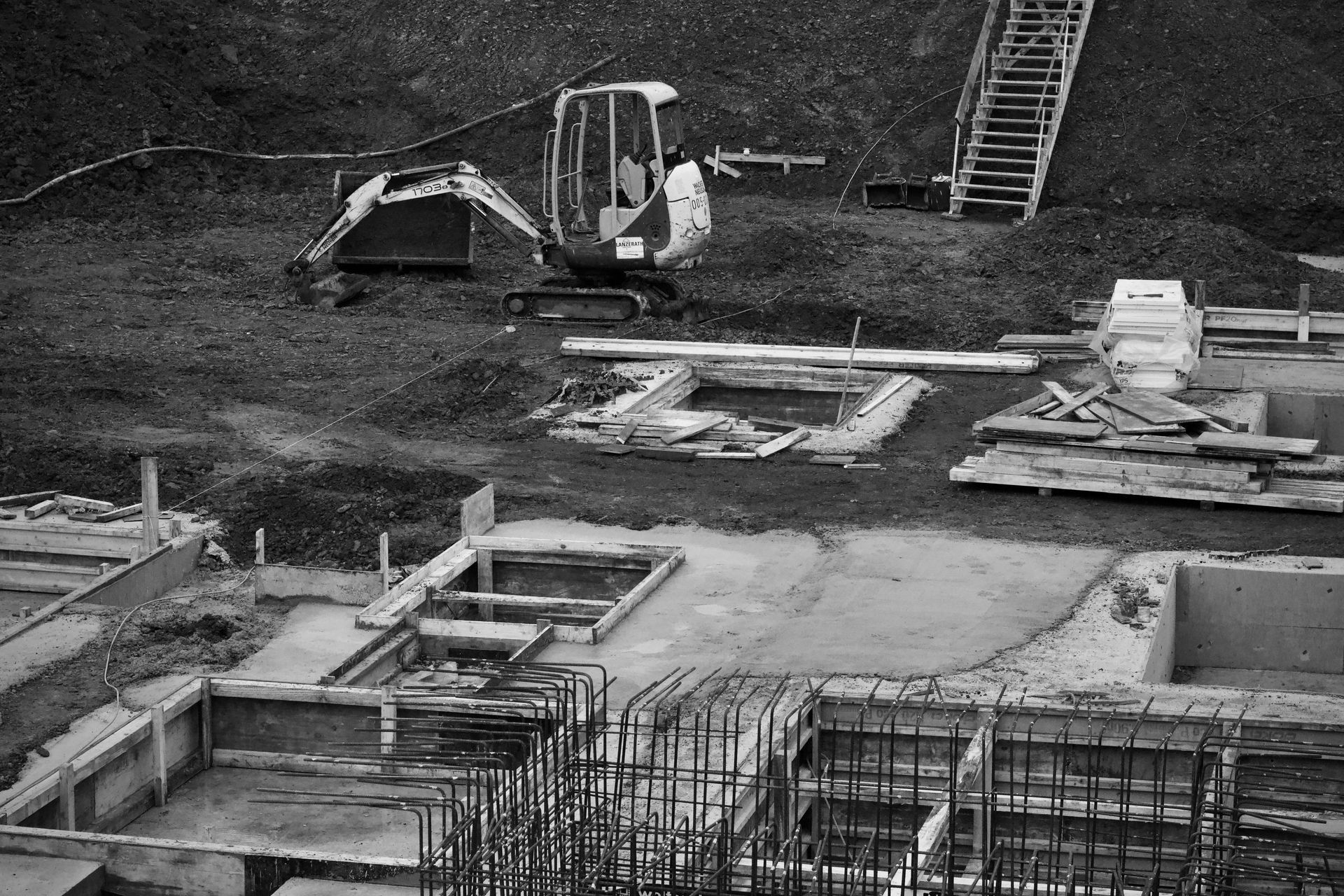
Construction should begin with an approved civil design, not with an excavator estimating the pond size in the field.
The design process may evaluate the contributing drainage area, expected runoff, existing and proposed surfaces, storm events, outlet capacity, emergency overflow, groundwater, soil conditions, maintenance access, and local drainage criteria.
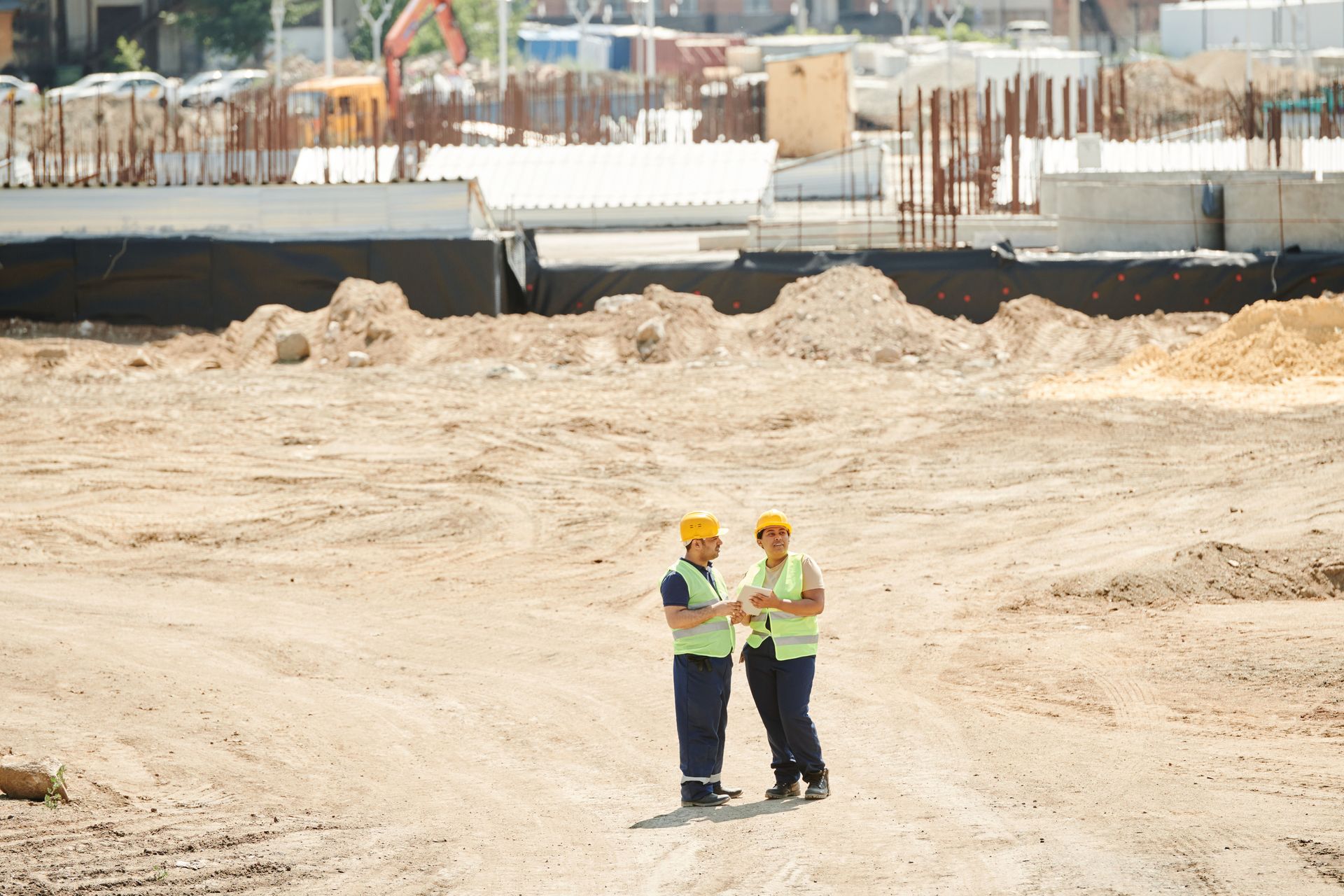
A topographic survey establishes existing elevations and allows the engineer to calculate storage volume and cut-and-fill quantities. Geotechnical information helps determine whether native material can be reused in an embankment and whether seepage control is needed.
Excavation and material management
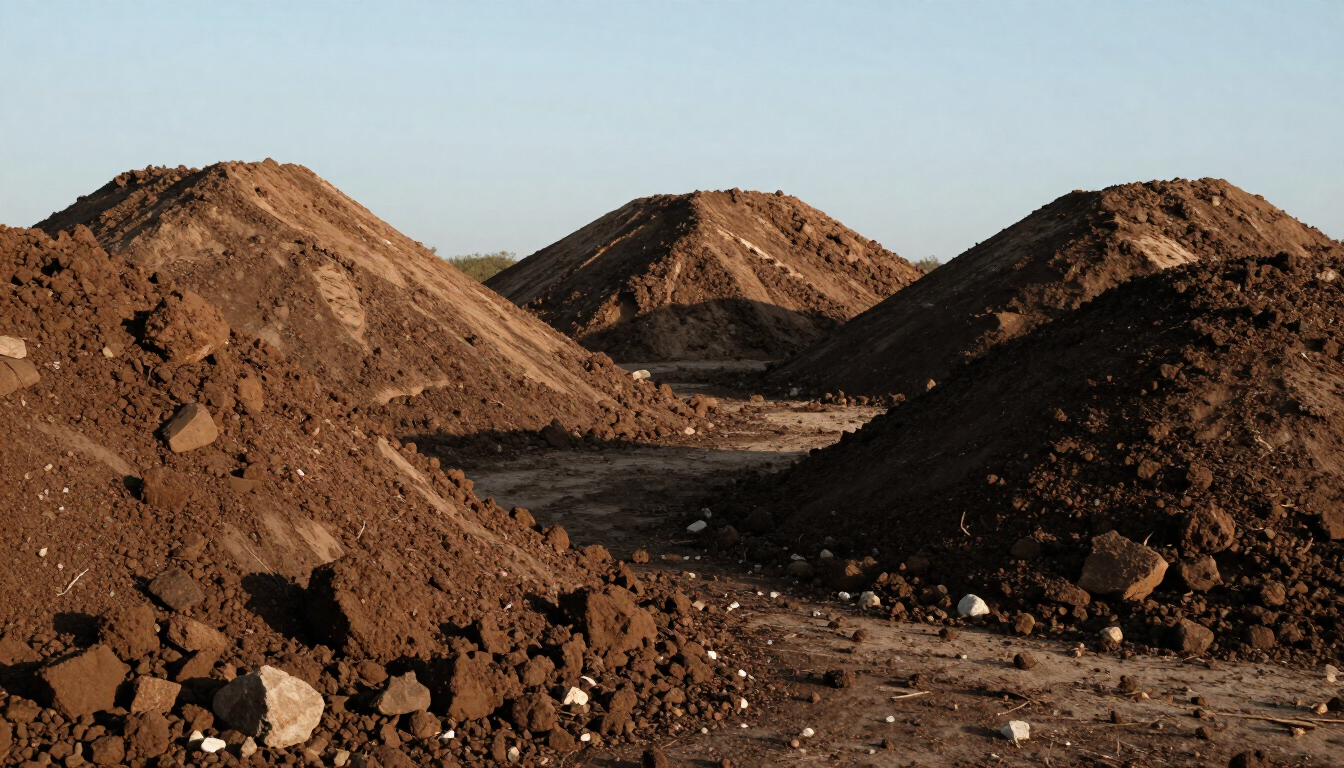
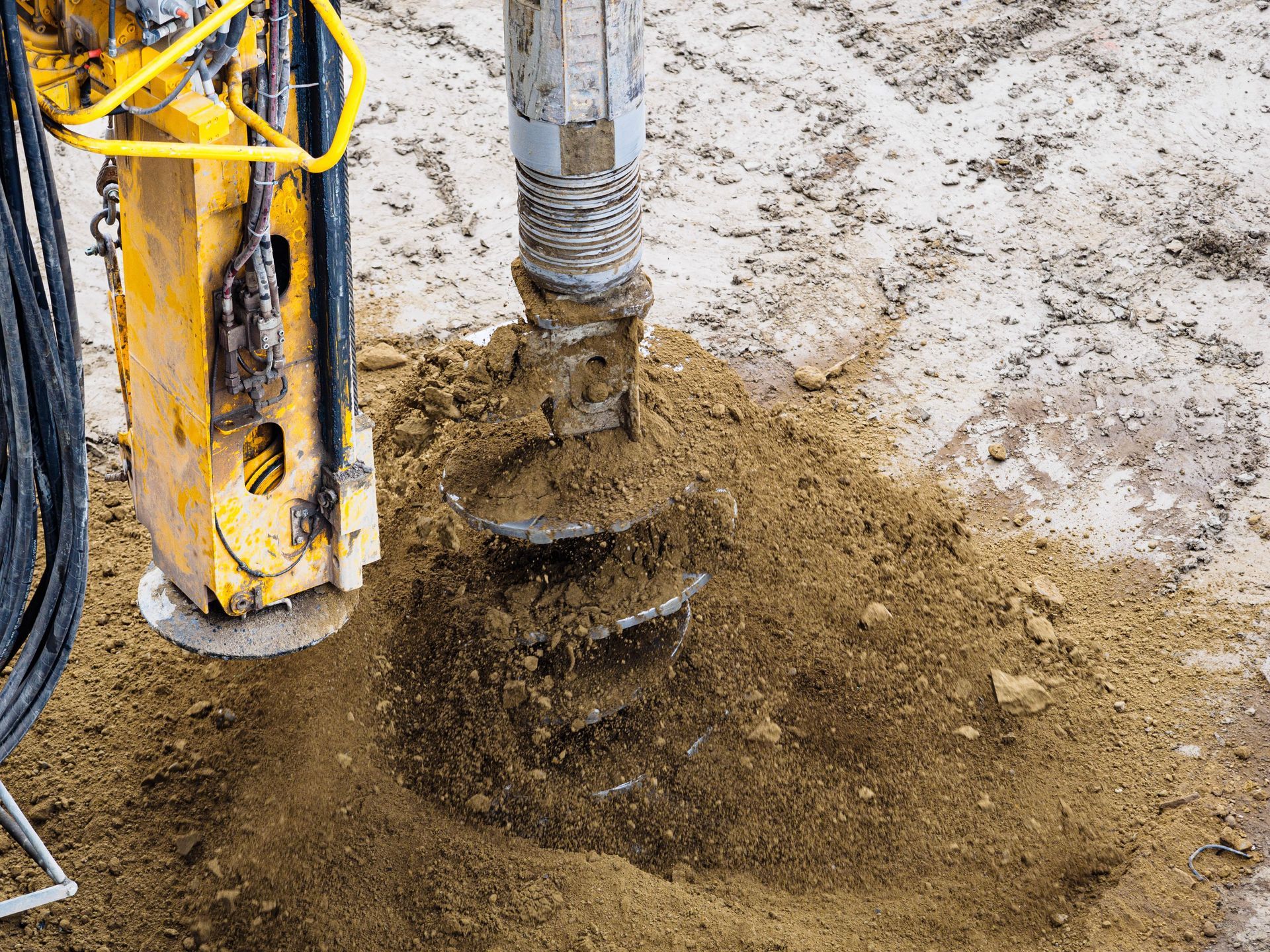
The excavation contractor removes vegetation and organic topsoil from structural areas, then excavates the basin to the approved dimensions and elevations.
Material should be separated as it is removed. Suitable soil may be reused in engineered fills or embankments. Topsoil can be preserved for final stabilization. Rock, wet soil, organic material, and unsuitable fill may need to be hauled away.
Mixing everything into one stockpile can turn usable soil into waste and increase trucking costs.
Embankments, outlets, and spillways
When the pond includes an embankment, suitable soil must be placed in controlled lifts and compacted according to the specifications. Pushing loose excavation spoil into a berm does not create a reliable engineered embankment.
The outlet pipe, riser, control structure, headwall, trash rack, and related components must be installed at precise elevations. Small elevation errors can change the amount of storage or how quickly the pond drains.
The emergency spillway is then shaped and stabilized so overflow follows the planned route without eroding the embankment or surrounding property.
Final grading and stabilization
The completed basin requires stable slopes, maintenance access, erosion protection, vegetation, and properly shaped inlet and outlet areas.
Rock may be installed where concentrated flow could erode soil. Topsoil, seed, erosion blankets, and approved plantings help stabilize disturbed areas. Construction-phase sediment controls remain necessary until the site has established adequate permanent stabilization.
What Affects Construction Cost?
The cost of a detention or retention pond cannot be determined reliably from surface area alone. Two ponds with similar footprints may require very different excavation volumes and structures.
Engineering, surveying, geotechnical work, permits, and construction staking are part of the initial cost. The earthwork budget then depends on total excavation volume, rock, haul distance, access, groundwater, embankment fill, compaction, and whether excavated soil can be reused.
Outlet structures can represent a substantial part of the project. Pipe, concrete, risers, headwalls, manholes, trash racks, control openings, and erosion protection add materials and specialized installation.
A retention pond may also need clay or a manufactured liner. Landscaping, revegetation, access roads, fencing, and long-term maintenance should be included in the ownership budget.
As Able Excavation explains:
“A construction project is only as fast as its material supply chain.”
Able Excavation Trucking and Hauling
This is particularly true for large pond excavations. If unsuitable material cannot leave the site or embankment fill, riprap, aggregate, and topsoil cannot arrive on schedule, the earthmoving equipment may sit idle.
Maintenance Is Part of the Stormwater System
A pond is not complete when the construction equipment leaves.
The owner or responsible organization should routinely inspect the inlet, outlet, forebay, basin, embankment, spillway, vegetation, and maintenance access.
Sediment gradually reduces available storage. Trash and vegetation can block small outlet openings. Erosion can damage slopes and channels. Animal burrows, settlement, seepage, and cracking may indicate embankment problems that need professional evaluation.
Retention ponds also require shoreline and water management. Algae, invasive plants, stagnant shallow areas, low water levels, and shoreline erosion can affect appearance, water quality, safety, and mosquito habitat.
Inspections should also occur after major storms, rapid snowmelt, wildfire runoff, or upstream construction activity. Those events can deliver enough sediment and debris to change how the facility operates.
An Able Excavation Perspective
On Western Colorado pond and drainage projects, one of the most important lessons is that the pond cannot be separated from the surrounding land.
Able Excavation has seen how a poorly drained, swampy area can become a managed asset when the basin, grades, inflow, overflow, and surrounding property are addressed together. The solution is not simply making the hole deeper.
You need to understand where the water comes from, how quickly it arrives, where it leaves, and what happens during a storm larger than expected.
Able Excavation can support pond projects through excavation, embankment construction, grading, utility and outlet trenching, material hauling, access-road preparation, and erosion repair. The civil or drainage engineer remains responsible for determining the required storage, outlet design, hydraulic performance, and regulatory criteria.
That division of responsibility matters. The engineer defines how the stormwater facility must function. The excavation contractor builds the earthwork and infrastructure to match the approved design.
Which Type Is Right for Your Property?
A detention basin may be appropriate when your priority is flood control, the site can support temporary storm storage, and you prefer an area that normally remains dry.
A retention pond may be appropriate when the design requires both runoff control and stronger water-quality treatment, and the property can realistically maintain a permanent pool.
Neither option should be selected based only on appearance. You need to consider flood-control requirements, soil, groundwater, evaporation, available land, safety, local drainage criteria, Colorado water law, and long-term maintenance capacity.
The best choice is the facility that meets the engineered performance requirements and can be maintained by the party responsible for the property.
Final Takeaway
The central detention pond vs retention pond distinction is straightforward. A detention pond temporarily stores water and normally drains after a storm. A retention pond maintains a permanent pool and temporarily stores additional runoff above that level.
The construction and ownership decisions are more complex.
Both systems require engineering, controlled outlets, emergency overflow, careful excavation, stable embankments, erosion protection, maintenance access, and ongoing inspections. Colorado projects must also account for flash storms, snowmelt, evaporation, rock, groundwater, local drainage requirements, and water-law considerations.
When those factors are evaluated before excavation, your stormwater pond can protect downstream infrastructure, reduce erosion, improve water quality, and become a functional part of the property rather than another drainage problem.
Share this article
Recent Posts