How Long Does a Septic System Last in Western Colorado?
You can usually tell before you get out of the truck. The owner meets you at the gate and walks you toward the yard, and somewhere between the house and that suspiciously lush stripe of grass there is a patch of ground that never quite dried out from last spring. The drains have been slow. There is a faint smell nobody wants to name. And the first question is never about flow rates or soil loading. It is always some version of this: how long does a septic system last, and did mine already use it up?
Here in Western Colorado, the honest answer splits into two camps. The older homestead and ranch parcels around Delta, Hotchkiss, and Olathe are often running on gravity systems that were put in decades ago, back before the current rules existed. The newer homesites and subdivision lots near Montrose, Ridgway, and Paonia tend to carry engineered fields designed under modern county standards. Two different clocks, two different conversations.
When you call us out to look at one, you are getting four generations of excavation experience, a Montrose-based crew with 25+ years on Western Colorado dirt, and a nationally certified septic installer (NAWT) on the team. What follows is the same rundown we give property owners standing in their yard, wondering whether they are looking at a repair, a replacement, or a system with plenty of life left in it.
How Long Does a Septic System Last: The Short Answer
Quick answers, with the caveat that matters: these are general industry figures, and actual lifespan swings hard based on system type, soils, usage, and installation quality. Nobody can hand you a precise number for your parcel without seeing it.
- Septic tank life: A well-made concrete tank that is not cracked or overwhelmed often serves for many decades. Tanks are the durable half of the equation.
- Leach field life: The drain field usually carries a shorter working life than the tank. Soil treatment areas age, clog, and lose their ability to accept wastewater over time.
- Overall system life: When people talk about a septic system "lasting," they are usually talking about the field. The tank and the field fail on different clocks.
The single most useful thing to understand is this: the drain field, not the tank, is usually what ends a system's useful life. A tank problem is often a scoped repair or swap. A failed field means field replacement, sometimes a full redesign, and a conversation with your county health department.
So the real question is not the national average. It is what is aging your specific system. That is the rest of this article.
What Actually Determines Septic System Lifespan in Western Colorado
Soils: Clay, Sand, and Everything Between
If you want to know how long a septic system lasts on your ground, start with the ground. The Uncompahgre Valley, the North Fork, and the Surface Creek country around Cedaredge and Orchard City each carry different soil profiles, and soil is the biggest lifespan variable there is.
Heavy clay drains slowly. Wastewater sits in the field longer than it should, the soil clogs faster, and the field ages out early. At the other end, fast-draining sand and gravel can move water through so quickly that it never gets properly treated before it reaches groundwater. Neither extreme is a dealbreaker. It just means the design has to match the dirt.
This is why Colorado's OWTS (Onsite Wastewater Treatment System) rules require a site and soil evaluation before a system is designed. That process runs through the CDPHE OWTS program and your local county health department, whether that is Montrose County, Delta County, or Ouray County. We do not make up the soils answer. The site tells you what it will support, and sometimes the answer is an engineered mound or a pressure-dosed field instead of a conventional gravity system. That is work we do regularly; you can read more on our septic installation page.
Water Table, Slope, and Mountain Versus High-Desert Sites
River-bottom parcels near Paonia, Crawford, and Colona bring high water tables into the picture, and a high water table changes both the design and the long-term prognosis for a field. Steep terrain around Ridgway and Ouray pushes projects toward engineered solutions for a different reason: you simply cannot lay a gravity field on ground that wants to run downhill through the laterals.
Freeze-thaw is a real factor in the mountains, too. Winter construction and freeze protection are legitimate scheduling considerations for install or replacement work in Western Colorado, and they shape when it makes sense to break ground on a given site. We plan around the site and the season rather than fighting them.
Installation Quality and Compaction
Here is the lifespan killer that is almost entirely preventable: a poorly installed or poorly compacted field. Backfill and compaction are not cleanup steps after the real work. They are part of the treatment system's future. An uneven field, pipe that is not bedded correctly, or soil that settles wrong around the laterals can shave years off a system that should have served for decades.
Proper excavation, level fields, correct pipe bedding, and compaction done right are exactly where a four-generations, NAWT-certified installation crew earns its keep. And a caution for anyone comparing bids right now: the cheapest dig is rarely the best-protected system. Hold that thought, because we come back to it in the bid checklist at the end.
Usage Load: Households, Guests, and Ranch Operations
Occupancy swings matter more here than in suburbia. A ranch house outside Olathe that goes from two people to twelve for hunting season, a cabin near Ouray that sits empty then fills on weekends, a shop with employees all flushing into the same system. Sustained overload is one of the most common reasons fields age out ahead of schedule.
The fix framing matters: when a system is undersized for actual use, the answer is right-sizing the replacement for real occupancy, not hoping the old field keeps absorbing it. And if you are a commercial buyer or property manager, commercial systems run on different loading assumptions entirely. That is a distinct design conversation, not a scaled-up house system.
Age of the System and What Came Before Modern Rules
A lot of parcels in Delta and Montrose counties still run on gravity systems installed decades ago, before current OWTS standards existed. These systems have a particular quality: they work right up until they do not. There is no gradual warning light, just the morning the drains back up or the yard goes soft.
Replacement decisions on legacy systems usually involve bringing the parcel up to current county health requirements, and the county health department drives that approval path. Expect records requests, a fresh look at the site, and a design that meets today's rules rather than the ones that were on the books when the original field went in.
Signs a Septic System Is Nearing the End
From the seat of a truck, these are the signs that get a second look:
- Slow drains across multiple fixtures at once, not just one stubborn sink
- Sewage odor inside or over the yard
- Wet or unusually green patches over the field, especially that lush stripe in an otherwise dry lawn
- Standing water or ground that stays soft long after weather should have dried it
- Gurgling in the plumbing
- Backups that show up during laundry or heavy-use periods
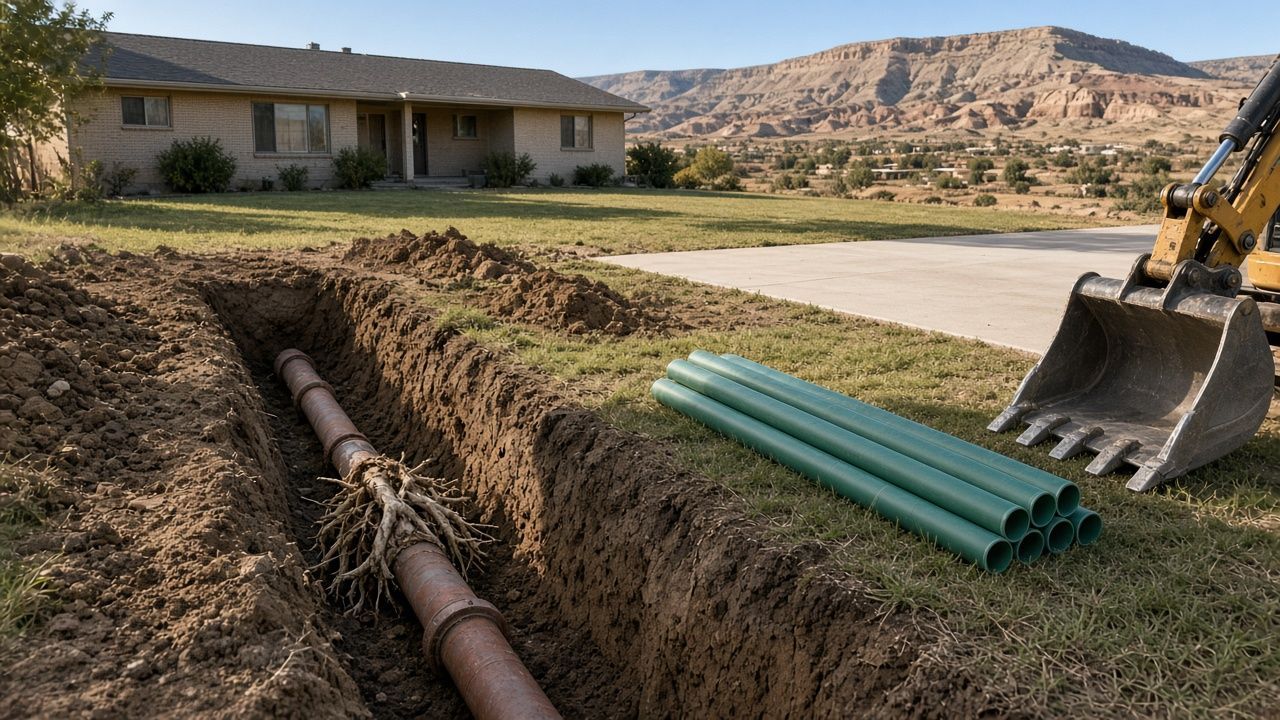
It helps to sort these into tank problems versus field problems. A tank issue, like a cracked or deteriorated tank, can sometimes mean a scoped repair or a tank replacement while the field still functions. A failing field is different. Field aging is gradual: soil clogging over the years, ponding in the laterals, a dropping acceptance rate, until the ground simply will not take more. That typically means field replacement, and often a new design under current rules.
When the source of trouble is unclear, a camera look at the lines can identify breaks, root intrusion, or collapsed pipe, which helps inform a repair-or-replace decision.
One caution we give every owner: do not keep living with a failing field. Untreated wastewater surfacing in your yard is a health issue and a groundwater issue, and county health departments treat it that way. It is not a nuisance you can out-wait.
Tank Versus Field: What Usually Gets Replaced First
When the Tank Is the Problem
Tanks fail in identifiable ways: cracks, deterioration, undersizing for the household, access riser and baffle issues. A tank replacement is a scoped excavation job. Expose the old tank, disconnect, set the new one, reconnect, backfill, and compact. It is contained work when the field is still healthy. The cost factors are their own conversation and belong in a separate discussion, so we keep pricing out of this one entirely.
When the Field Is the Problem
When the field is the problem, the soil treatment area itself has reached the end of its working life. Replacement usually means a new soil evaluation and a new design under current county and CDPHE OWTS rules, especially if the original field predates modern standards.
One thing owners overlook: lot grading and drainage around the new field affect its long-term performance. Surface water running toward or pooling over a field shortens its life. Getting the drainage right is part of the job, and it pairs naturally with our grading and drainage work.
Full System Replacement and Site Reuse
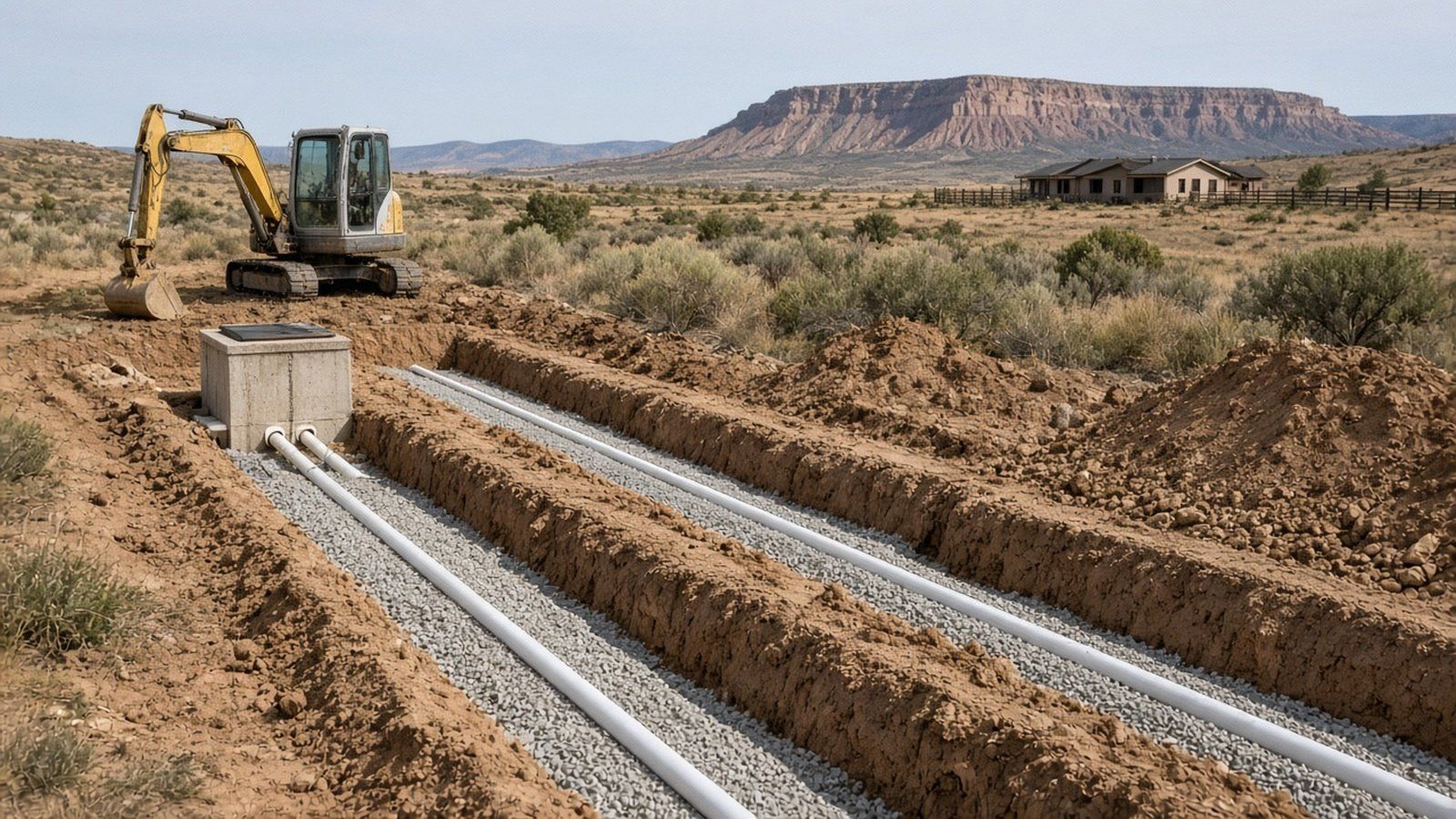
Sometimes a replacement field can go back into the same footprint. Just as often, a new field area is required and the old field is decommissioned per county requirements. Sequencing matters here: soils evaluation, design, county approval, locates through Colorado 811, then construction. Utility lines, water lines, and existing structures all constrain where a replacement field can live.
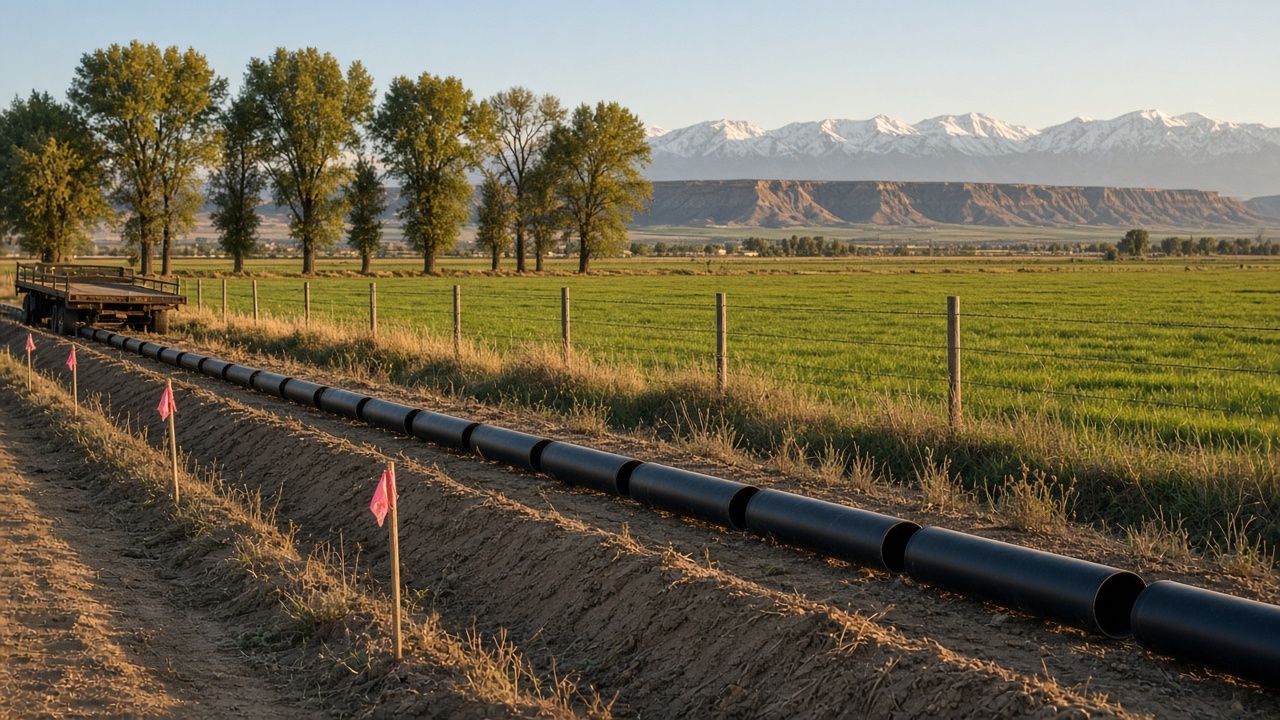
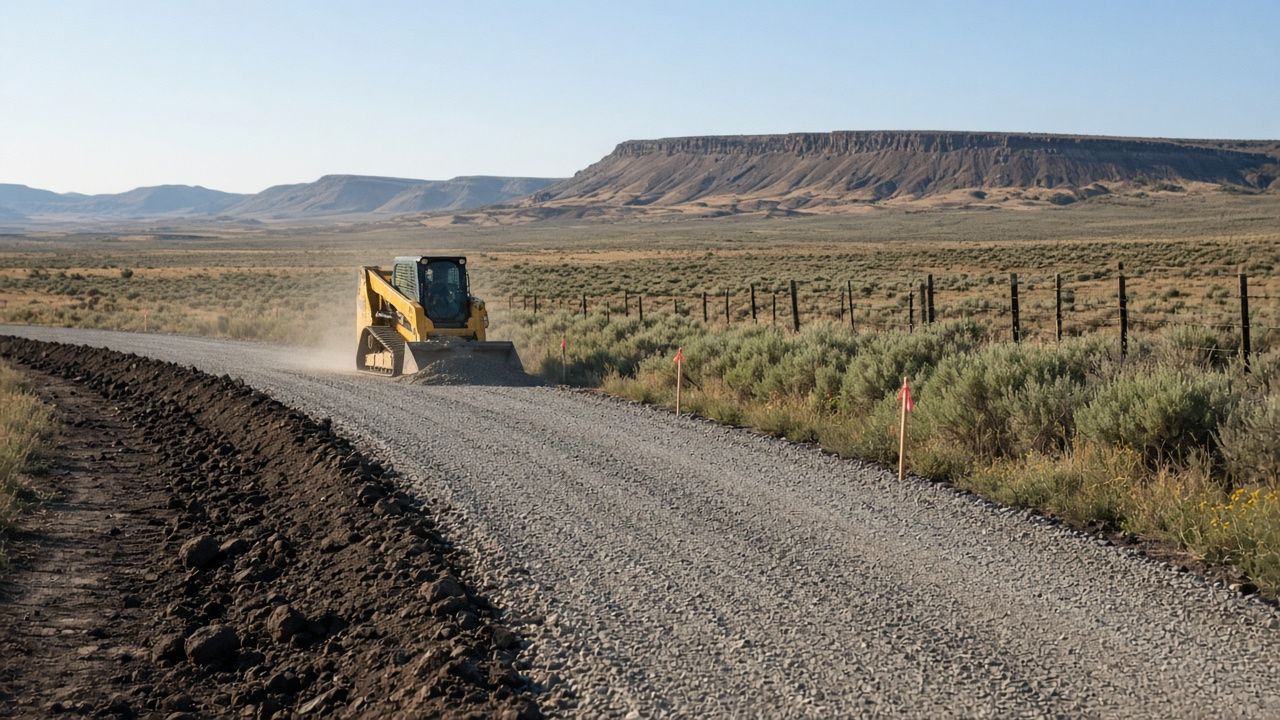
On rural lots, there is often related scope that makes sense to handle in the same mobilization: utility trenching, or driveway and pad work disturbed by the new field location. If you are building from scratch, septic installation often pairs with other site excavation work planned in the same mobilization.
How Long Does a Septic System Last If You Replace It Right: What a Good Installation Changes
Here is the honest answer to the question that brought you here. A correctly designed, correctly installed system, matched to the actual site and the actual usage, is the difference between a system that reaches the long end of its expected life and one that fails years early.
"Installed right" is not a slogan. In practice it means:
- A design based on a real soils evaluation, not assumptions
- A level field with correctly bedded pipe
- Backfill and compaction done to standard, not rushed
- Correct setbacks from wells, water lines, and structures
- Protecting the finished field area from vehicle traffic after install, because a field that gets driven on is a field with a shortened life
Our septic work is led by a nationally certified installer (NAWT), and we hold ourselves to that standard on every system we put in the ground. That is the whole pitch. The point of this section is not to sell you. It is to give you a yardstick for evaluating whoever does the work.
Western Colorado Realities: Replacing a Septic System Here Versus the National Picture
Read a national article on septic replacement and you would think the process is the same everywhere. It is not.
Jurisdiction. OWTS approvals run through your county health department under the state framework, and the practical requirements differ between Montrose, Delta, Ouray, and Gunnison-area parcels. Expect the county to be your permitting authority, and expect the process to be part of your timeline.
Terrain and access. A mountain lot near Ouray or Ridgway, an orchard parcel near Paonia or Cedaredge, and valley floor ground around Montrose, Olathe, and Hotchkiss each present different equipment access, soils, and drainage realities. The same system design can be a straightforward dig on one parcel and an engineered project on the one next door.
Season. Frozen ground and spring saturation both affect when replacement work can happen. Plan the window, do not invent one.
The buyer's angle. If you are buying rural property, the lifespan question comes up in due diligence for a reason. A replacement conversation during a purchase is a completely different animal from an emergency replacement in August. Planning ahead widens your options on design, timing, and where the new field lives. The Colorado Geological Survey publishes useful background on the state's wildly varied geology if you want to understand your parcel's context better.
Repair, Upgrade, or Replace: How the Decision Gets Made
The decision logic is the same whether you call us or anyone else:
- Diagnose. Symptoms first. A camera where the source is unclear. County records on what exists and when it went in.
- Evaluate the site. Soils, water table, slope, available area for a replacement field.
- Decide. A targeted repair, a component replacement (often the tank), or a full redesign of the field.
Upgrades are a real category here. Converting an aging gravity system to a pressure-dosed or mound system when the site demands it can be the right move, and we install conventional gravity, engineered mound, and pressure-dosed fields along with handling repairs and upgrades. Commercial systems follow the same logic with different loading assumptions.
If you are planning ahead, here is the sequencing checklist: pull county records on the existing system, order a soil and site evaluation, confirm a design the county will approve, and schedule Colorado 811 locates before any ground breaks.
What a Septic Replacement Bid Should Cover (Scope Checklist)
When bids land in your inbox, compare line items, not just totals. Here is what a complete scope should address:
- Soils evaluation and system design coordination with the county health department and the CDPHE OWTS process
- Permits: who pulls them and what the county requires
- Colorado 811 locates before excavation begins
- Site protection for existing utilities, driveways, landscaping, and structures
- Excavation, tank setting or replacement, and field installation per the approved design
- Backfill and compaction standards, spelled out
- Final grading and drainage directed away from the new field area
- Decommissioning of the old field or tank per county requirements
- An insured and bondable contractor with a certified septic installer (NAWT)
- A clear written scope of what is and is not included
A bid that leaves out backfill quality, drainage, or decommissioning is not the same bid as one that includes them, whatever the total says at the bottom.
If you are in Western Colorado and standing over a yard that is telling you something, call Able Excavation at (970) 596-9687, email office@ableexcavation.com, or use the contact page.
Share this article