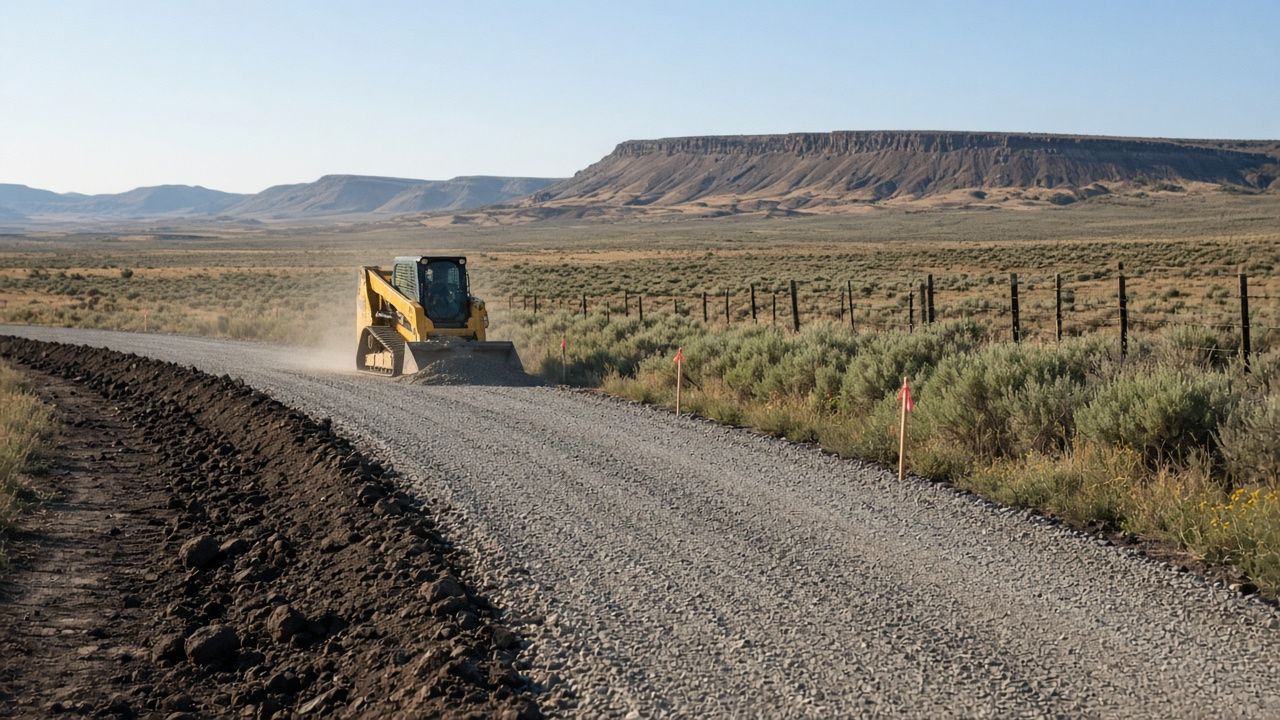
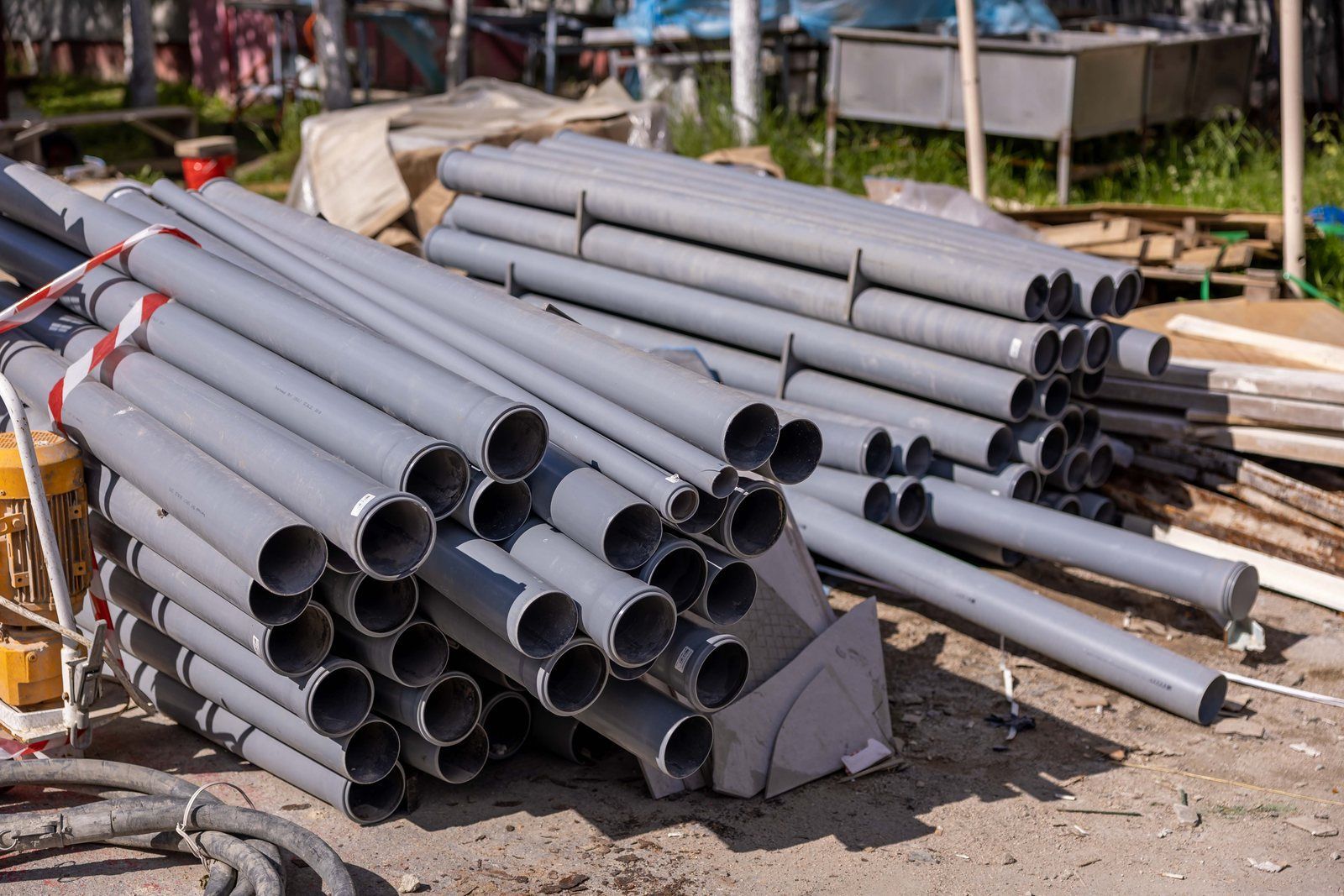
Delivery day for a pipe job is quieter than you would expect. A truck backs up to the fence line, and long black sticks of HDPE come off one at a time, laid end to end on the ditch bank beside the stakes that mark the route. No machine has touched the ground yet. There is just pipe, stakes, and the route the water will take.
Walk that line and one thing jumps out. Every gap between two sticks is a future joint, and how those joints get made is the whole point of HDPE pipe fusion. A run that crosses a pasture and a driveway can have a lot of them, and every one will live underground in soil that gets wet, dries out, freezes, and settles.
So the important questions are usually not which pipe to buy. They are how the pipe gets joined, why the joining method matters once it is buried, and who is qualified to do it. Able Excavation is qualified to fuse HDPE pipe for gas, water, and irrigation applications, as listed on its
utility installation and repair page.
What HDPE Pipe Fusion Actually Is
HDPE stands for high-density polyethylene, a flexible plastic pipe. What sets it apart is how lengths are joined. Instead of pushing pipe into a fitting, the ends are heated and pressed together until they become one piece.
The Plastics Pipe Institute (PPI) describes
butt fusion as the most widely used method for joining individual lengths of PE pipe, and says it produces a permanent, economical, flow-efficient connection. That is general industry guidance.
Compare that with joints you may already know. A gasketed bell joint pushes one pipe end into a bell sealed with a rubber ring. Glued PVC bonds pipe to fitting with solvent cement. Mechanical couplings clamp pieces together. Each of those methods has its place. The difference is that each one leaves a separate connection sitting between two pipe ends, and fusion does not.
Electrofusion is a related method that uses special couplings with heating elements built in. It is a separate procedure with its own uses, and this post sticks to HDPE butt fusion.
Why the Joint Matters More Than You Think
Able's utility page puts its view plainly: HDPE fused joints are stronger than the pipe itself, with no couplings or fittings to leak, no joints to shift, and no corrosion over time. PPI's general guidance points the same direction, noting that when pipe is fused to the manufacturer's procedures, the joint area becomes as strong as or stronger than the pipe in tensile and pressure properties.
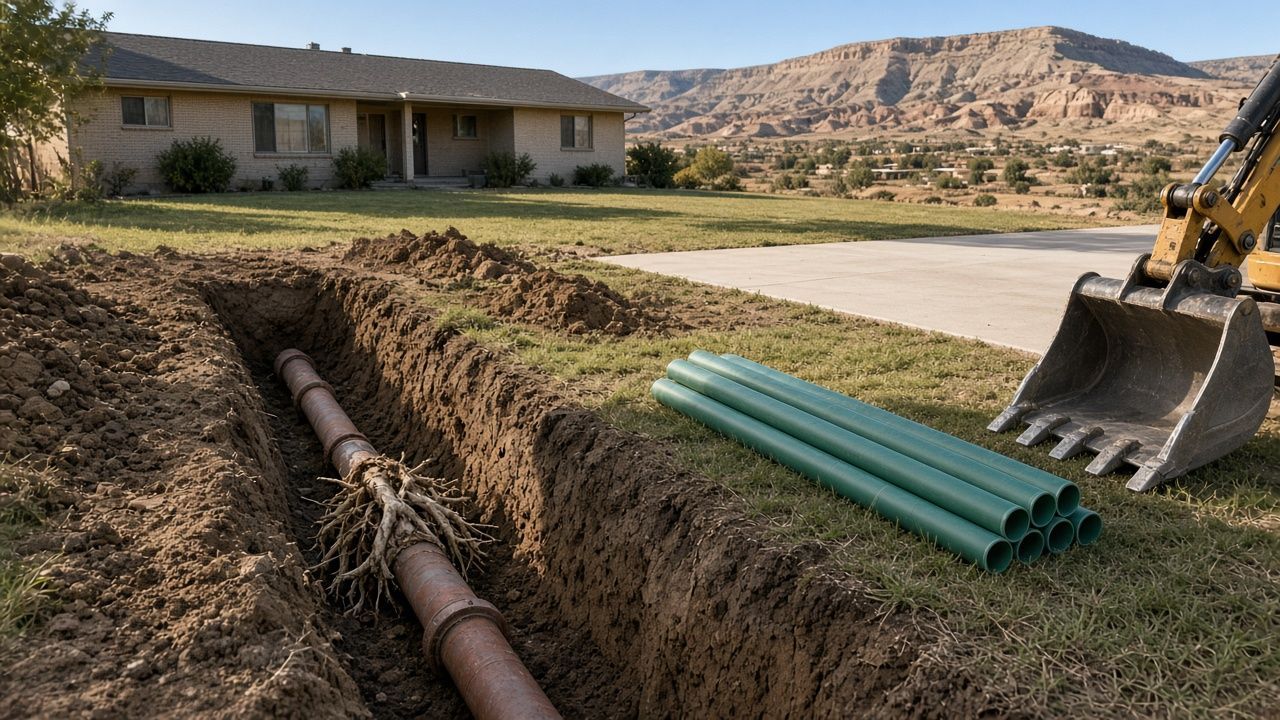
Think about what a buried line lives through on a Western Slope property:
- Soil that swells and shrinks through wet and dry seasons
- Backfill that keeps settling after the trench is closed
- Freeze-thaw cycles, winter after winter
- Runs under driveways, field crossings, and ditch banks that nobody will see again without digging
None of that means a fused line has no connections at all. The ends still tie into something: a meter, a valve, a building, an existing line. The
PPI handbook chapter on joining PE pipe notes that PE pipe joins to other materials with mechanical fittings, flanges, or manufactured transition fittings. Transitions at the ends are normal. What fusion gives you is the long middle of the run without a separate fitting at every joint.
How HDPE Butt Fusion Works, in General Terms
The generic procedure comes from PPI's technical report
TR-33 and from
ASTM F2620, the Standard Practice for Heat Fusion Joining of Polyethylene Pipe and Fittings. In plain terms, PPI lists six steps:
- Clean the pipe ends, clamp them in the machine, and align them.
- Face the ends so they are clean, parallel, and square.
- Align the pipe profiles so the walls match.
- Melt both ends against a heating tool.
- Join the ends with the proper fusion force.
- Hold the joint under pressure until it cools.
Those are general steps, not a field procedure. The actual parameters come from the pipe manufacturer and the qualified procedure for the job, and ASTM F2620 itself says to consider the manufacturer's instructions when setting them. That is why you will not find heat, pressure, or timing figures here.
For you as the owner, the takeaway is simple. A fused joint is only as good as the procedure and the person running it. A joint made out of procedure can look fine as it goes into the trench, and nobody sees it again until something goes wrong. That is also why fusion is not a weekend rental project.
Where Fused Joints Earn Their Keep
Long water runs. When an HDPE water line crosses a field, runs along a ditch bank, or passes under a driveway, length works against a line with a fitting at every joint. Able's utility page names long runs of water piping as a place fused pipe is the better choice. If your project is really a service line swap from the meter to the house, the
water line replacement guide covers that scope.
Gas lines. Able is qualified to fuse HDPE for gas, and its site lists gas line trenching and bedding in coordination with your gas utility provider. Gas carries an extra layer of oversight. PPI notes that people joining PE pipe for gas must also meet U.S. Department of Transportation pipeline safety rules, and ASTM F2620 says gas procedures must be qualified under the authority having jurisdiction. Expect your gas provider to be part of the conversation.
Irrigation mainlines. Around Montrose and across the Western Slope, the irrigation main can be the longest line on a property. Able lists agricultural and residential irrigation mainline installation, including HDPE fused mains for long-distance runs.
What HDPE Pipe Installation Looks Like on Site
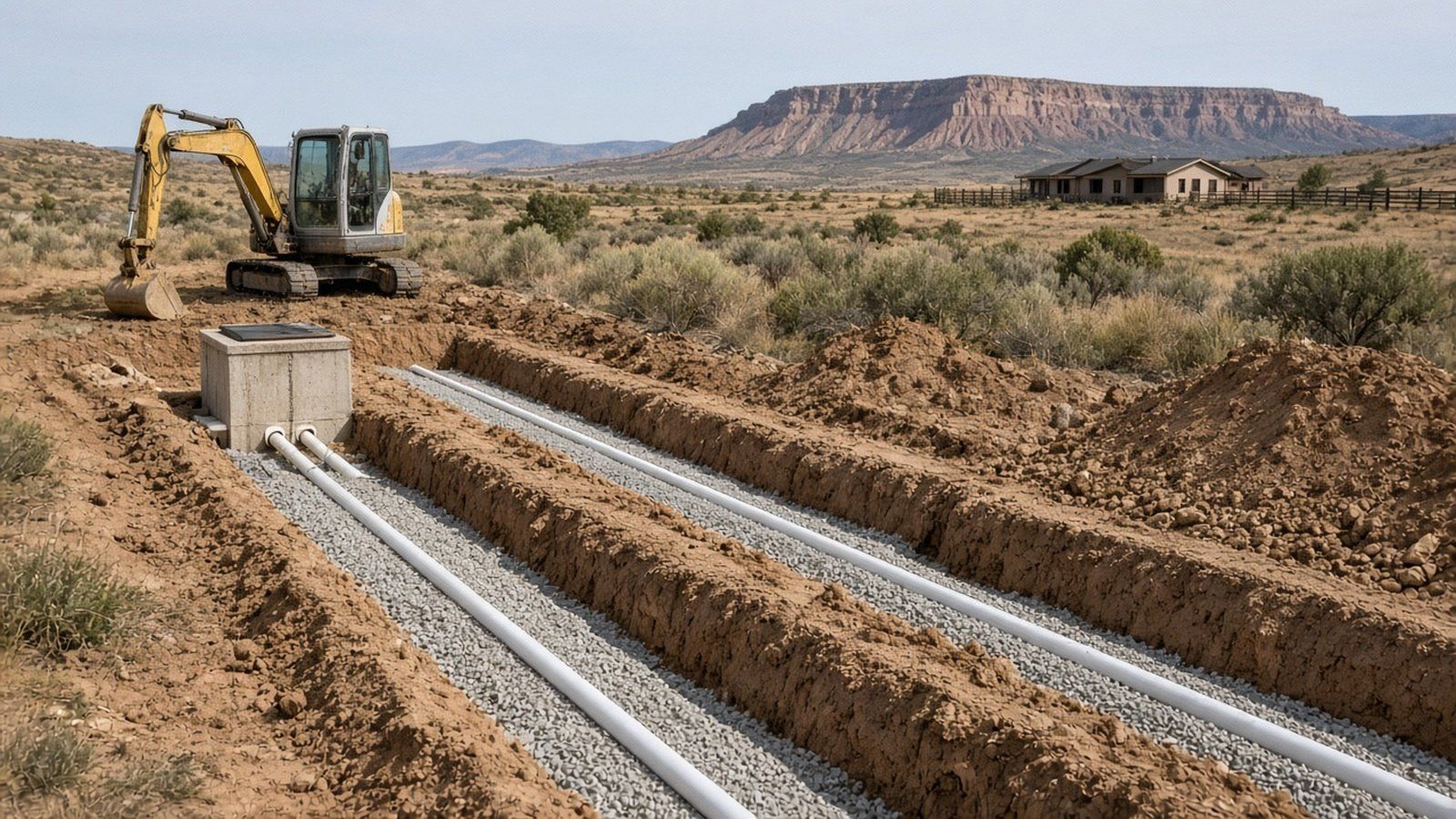
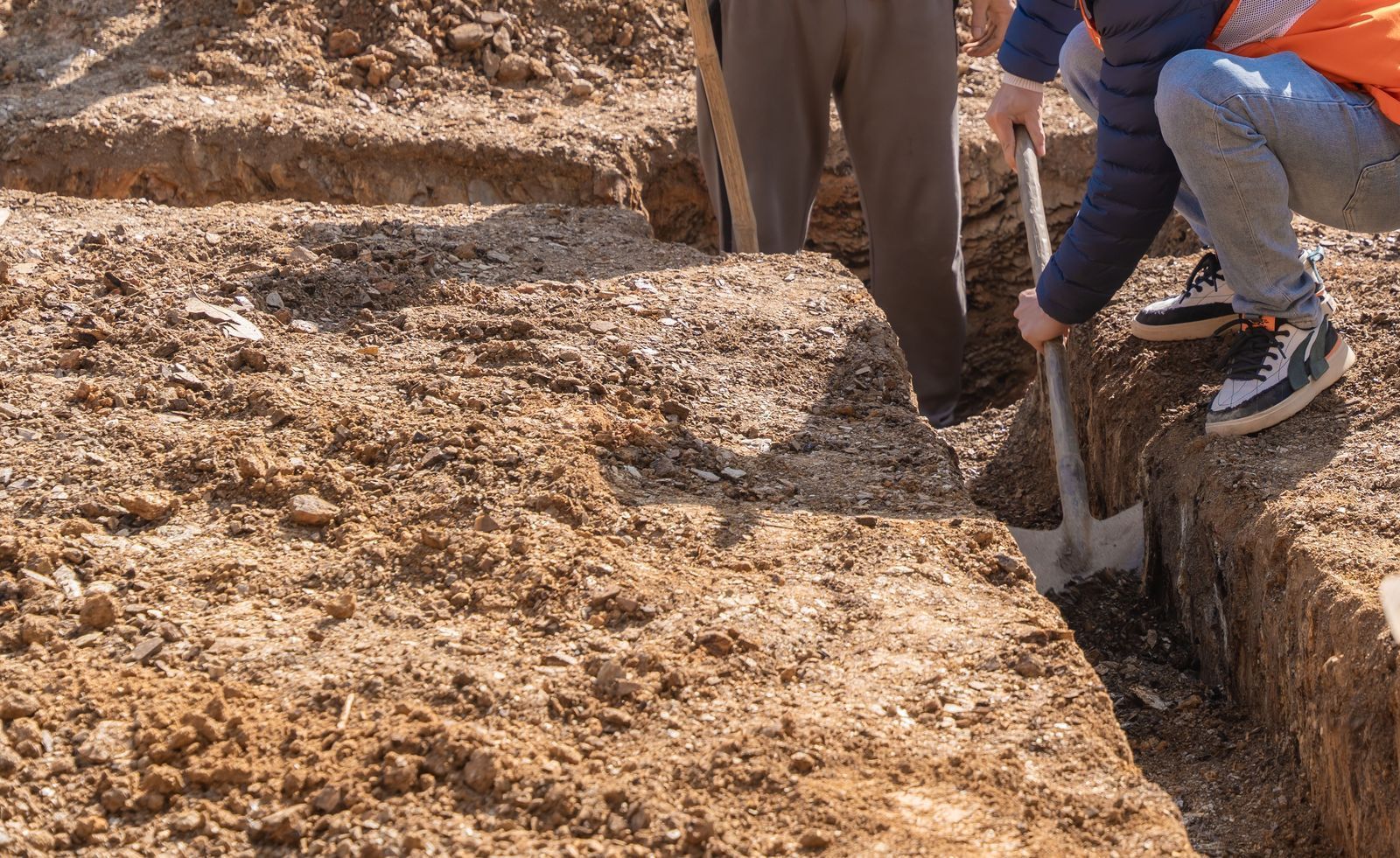
By the time fusing starts, the pipe from delivery day is laid out along the staked route. Joints are made in the machine as the string comes together, then the fused pipe goes into the trench, gets bedded, and gets backfilled and compacted.
Two things to keep in mind. First, a good fusion joint does not make up for poor bedding. Sharp rock against the pipe or loose fill under it can cause trouble that has nothing to do with the joints. Second, trench work and pipe work are one job. Whoever fuses the pipe should care what it rests on.
Testing belongs in the plan too. Where the engineer, water provider, or gas utility calls for a pressure test or inspection, it should happen before the trench is closed, so a problem is a fix and not a re-dig.
Before Any Pipe Is Ordered
Every route starts with locates.
Colorado 811 puts it simply: it is free, it is fast, and it is the law. Contact them before any digging, even on your own land. Public utilities get marked through 811, but private lines such as a feed to a shop, an old irrigation lateral, or the customer side of a service line may need separate private locating.
It also helps to have a few things ready when you talk to a contractor:
- A rough route sketch, even hand-drawn
- What the line carries and roughly how long it is
- Where it ties in at each end
- Any crossings: driveways, ditches, existing utilities
What to Confirm in the Bid
When you compare bids, ask any excavator who on the crew is qualified to fuse, and for which applications. Then look at how the plan joins the pipe. Bids that join the line differently are not the same job at different prices, so compare them on method as well as cost. Before you sign, make sure the bid answers these:
- Who makes the fused joints, and for which uses (water, gas, irrigation)
- The joining method for the run, and where any fittings or couplings sit
- How the HDPE transitions to existing pipe, meters, or valves at each end
- Whether the engineer or provider wants fusion records, and who keeps them
- Bedding, backfill, compaction, locates, and restoration, and who owns each
- Pressure testing and any inspection or utility sign-off the job requires
Talk Through the Route First
Able Excavation is Montrose-based, four generations in, with more than 25 years of experience, and fully insured and bondable. If you have a water line, gas line, or irrigation main planned anywhere in Western Colorado, the best time to talk is before the pipe shows up.
Request a quote or call
(970) 596-9687, and walk the route with someone who fuses this pipe for a living.