January, first light, and the kitchen tap coughs a little air at you and then goes quiet. Nothing. Two lots over, your neighbor has been running water all morning. Same cold snap, same valley. So why yours?
You walk the yard in boots and spot it: a bare strip where the truck has parked all winter, right along the route the service line takes to the house. The frost on that strip looks different from the snow on the grass around it. Harder, grayer, closer to the dirt, and sitting right over what may be a frozen water line.
Hold onto that bare strip. When a frozen water line or a frozen sewer line stops a house in winter, the useful questions are usually not "how bad is this." They are: which line froze, can it be thawed without digging, and if it froze once, will it freeze again? Digging is usually the last step, not the first. Most of the work happens above ground, in your kitchen and on the phone.
Stage 1: Figure Out Which Line Stopped Working
Most properties have two buried lines that matter in a freeze, and they act very differently when they quit.
The first is the water service, a pressurized line running from your provider's system (often through a curb stop or meter near the street) into the building. The second is the building sewer, which carries waste out of the house to a public sewer or to a septic tank on the property. One pushes water in. One lets water out. They freeze for different reasons, and the failure looks different from inside.
What a frozen water line looks like from the kitchen
No water at all, or a weak trickle, sometimes at every fixture and sometimes at just one. If a single fixture on an outside wall goes dead and the rest of the house still runs, the freeze is probably inside the building, in a wall or crawlspace, not in the ground. If the whole house is dry, the suspect list moves toward the meter, the service entry at the foundation, and the buried service itself.
What a frozen sewer line looks like
A frozen sewer line rarely announces itself with silence. It shows up as every drain slowing at once, gurgling in fixtures that never gurgled before, or the shower backing up when the washer drains. One slow drain is usually a local clog. Every drain slowing together points at the building sewer or the line to the tank.
The stakes differ, too. No water is miserable. A blocked sewer means backup risk, which is worse. Both need attention, but different people usually handle them, and guessing wrong costs you time.
Who owns which part of the line
Responsibility for a buried service is usually split between you and your provider, and the split is not the same everywhere.
Colorado Springs Utilities, for example, tells its customers that property owners maintain and defrost the service line out to the curb stop valve. Your provider may draw that line somewhere else, so ask rather than assume.
Stage 2: Rule Out the Easy Stuff and Call Your Provider
Before you blame the ground, check the building. Open the sink cabinets, look in the crawlspace, and find the wall where the service comes through the foundation. The
American Red Cross lists exterior walls and the spot where the water service enters through the foundation as likely freeze points.
Then call your water provider. Report the outage, ask whether anything is happening on the main in your area, and ask where their responsibility ends and yours begins. If the problem turns out to be a public main rather than your own line, that is a different situation, and our piece on
what to do when a water main breaks covers it.
On a property with a private well, this stage looks different. The pump, the pressure tank, and the power to them are suspects before the ground is.
For a suspected frozen sewer line, call a plumber or, on a septic property, a septic professional. Hold off on running extra water down a line that is not draining.
Why Buried Lines Freeze in Western Colorado
This is where the bare strip comes back into the story.
There is no single honest frost depth number for a yard. How deep the ground freezes in a given winter depends on how long the cold lasts, how much snow sits on the ground, the soil, and its moisture. A line can freeze in one stretch of a yard and stay fine a few steps away.
Colorado Springs Utilities puts the basic mechanism simply: cold temperatures drive frost deeper into the ground, and that can freeze water service lines.
Snow cover, bare ground, and compaction
Undisturbed snow insulates. Take it away by plowing, shoveling, parking, or driving the same path all winter, and the ground under it loses that blanket. The
University of Minnesota Onsite Sewage Treatment Program notes that compacted snow does not insulate as well as undisturbed snow, and that driving equipment over a system sends the frost deeper. The truck spot, the lane to the shop, the path the dog wears across the yard: each one strips insulation off whatever runs below it.
On the Western Slope, plenty of ground goes bare on its own. Wind-scoured lots and high-desert yards can sit open to the cold with little snow on them, and that matters more than the date on the calendar.
Shallow cover and exposed transitions
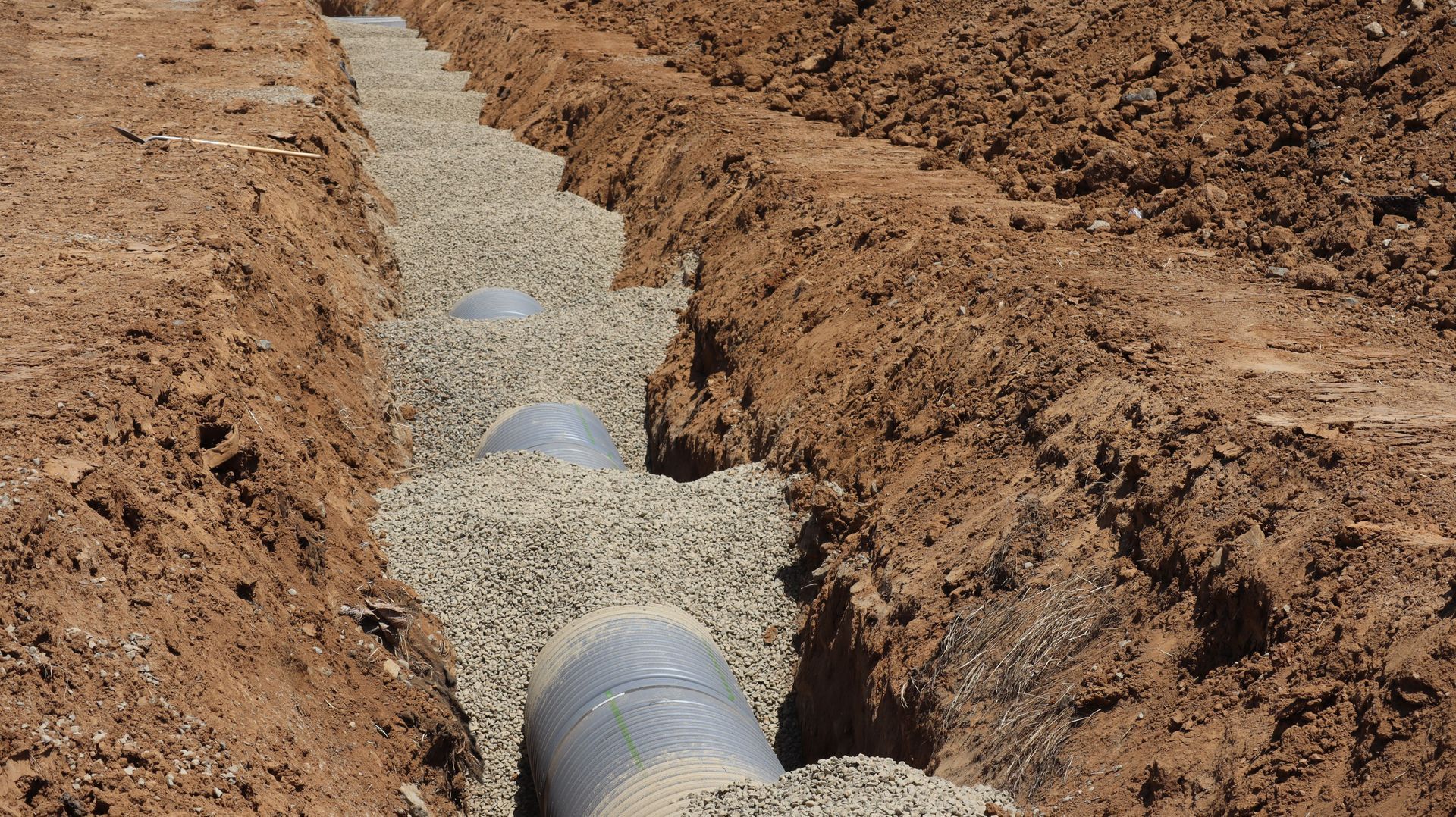
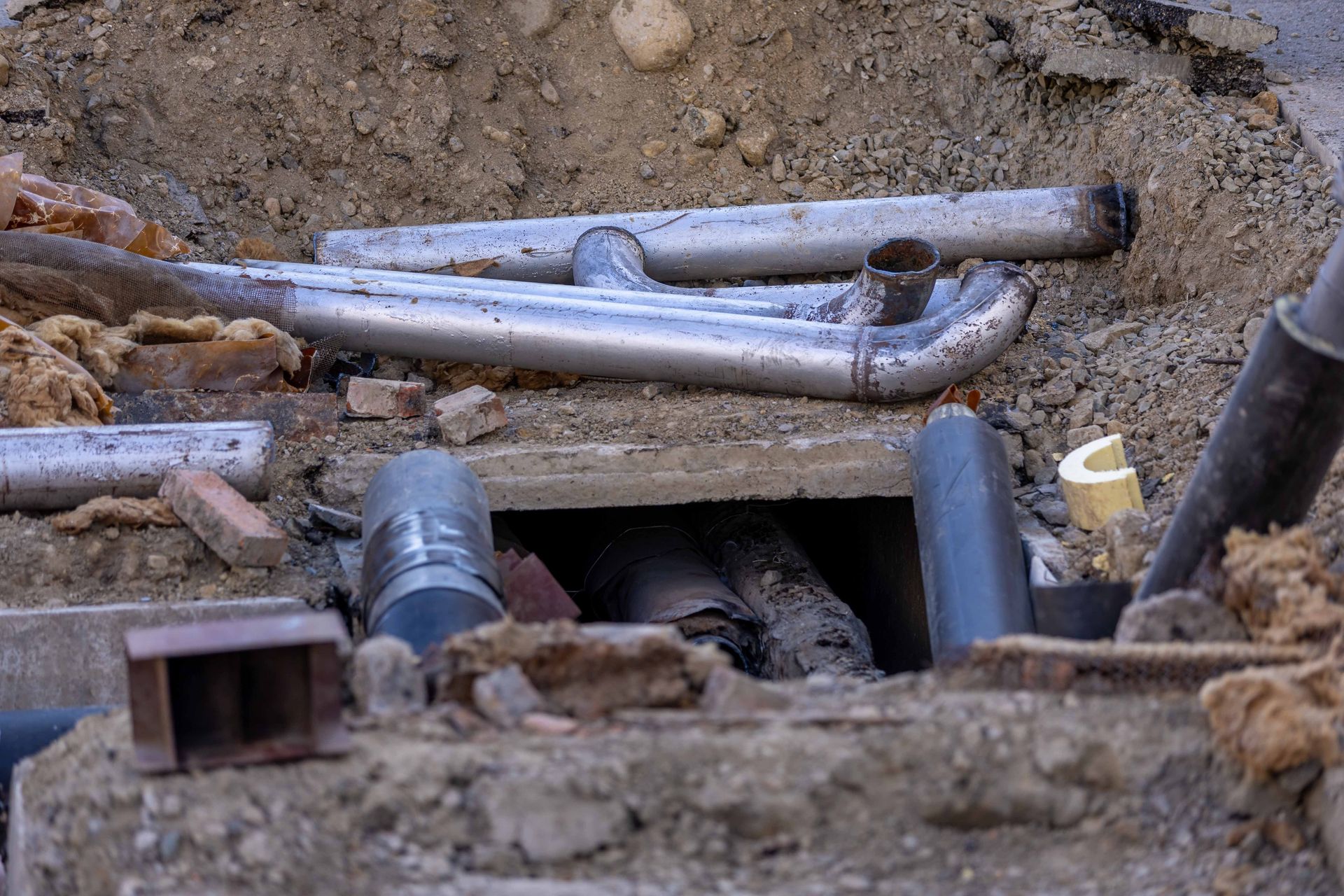
Lines tend to freeze where cover is thinnest or where the pipe leaves the ground. The usual suspects are the transitions, not the middle of a well-buried run: where the service enters the foundation, a meter pit, a curb stop, where a sewer line drops into a septic tank, or a stretch where grading or erosion has thinned the soil over an old trench.
Low or no flow
Water that moves resists freezing better than water that sits. Seasonal cabins, vacant rentals, lines to shops and barns used once a week, all freeze more readily. The
Red Cross notes that even a trickle of running water helps keep a pipe from freezing. A line that froze while a property sat empty may have been a low-flow problem, not a bad line, and that distinction decides whether the fix is a thaw or a rework.
Where burial depth comes from
How deep a water or sewer line must be buried is set by the local jurisdiction and your provider, not by guesswork. Montrose County's
building requirements handout lists a design frost depth, but that figure is for footings and foundations. For your line, ask your water provider and the local building department what applies at your address.