
Dirt Removal: Why Projects Need It and Where the Dirt Gets Taken
TL;DR
- What is dirt removal? Dirt removal is the loading, hauling, relocation, reuse, or appropriate disposal of soil, rock, and other excavated material that no longer belongs in its original location.
- Why do excavation projects create so much extra dirt? Some excavated material cannot go back because foundations, pipes, gravel, concrete, septic components, and other improvements now occupy part of the original volume. Excavated material can also increase in loose volume after it is disturbed.
- Where does excavated dirt go? Depending on the material, it may be reused elsewhere on the same property, stockpiled for later, transferred to another project needing suitable fill, taken to an approved fill location, or delivered to an appropriate disposal facility.
- Can you just dump clean dirt somewhere? No. The receiving property needs to be authorized to accept the material, and drainage, floodplain, environmental, land-use, and solid-waste requirements may apply.
- Can you give dirt away as free fill? Potentially. This is a common homeowner strategy, but you need to know what the material contains and whether it is appropriate for the receiving property. Transportation usually remains the biggest challenge.
- Why does dirt removal cost so much? The truck has to be loaded, travel to an acceptable destination, unload, and return. Haul distance, truck capacity, legal payload, fuel, loading conditions, disposal fees, waiting time, and the number of required trips all affect cost.
- Should you keep topsoil? Usually, if it is usable and the project will need landscaping or revegetation later. Paying to export good topsoil and then buying more at the end of the project is often inefficient.
- What is excavation spoil? Spoil is soil, rock, or other earth material removed during excavation. Spoil is not automatically waste. It may be reusable elsewhere on your project.
- What if the soil might be contaminated? Stop treating it as ordinary fill. Soil associated with fuel spills, tanks, industrial activity, unusual odors, staining, buried waste, or other suspicious conditions may require characterization and a different disposal process.
- Can dirt be dumped into a low or wet part of the property? Not automatically. Filling drainage areas, wetlands, waterways, or regulated state waters can create flooding problems and may trigger environmental authorization.
- Does dirt have to be hauled immediately? Not always. Suitable soil and topsoil may be stockpiled for later use if the pile does not interfere with drainage, utilities, construction access, septic areas, or other work.
- What should you ask your excavation contractor? Ask how much soil is expected, what can be reused, what must leave, where it will be taken, whether disposal fees are included, and whether imported material will need to come back afterward.
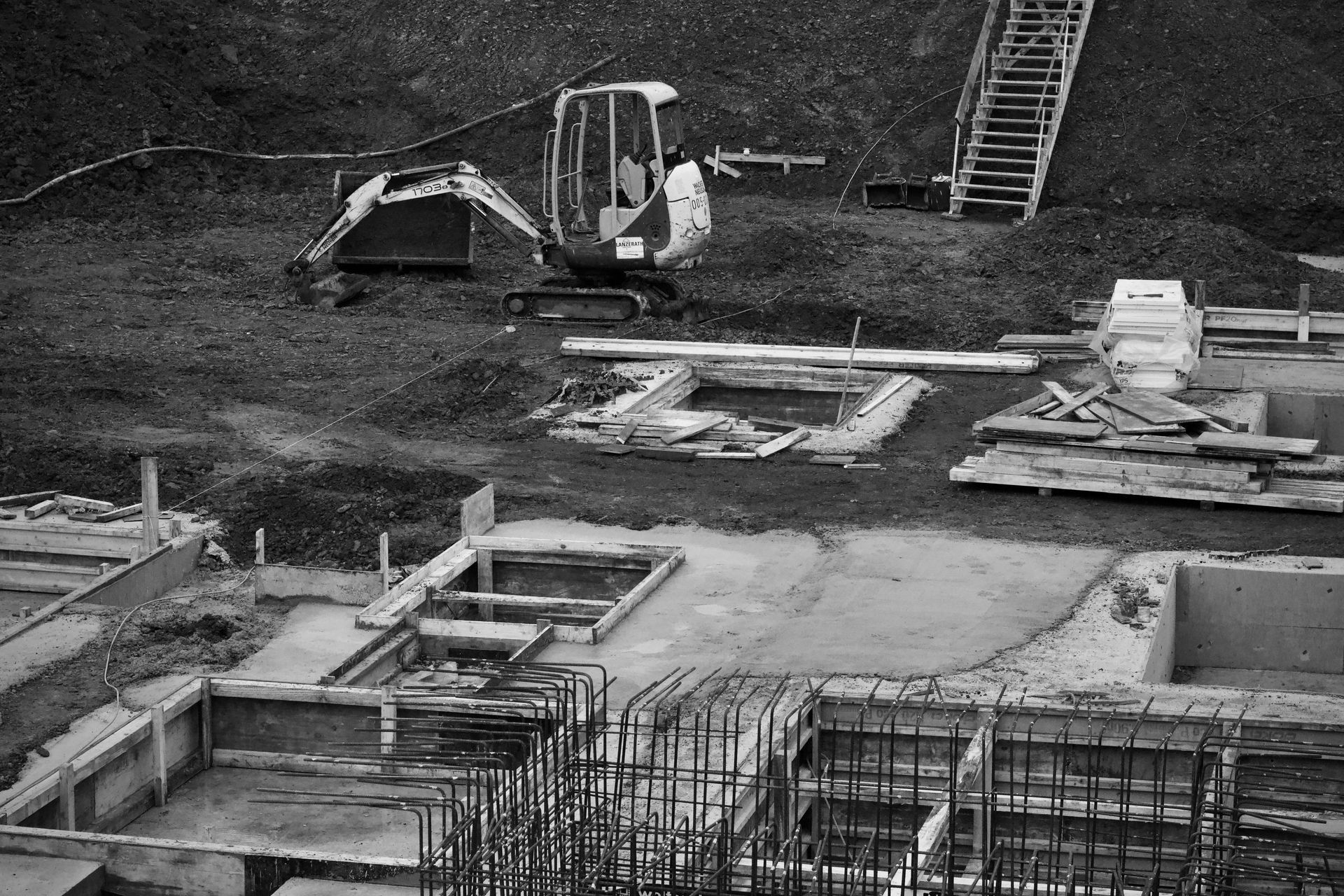
Dirt removal is one of the least visible parts of an excavation estimate until you suddenly have a pile of soil occupying half the property. Whether you are excavating a foundation, installing septic, cutting a driveway, trenching utilities, developing a commercial site, or reshaping drainage, you need a plan for what happens to every cubic yard that comes out of the ground.
For Western Colorado projects, that plan may involve both excavation services and coordinated trucking and hauling. Able Excavation handles soil and spoil haul-off alongside gravel, structural fill, topsoil, construction water, and other materials, which illustrates the bigger point: earthwork is rarely just about getting dirt off the property. The right materials often have to move both out of and back into the site.
Why Do Construction Projects Need Dirt Removal?
When you dig a hole, it is tempting to assume all of the soil can simply go back into that hole later.
Construction does not usually work that way.
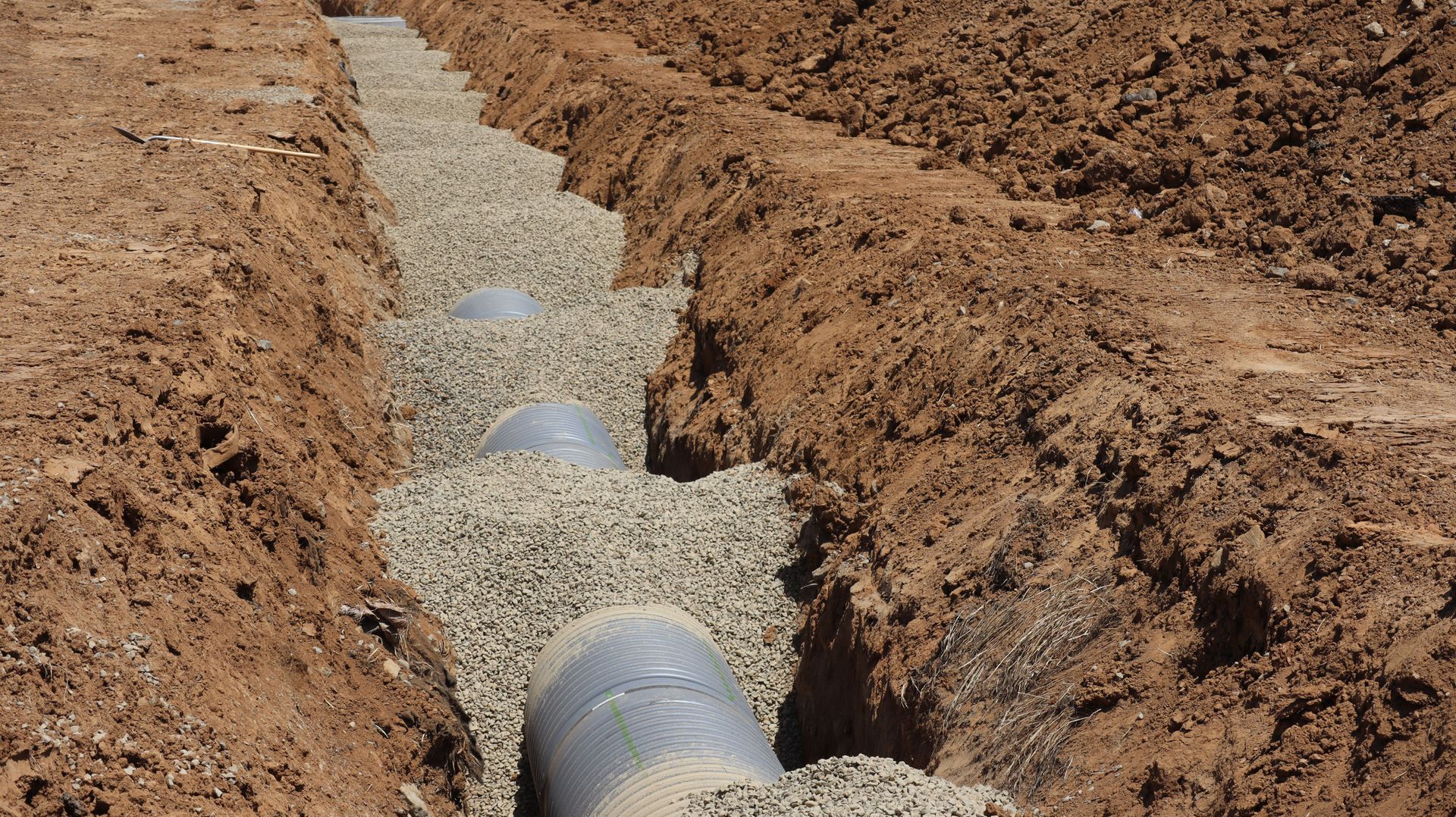
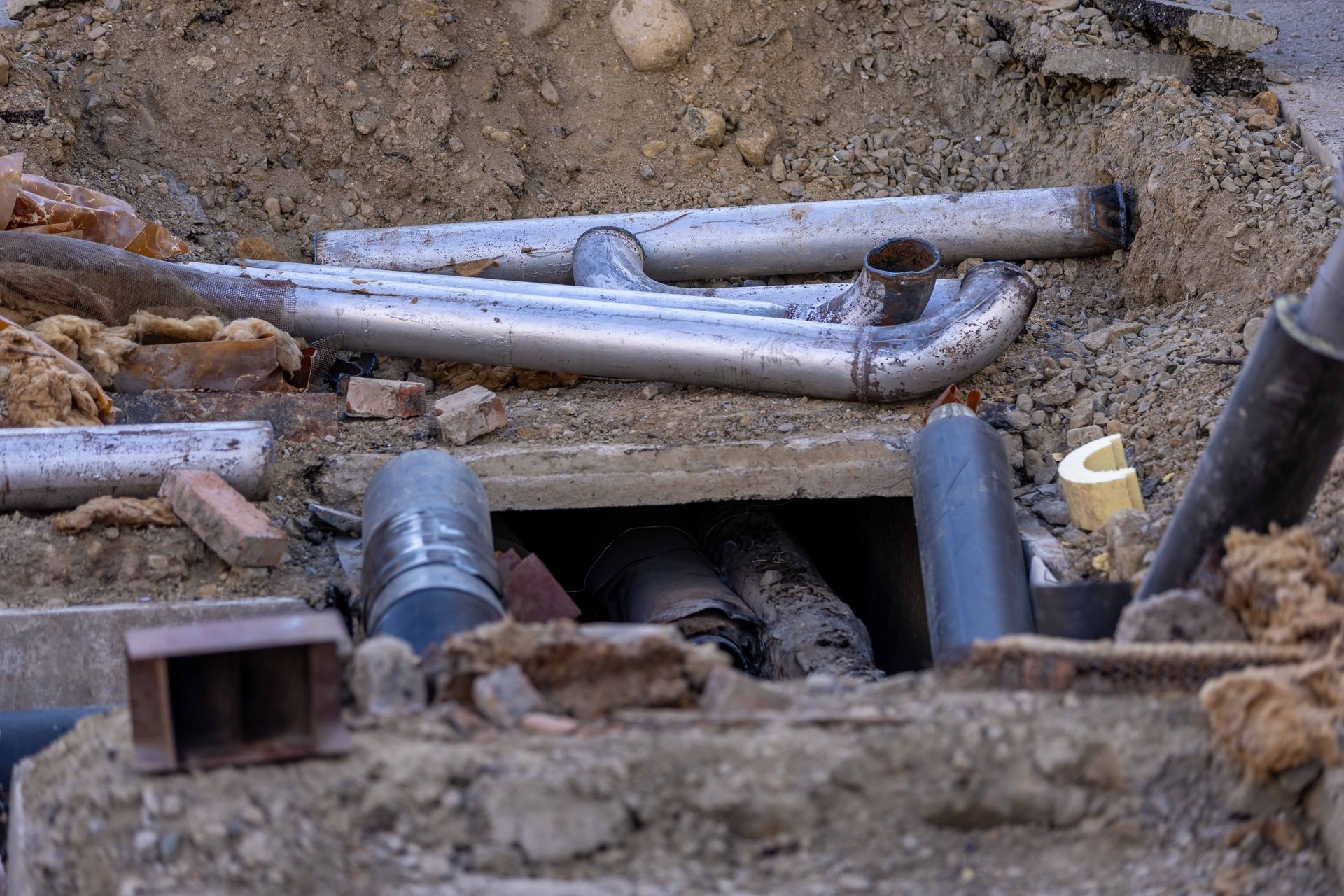
Consider a utility trench. Once the pipe is installed, the pipe itself occupies space. The contractor may also add bedding around the pipe and road base above it. There is now less room for the native soil than there was before excavation.
A basement creates an even more obvious example. A large volume of soil is removed, but the finished basement, walls, foundation, drainage stone, and backfill configuration occupy much of that space permanently.
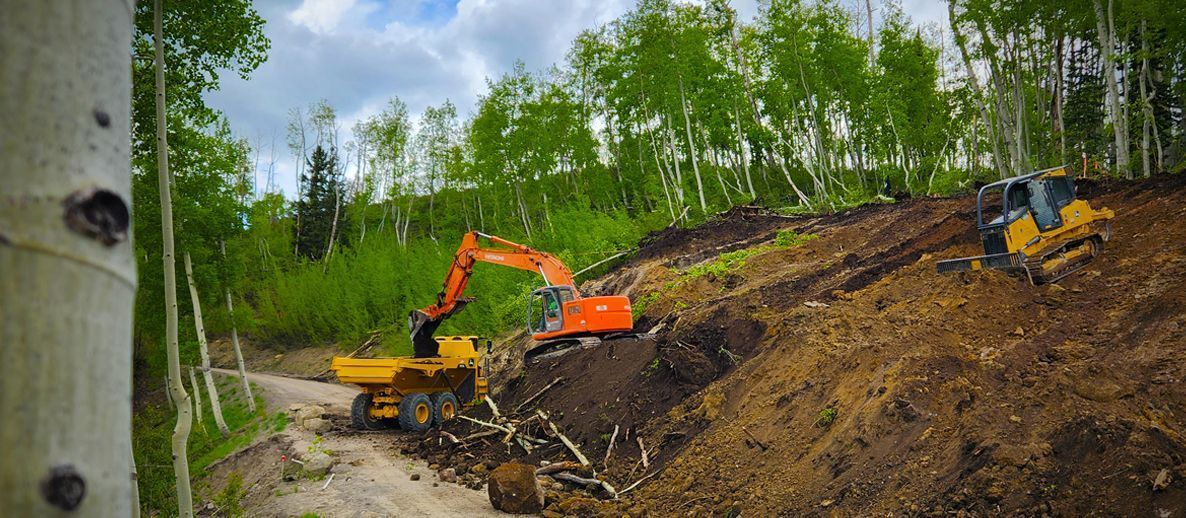
Road construction produces excess material for different reasons. A hillside may need to be cut down to establish the road elevation. Some of that soil may be useful farther down the project as fill, but if the project has more cut than fill, the excess has to go somewhere.
The same issue appears with septic installation, pond construction, retaining walls, drainage ditches, commercial pads, and foundation excavation.
Why Does the Dirt Pile Look Bigger Than the Hole?
This question appears constantly in homeowner discussions online.
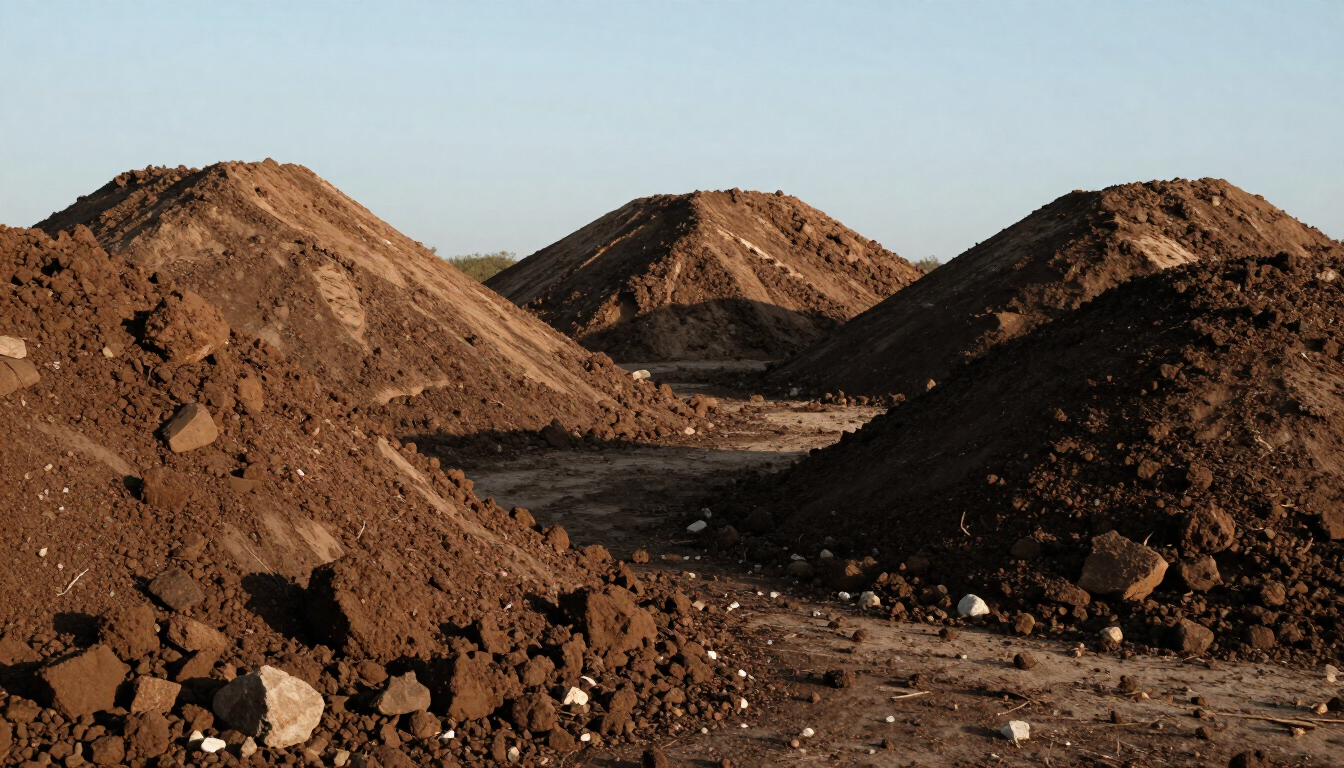
Someone digs a patio, shed base, trench, or foundation and suddenly wonders where an enormous pile of soil came from. A recent landscaping discussion involved a homeowner who could not figure out where to take the dirt generated by a relatively modest patio project.
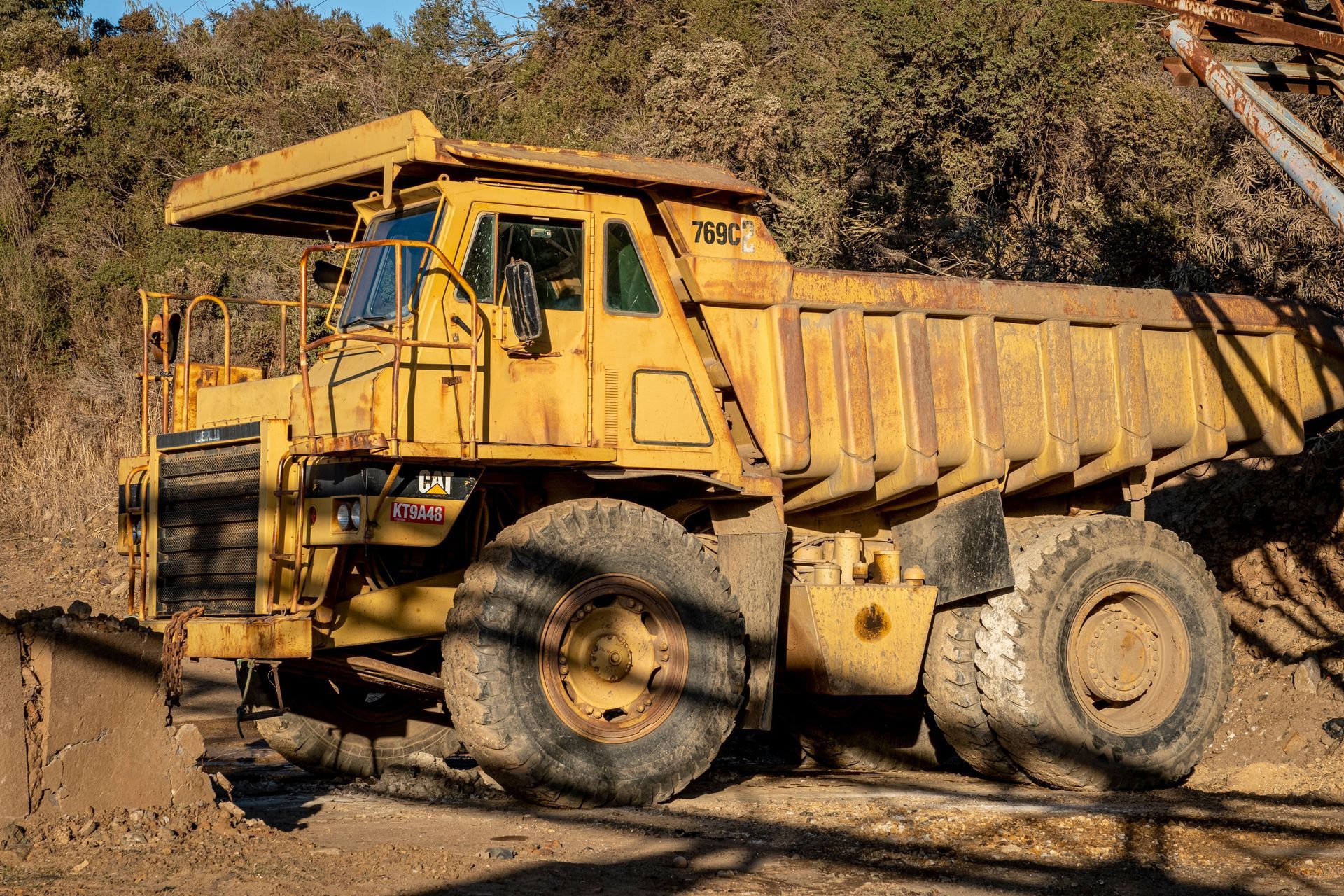
The answer is partly swell.
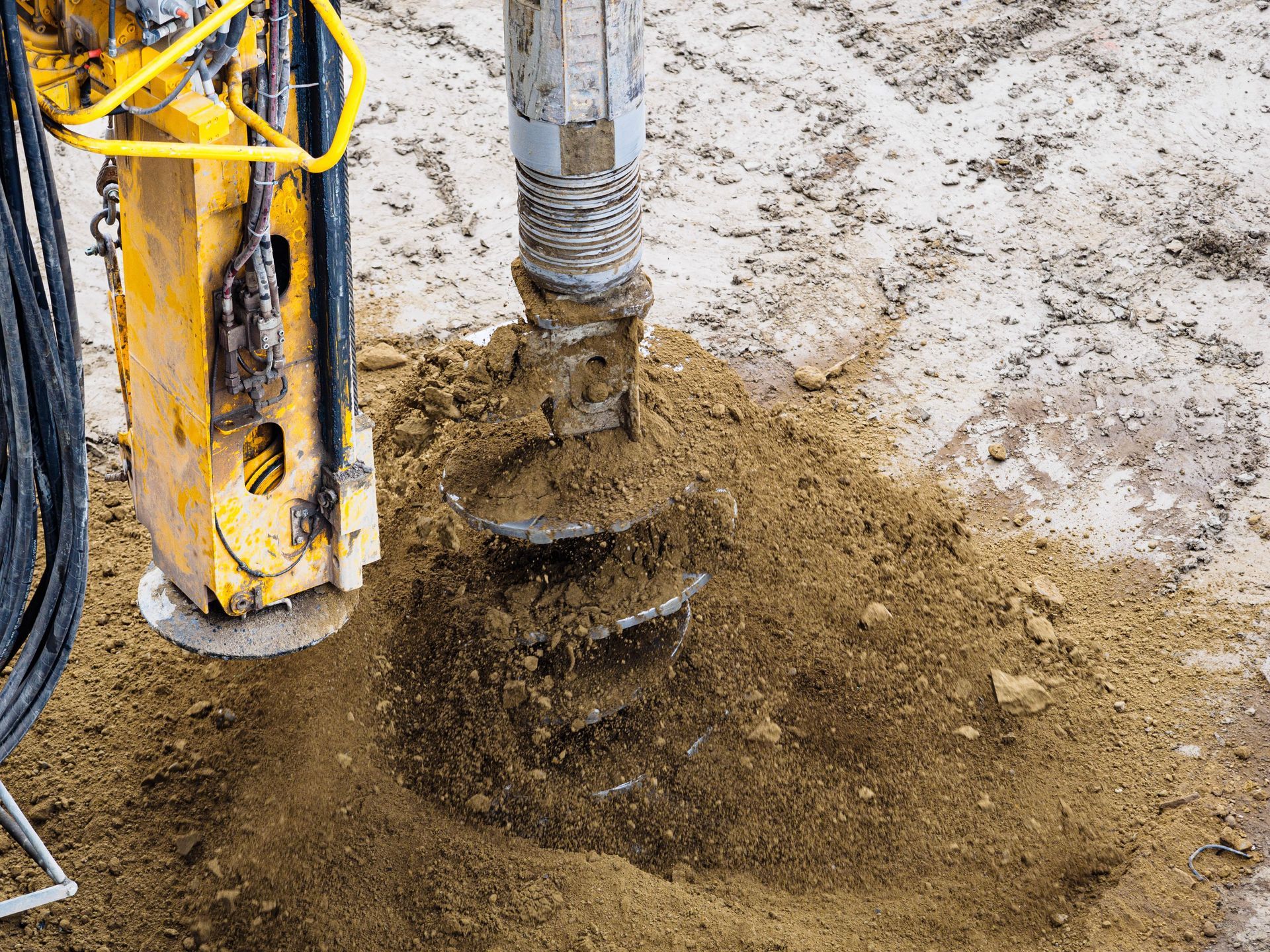
Soil in the ground has been consolidated by its own weight and natural conditions. Excavation breaks that structure apart. The loose pieces do not pack together as tightly, so the material can occupy more volume after it leaves the ground.
Civil earthwork professionals distinguish between different measurements.
Bank cubic yards describe material in its natural, undisturbed condition. Loose cubic yards describe material after excavation. Compacted cubic yards describe material after it has been placed and compacted again.
FHWA earthwork guidance specifically requires project quantities to account for shrink and swell rather than assuming soil maintains the same volume throughout excavation and placement.
That is one reason a project that looks like it should require five truckloads may actually require considerably more hauling.
Where Does Excavated Dirt Actually Go?
There is no universal “dirt dump.”
The destination should depend on what you excavated and whether somebody can legitimately use or accept it.
Reusing Soil on Your Own Property
The first option is often the most economical: do not haul the material away at all.
Suitable native material may be used to raise low areas, construct an embankment, establish finished grade, reshape a slope, backfill parts of the project, or support other approved earthwork.
This is where an experienced excavation contractor can save considerable material-handling cost. If usable soil can move directly from a cut into an area requiring fill, you avoid loading it for off-site disposal and buying another load of material later.
But keeping soil only makes sense when the property actually needs it.
Spreading excess dirt simply because hauling is expensive can change drainage, bury valuable topsoil, create awkward slopes, interfere with septic systems, or push runoff onto neighboring property.
The goal is not to keep as much dirt as possible. It is to keep the dirt that has a legitimate use.
Save Good Topsoil Whenever Practical
Topsoil deserves separate treatment.
The organic-rich soil that supports grass and vegetation can be valuable at the end of the project but undesirable beneath roads, structural pads, or foundations.
A well-planned site may strip topsoil before major excavation, place it in a separate stockpile, and reuse it during final grading and revegetation.
Mixing topsoil with clay, rock, construction debris, and ordinary excavation spoil can turn a useful resource into material that is difficult to reuse.
That separation is especially valuable on Western Colorado agricultural and rural properties where establishing vegetation after construction can be important for erosion control.
Sending Suitable Dirt to Another Project
Sometimes one job has exactly what another job needs.
A development may be cutting excess suitable soil while another property nearby requires fill for grading. Coordinating those projects can reduce disposal cost for one owner and material-purchase cost for the other.
Homeowners attempt a smaller version of this through Facebook Marketplace, Craigslist, neighborhood groups, and similar services by advertising “free fill dirt.”
Recent Reddit threads show that this is still one of the most common recommendations for small quantities of clean soil. The catch is usually transportation. Even when somebody wants the dirt, somebody still needs to load it and move it.
Before doing this, both parties should understand what is actually in the material. “Free dirt” containing roots, concrete, construction waste, asphalt, trash, or questionable material is not the same as suitable clean fill.
Approved Fill and Beneficial-Use Locations
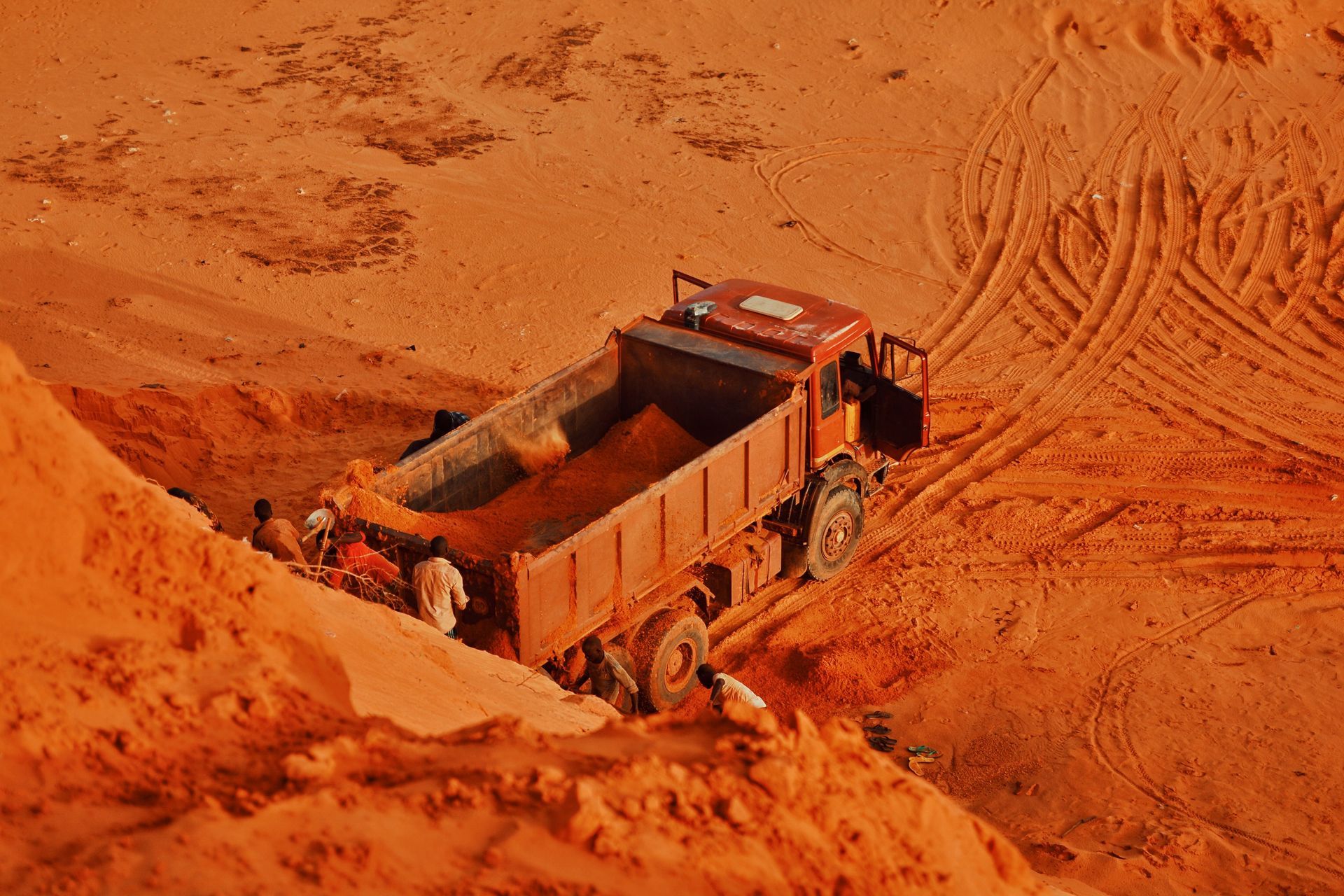
Larger quantities may be transported to a location that is accepting suitable material for legitimate grading, reclamation, construction, or another approved use.
Acceptance standards can vary.
The receiving site may want to know where the material originated, what type of soil it is, whether it contains debris, and whether there is any reason to suspect contamination.
Colorado's solid-waste regulations include formal beneficial-use provisions for qualifying materials. CDPHE maintains specific beneficial-use tables and regulatory requirements rather than treating every reused material as ordinary waste.
As the Colorado Department of Public Health and Environment explains through its current regulations, regulated sites and reuse activities remain subject to applicable state, federal, and local requirements.
That means an excavation contractor should determine where material is going before dozens of loaded trucks are waiting for a destination.
When Dirt Goes to a Disposal Facility
Not everything coming out of the ground has a useful destination.
Mixed construction material, unsuitable soil, debris-containing spoil, or material that cannot be accepted elsewhere may need to go to an appropriate waste facility.
Colorado regulates solid-waste sites and facilities jointly through CDPHE and local government.
CDPHE summarizes that relationship this way:
“Permitting of solid waste sites and facilities is a joint effort.”
Colorado Department of Public Health and Environment
That matters because an empty lot is not automatically an appropriate dirt-disposal location simply because there appears to be room.
The destination has to be appropriate for the material being hauled.
What Happens if the Soil Might Be Contaminated?
This changes the project significantly.
Suppose excavation exposes stained soil near an old fuel tank, unusual odors around a former shop, buried industrial material, or debris from an unknown historical use.
You should not assume the material can be hauled to the same place as ordinary native soil.
Environmental evaluation may be needed to determine what contaminants are present and how the soil should be handled.
Colorado's solid-waste enforcement program specifically oversees releases of non-hazardous substances in soil to ensure proper characterization, management, and disposal.
Material containing asbestos or other regulated substances introduces additional requirements.
For the property owner, the practical rule is simple: if something about the soil suggests it may not be ordinary native material, find out what it is before moving it somewhere else.
Transporting contaminated soil to another property can turn one environmental problem into two.
Why You Cannot Just Fill a Wet Area With Extra Dirt
A low spot can look like the perfect solution to an excess-soil problem.
Sometimes it is not.
That area may be carrying runoff, functioning as drainage, lying within a floodplain, containing wetlands, or qualifying as regulated state waters.
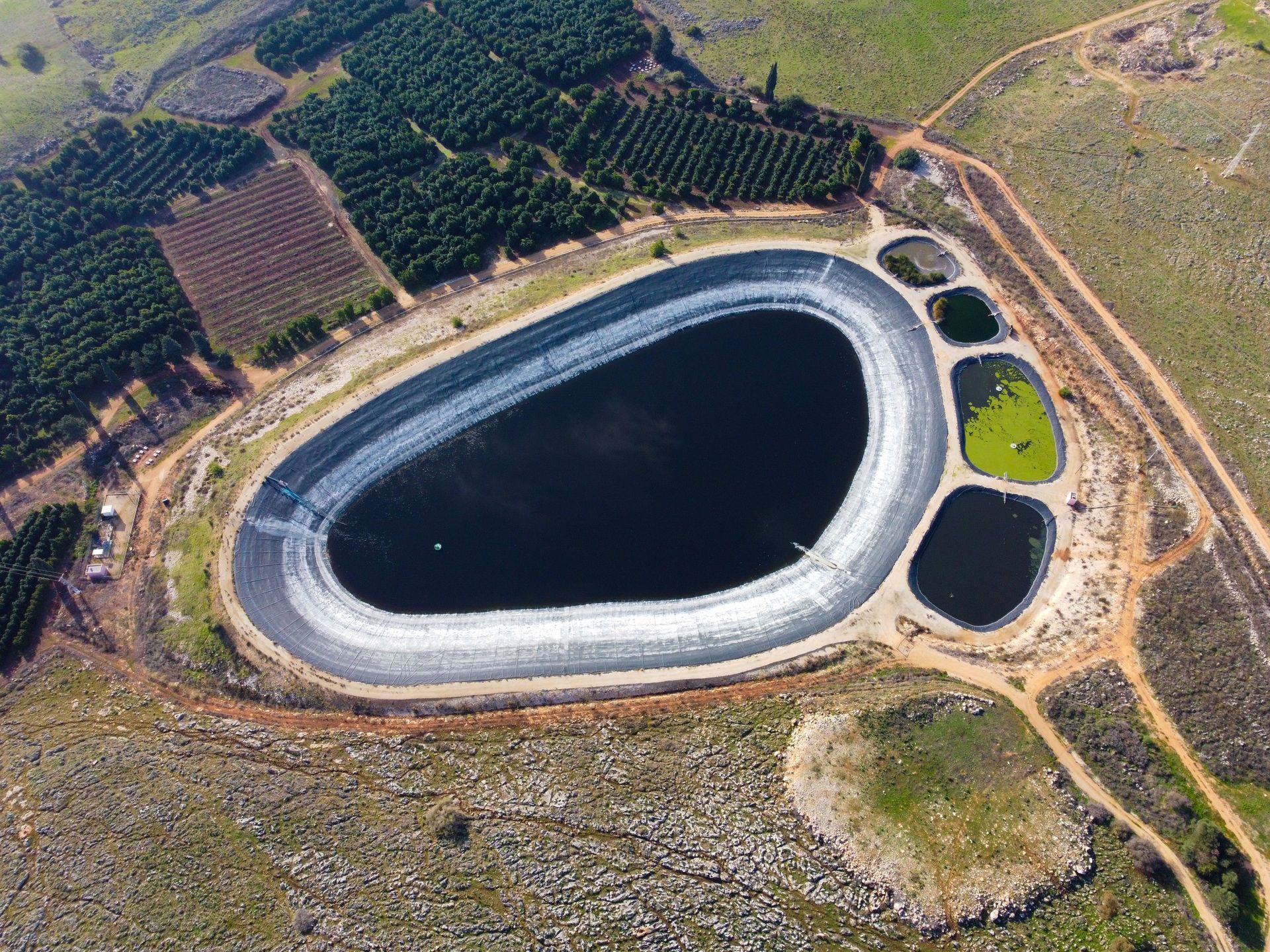
Colorado now operates a state dredge-and-fill authorization framework for certain waters that are outside federal jurisdiction. The current CDPHE dredge-and-fill program regulates qualifying discharges of dredged or fill material into state waters.
This does not mean every low point requires a permit. It means you should not decide that an area is an appropriate dirt-disposal location solely because it is lower than the surrounding land.
From a practical excavation standpoint, filling an existing drainage route can also redirect water toward roads, structures, septic systems, or neighboring property.
Dirt Removal Is Also a Safety Issue
Spoil management matters before the truck ever leaves the site.
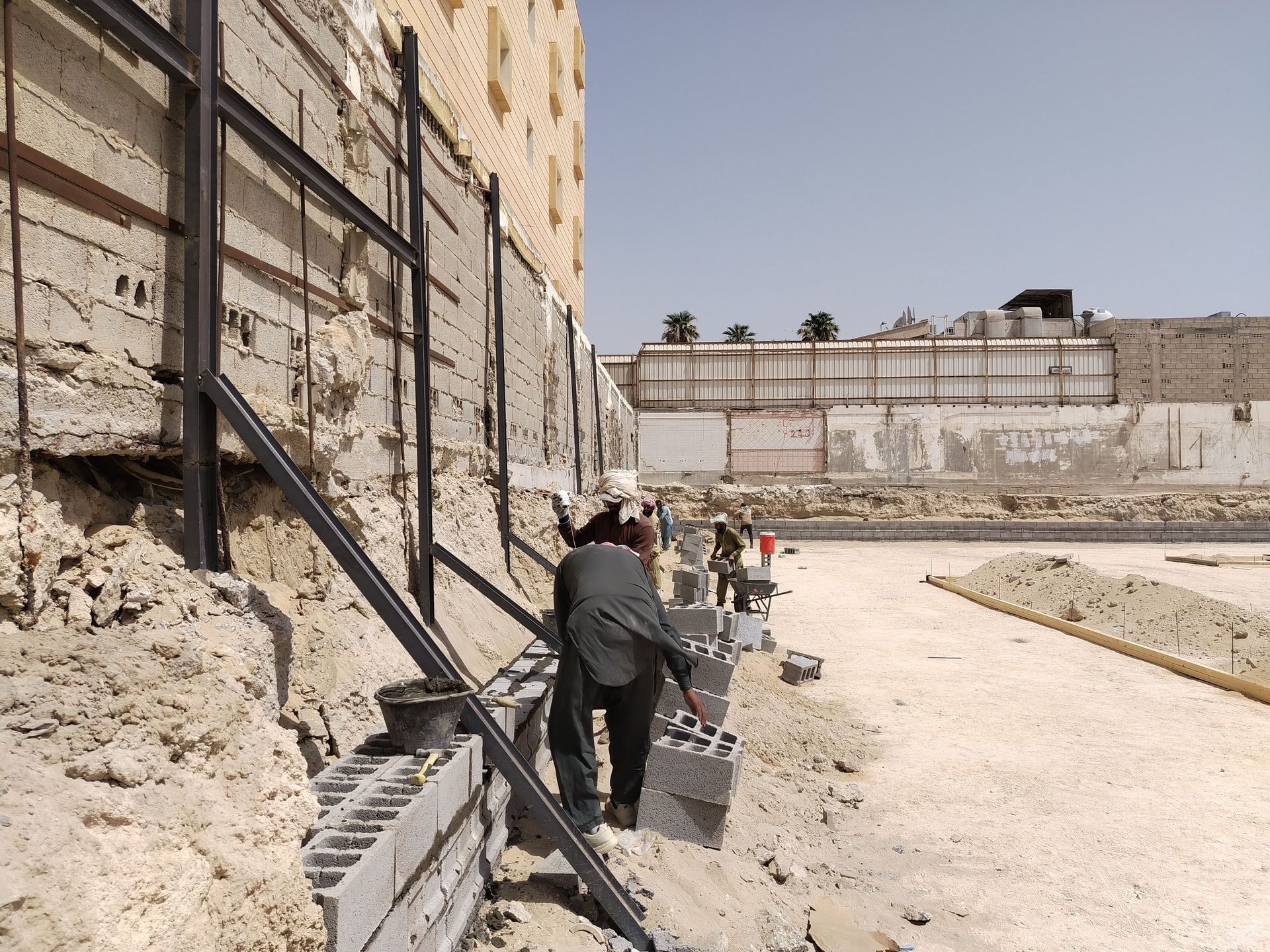
During trench excavation, the soil pile itself can create additional loading on the excavation wall and can fall or roll back onto workers.
OSHA's trenching guidance states:
“Set spoils and equipment at least two feet back from an adequately protected excavation.”
Occupational Safety and Health Administration
OSHA also notes that if the site does not provide enough space for the required setback, spoil may need to be temporarily hauled elsewhere.
That is particularly relevant on confined residential, utility, and commercial sites where there simply is not enough room for a large excavation pile beside the trench.
Why Dirt Hauling Costs More Than You Might Expect
You are not paying only for the few minutes it takes the excavator to fill a truck.
Each truck completes a cycle. It reaches the site, gets positioned, gets loaded, travels to the receiving location, unloads, returns, and gets back in line.
Haul distance can therefore change dirt-removal cost dramatically.
Imagine two projects producing roughly the same amount of spoil. One has an approved receiving location a short drive away. The other requires every truck to travel deep into another part of the county. The excavation quantity is identical, but the second project's trucks complete far fewer cycles per day.
Material also affects payload. A truck may reach its legal weight before the bed is physically full when hauling dense rock, wet clay, or saturated soil.
Site access matters too. A large excavator loading full-sized dump trucks on an open commercial site can move material much faster than a compact machine carrying soil from a backyard to trucks parked along the road.
This explains one of the most common homeowner complaints online: “Why is somebody charging so much just to take dirt away?”
The dirt itself may be free. Moving it is not.
Matching Trucks to Excavator Production
Hauling efficiency is a balancing exercise.
Too few trucks leave the excavator waiting. Too many trucks can create congestion, block access, and leave drivers sitting in line.
Able Excavation describes this production relationship particularly well:
“A construction project is only as fast as its material supply chain.”
Able Excavation Trucking & Hauling
That becomes obvious on large earthwork projects. If an excavator can load a truck faster than trucks can return from the dump location, excavation eventually stops.
Able's approach of coordinating trucking alongside excavation is useful because spoil removal, gravel delivery, structural fill, road base, topsoil, and construction water can be planned as parts of the same material flow.
Dirt Often Has to Leave Before Better Material Comes Back
Another point property owners frequently overlook is that dirt removal is often paired with material import.
For example, a road crew may remove weak native subgrade and replace it with better structural material. A utility crew may remove native soil but install pipe bedding and road base. A retaining-wall project may export native soil and import drain rock and engineered backfill.
A home and building site may remove organic or unsuitable material before bringing in structural fill.
So the real question is not simply:
“Where are you taking my dirt?”
You should also ask:
“What material needs to come back after it leaves?”
That second question can have just as much influence on your excavation budget.
How to Reduce Dirt Removal Costs
The biggest opportunity is usually planning.
Before excavation starts, estimate cut and fill quantities and identify what material can remain on the property. Preserve good topsoil. Keep reusable material separate from unsuitable material. Identify the likely spoil destination before excavation begins.
If a project has both cut and fill, moving acceptable soil directly from one area to another can eliminate unnecessary truck trips.
You should also avoid hauling material off-site too quickly. If the project will need suitable backfill later, exporting it on Monday and purchasing replacement soil on Friday is an expensive mistake.
At the same time, do not keep unsuitable material simply because removal costs money. Weak, organic, contaminated, or poorly performing soil beneath a road or structure can create far more expensive problems later.
Dirt Removal for Roads and Driveways
On road and subdivision projects, earthwork quantities can become substantial.
A road crossing a hillside may generate cut material from one section and require fill in another. Ditch excavation and culvert installation create additional spoil.
If existing subgrade is weak, the contractor may remove it and import road base or structural material.
Rock can change the plan again. Some excavated rock may be usable for erosion control or other purposes, while other material may require crushing, processing, or removal.
The most efficient road project therefore treats excavation, grading, hauling, drainage, and material delivery as one coordinated process.
What Should You Ask Before the Trucks Start Moving?
Before dirt removal begins, you should know approximately how much material will leave, how the contractor estimated the quantity, what can remain, and where the exported soil is expected to go.
Ask whether disposal or acceptance charges are included in the estimate. Find out what happens if the destination rejects the material. Ask whether rock, wet soil, or contaminated material will be handled at a different rate.
You should also understand whether the project needs imported fill afterward and whether that delivery is included in the scope.
Those questions will tell you far more than asking only for a price “per truckload.”
Final Takeaway
Dirt removal is not really about getting rid of dirt. It is about putting the right earth material in the right place.
A properly planned excavation determines what soil should stay, what should be saved, what can be reused, what needs to leave, where it can appropriately go, and what material needs to return to the project.
That planning directly affects your project cost.
Every unnecessary truck trip costs money. Every load of good topsoil thrown away may need to be replaced. Every cubic yard of unsuitable material kept beneath a road or building can create future problems. Every poorly selected disposal location can create drainage, environmental, or regulatory issues.
For Western Colorado projects, the logistics become even more important because haul distances, mountain roads, rural access, soil conditions, rock, and seasonal moisture can all affect production.
The most efficient approach is to treat excavation and hauling as one material-management process. When the contractor understands the site from the first cut through final grading, you are far less likely to end up staring at an enormous dirt pile and asking the question homeowners ask online every week: Where are we supposed to put all of this?
Share this article
Recent Posts