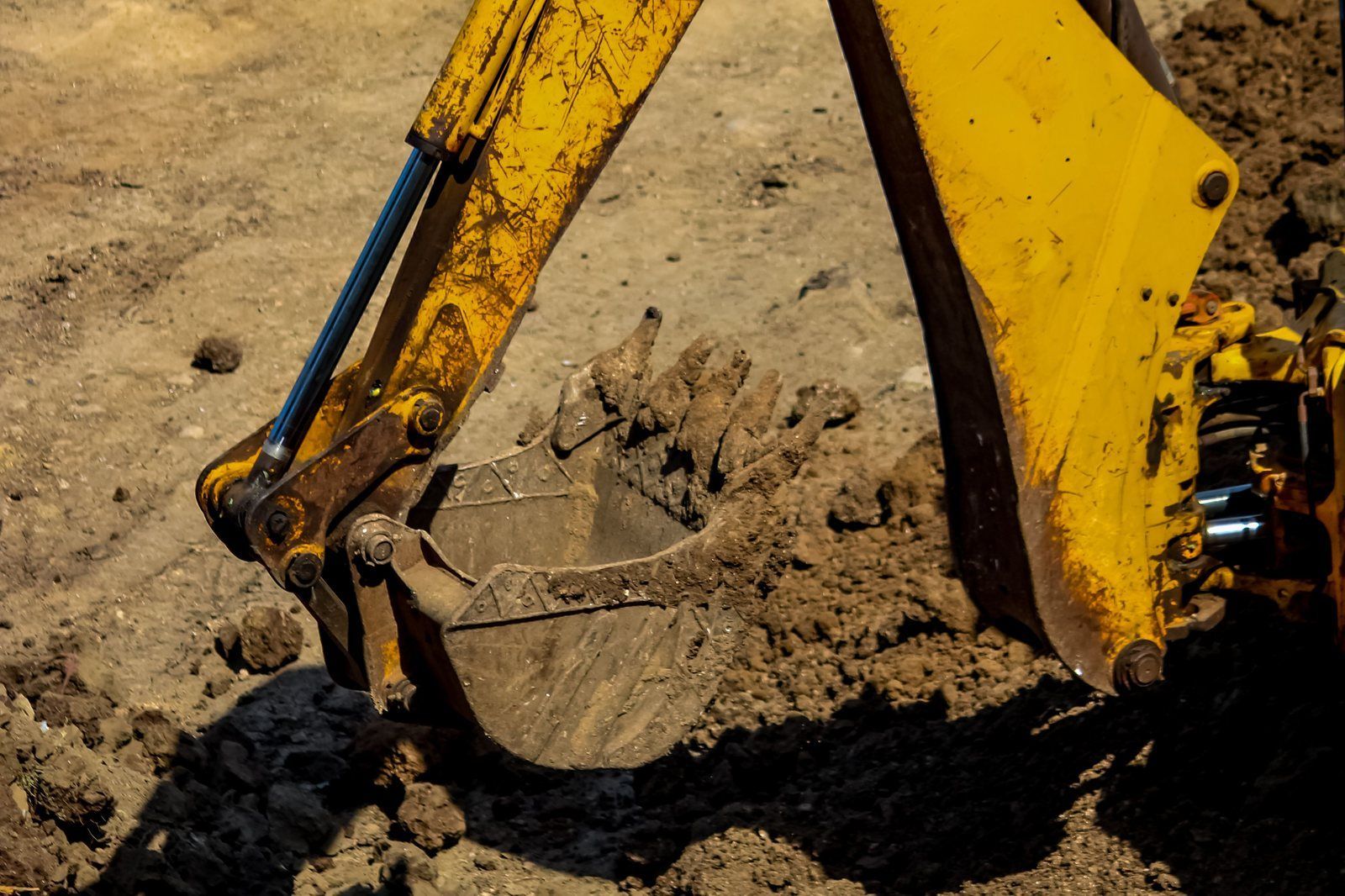

Leach Field Replacement in Western Colorado: Repair or Replace?
It is a cold November morning, and you are standing at the far edge of the yard where a short white PVC riser pokes up out of the dead grass. You twist the cap off, shine a flashlight down the pipe, and the beam lands on liquid. Not a damp film. Standing liquid, sitting in a pipe you expected to be dry or close to it.
That pipe is there for exactly this moment. Liquid standing in it is the field talking, and it can be an early sign that you may be looking at a leach field replacement rather than a quick fix.
You just went from "the yard seems fine" to "I have a project" in about ten seconds.
The important questions are usually not "how much will this cost" or "how fast can someone get a machine here." They are: is this a repair or a replacement, what does the county require before anyone touches a shovel, and what evidence should that call rest on? Below is how to work through all three, followed by the replacement job itself, stage by stage, so you can read a bid with your eyes open.
A quick note on words. "Leach field," "drain field," and "soil treatment area" all describe the same thing: the part of your septic system where liquid leaving the tank soaks into the soil and gets treated there.
What You Are Looking At When a Leach Field Fails
A septic system does two jobs in two places. The tank holds solids and lets them settle. The drain field takes the liquid that leaves the tank and lets it soak into the soil, where the soil finishes the treatment. When someone says "my septic is failing," they are often describing a problem out in the field, not in the tank.
The EPA's page on
resolving septic system malfunctions lists the classic signs: standing water or damp spots near or over the tank or drainfield, sewage odors, and bright green, spongy grass over the system even in dry weather. Backups into the house belong on the list too. The riser from the opening scene is the quieter check. Some systems have observation or inspection risers out at the field. If yours does, liquid standing in one or more of them is something you can look at without digging. If you are not sure which pipe is which, the installer's records or the county's permit file for your system can usually tell you.
One point from that EPA page matters more than the rest for the decision ahead. Most septic systems malfunction because of inappropriate design or poor maintenance. That covers sites with inadequate soils, excessive slopes, or high groundwater, and it covers solids drifting out of an unpumped tank into the field and clogging it. A field killed by skipped pumping and a field killed by the wrong soil are two different conversations. The first sometimes has options. The second usually needs a design change.
Able's post on signs your septic system has issues covers the broader warning signs, so this post keeps that part short and moves to the decision.
Repair or Replace: The Decision Stage
Two questions drive this stage: what is the evidence telling you, and what will the county allow on this lot?
What the Evidence Shows, and What It Usually Points To
Treat the table below as a field guide, not a diagnosis. These patterns show up often enough to be worth knowing before you call anyone. Only an on-site evaluation can confirm what is going on under your yard.
| What the evidence shows | What it usually points to | Usual next step |
|---|---|---|
| Liquid in one field riser, others dry, and drains inside still working | A single blocked or crushed line, a distribution box problem, or roots in a line | Open the distribution box and check the lines; a targeted leach field repair if the rest of the field checks out |
| Effluent surfacing across the whole field, sewage odor outdoors, lush grass over the field in dry weather | A saturated, worn-out soil treatment area | Soil and site testing, then a replacement design and county permit |
| Field works in late summer but struggles in wet spring or during irrigation season | Seasonal high groundwater or tight, saturated soil | Site evaluation; the design may move toward a mound or pressure-dosed field |
| Trouble started after a vehicle or equipment crossed the field | Compacted soil or a crushed line | Repair the damaged section, then keep traffic off the field |
| Tank not pumped in years and solids found in the field lines | Solids carried out of the tank into the field | Full diagnosis first; the field may or may not recover, and the maintenance cause needs fixing either way |
The last row deserves a second look. Because poor maintenance is a common cause of field trouble, a question about pumping history belongs in every diagnosis. If nobody asks when the tank was last pumped, ask why not.
When a Leach Field Repair Makes Sense
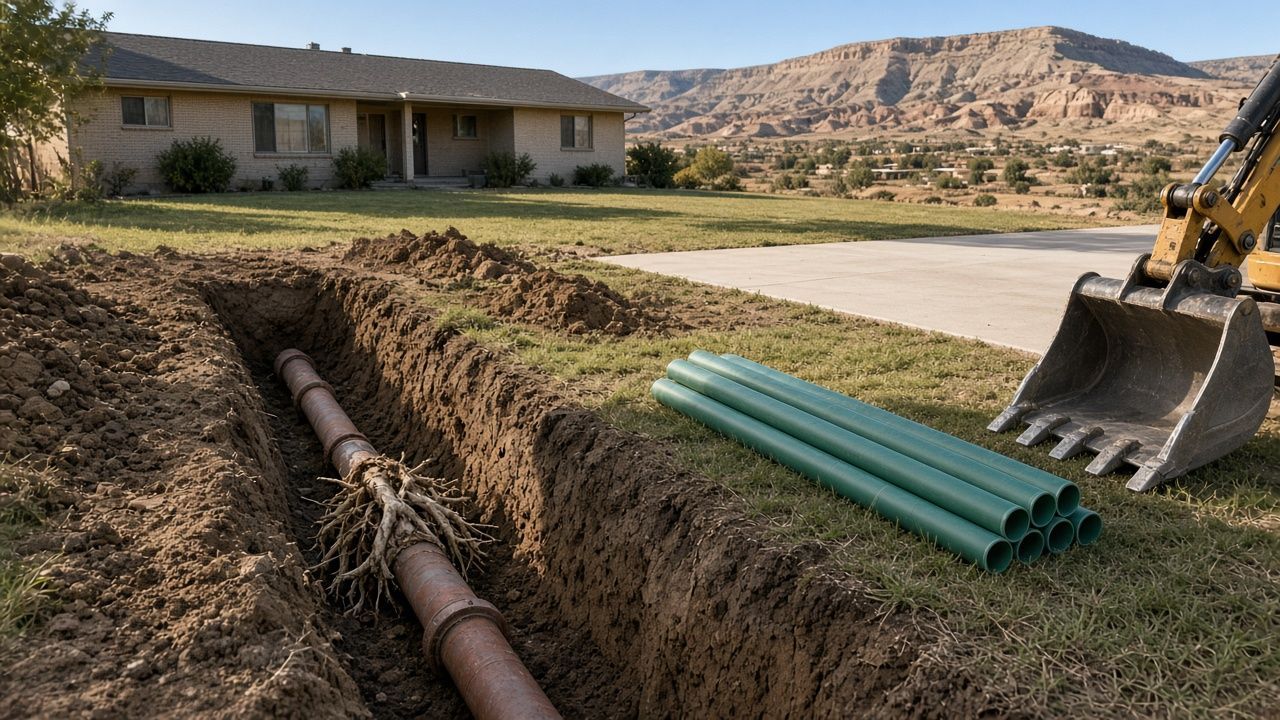
A leach field repair is worth chasing when the problem is isolated. One crushed line. A distribution box that has shifted or filled with solids. A line plugged with roots. In those cases the field as a whole may still have life in it, and fixing the failed piece can bring the system back.
Repair also gets a fair look when the field is fairly young and the soil around it still accepts water. A newer field with one damaged line is a different animal than an old field that is wet from end to end.
Sometimes repair is the only practical path, because the lot cannot fit a new field that meets the required setbacks. More on that in Stage 3, because it is a real constraint on smaller and older parcels.
One thing that surprises owners: in Montrose County, a repair needs a permit too. The county's onsite wastewater treatment system regulations require a permit before anyone installs, alters, expands, or repairs a system, and repair permits set a period of time by which the repairs must be made.
When Replacement Is the Realistic Answer
Leach field replacement is usually the realistic call when the field has reached the end of its life, when the soil is saturated across the whole area, or when the original design never suited the site. It is also on the table when a repair has been tried and the same symptoms come back. A repeat after a repair can be a sign that the soil, not a pipe, is the problem.
Replacement needs room. A new field, sometimes in a different spot on the property, has to fit the lot and meet the county's setbacks. If you have acreage, that flexibility shapes the design in ways a small in-town lot does not allow.
System type is the next fork. Where soil, depth, and slope cooperate, a conventional gravity field is the straightforward path. Where shallow soil, slow-draining soil, or high groundwater rule that out, an engineer-designed system takes over, such as a mound system or a pressure-dosed leach field. Able's guide to septic installation in Western Colorado goes deeper on those options and how an install unfolds.
Why the Same Symptom Gets Different Answers on Different Lots
That soil variety is why nobody careful diagnoses a field over the phone. The ground out here is not one soil story. Some lots in the valleys and up on the mesas sit on clay that swells and seals. Some sit on shallow soil over rock. Some carry slopes that complicate how effluent moves. Some see groundwater rise when nearby ditches run and fields get irrigated. And in winter, frozen ground changes what excavation looks like at all.
The practical result: two houses a few miles apart can show the same symptom and get opposite answers. One needs a leach field repair. The other needs a full replacement with a different kind of system. That is why the evidence comes before any price talk.
The Leach Field Replacement Job, Stage by Stage
If you have decided on replacement, or you are close, here is the sequence a complete job follows. Knowing it is how you compare bids, because the cheapest number on the table often leaves out a stage.
Stage 1: Gather the Evidence Before Anyone Digs
Start with what you already have. Write down which risers hold liquid, when backups happen, and how long this has been going on. Then pull the paper: the permit and as-built records from the county if they exist, the tank pumping history, and the age of the system. A file already sitting at the county office can make the next decisions a lot easier.
Then the locate. Colorado 811 says you are legally required to contact it at least three business days before you dig, whatever the size of the project. Here is the part septic owners tend to miss: 811 marks public utility lines, and privately owned lines are not included. Your septic lines, a water line from a private well, or power run out to a shop can all sit right where a replacement field gets dug, with no paint on the ground to warn anyone. That is a big reason this is not a weekend dig, and why the person excavating should file the locate and plan separately for private lines.
Stage 2: Diagnosis and Site Evaluation
A real diagnosis is hands-on. It usually means opening the tank and the distribution box, checking liquid levels across the field lines, digging or probing in the field, and reading the records from Stage 1. Even levels across every line tell one story. High levels in some lines and normal levels in others tell a different one.
If replacement is likely, soil testing comes next. Angi's cost guide lists perc testing as a step before replacing a leach field. In Colorado, the designer and the county permit process decide what testing your site actually needs. The soil questions from the decision stage come back hard here: clay, shallow soil, slope, and groundwater all change which designs are even possible.
Stage 3: The County Permit
In Colorado, septic systems are governed by Regulation 43. According to
CDPHE, systems of 2,000 gallons per day or less are permitted by local counties, and each local agency's rules must be at least as stringent as Regulation 43.
Montrose County spells out the order. A permit from Montrose County Planning and Development comes before installing, altering, expanding, or repairing a system. No work starts until the Health Officer has reviewed the application, issued the permit, and approved the start. And the county will not approve a permit to construct, repair, or replace a system unless the required setbacks can be met.
In plain terms, if your lot cannot fit a new field that keeps the required distances from things like wells and property lines, the design has to change: a different spot on the property, or a different kind of system. Or the repair path gets a second, serious look, because a repair that fits can beat a replacement that does not.
Outside Montrose County, your own county's environmental health or planning office runs the septic permit, and the details can differ.
Stage 4: Design and System Selection
The system type usually comes out of the decision stage: a conventional gravity field, a mound, or a pressure-dosed field. Here, with test results and lot limits in hand, that choice becomes a layout and set of elevations the county can review. On a replacement, this is also where you find out whether the new field goes where the old one was or somewhere else on the property. If someone quotes you a firm drain field replacement price before this stage is settled, ask what it assumes.
The design has to satisfy the county before the permit issues, so this stage and Stage 3 run together. Design, permit, and setbacks end up as one conversation with the county, not three.
Stage 5: Excavation and Installation
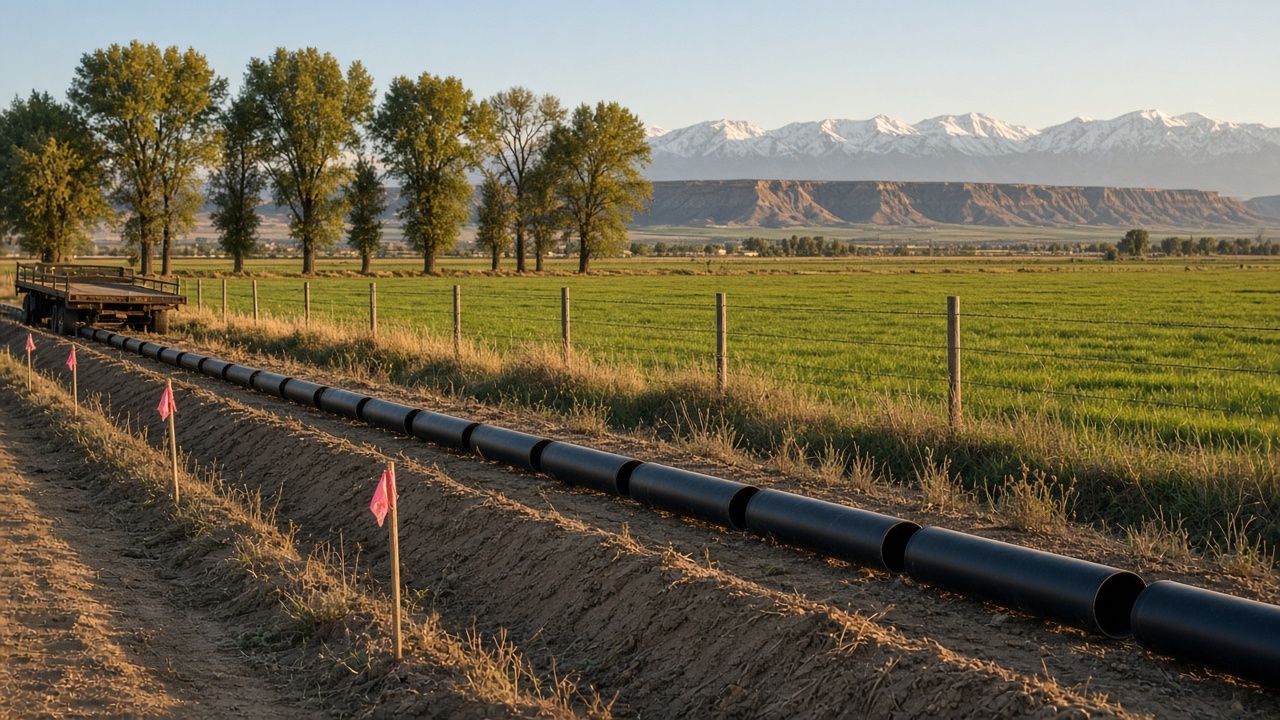
This is the part you watch from the kitchen window. The crew finds the old field, digs the new trenches or the mound footprint, sets the distribution box and field lines to the approved elevations, and ties everything back to the tank. Because a replacement field usually connects to the existing tank, the tank's condition should be checked as part of the job rather than assumed.
Sequencing matters more than most owners expect. The house is usually lived in during the work, so the dig should be planned to keep the system out of service for as short a window as the job allows. Ask about that up front. Weather here shapes the calendar too: clay that bakes hard in one season and turns to soup in another, irrigation water running beside the work area, and frozen ground in winter.
Stage 6: Backfill, Grading, and Protecting the New Field
The job is not done when the pipe is in the ground. How the field is backfilled and graded affects how it performs for years. Ask how the crew will keep heavy equipment off the finished field and how the surface will be shaped so rain and snowmelt do not pond on top of it.
Then protect what you just paid for. The EPA's guide to caring for your septic system keeps it simple: do not park or drive on the drainfield, keep roof drains, sump pumps, and other rainwater drainage away from it, and plant trees far enough away that roots stay out of the lines. Then set a pumping schedule so solids never reach the new field. If skipped maintenance helped wear out the old one, this is where that loop closes.
Safety While the Field Is Open
A few general points for anyone at home while the work is underway.
OSHA's trenching and excavation guidance calls trench collapses, or cave-ins, the greatest risk to workers' lives. Crews prevent them by sloping or benching trench walls, shoring them, or shielding them with trench boxes. Materials and spoil piles stay back from the edge, and nobody enters a trench that has not been properly inspected. That includes curious owners.
The second concern is sewage. An open tank or a trench with effluent in it is no place for bare hands. If wastewater backs up into the house, the EPA advises avoiding contact and calling your local health department for guidance. Keep kids and pets well away from the open excavation. And that riser from the opening scene: put the cap back on snug when you are done looking.
What Leach Field Repair and Replacement Cost Nationally
Every number in this section is a national estimate, not Able pricing. The figures come from
Angi's 2026 guide to septic tank and drain field replacement cost (updated October 2026).
- Replacing just the drain field: around $7,000.
- Drain field repairs: $2,000 to $15,000, depending on where the problem is and how easy it is to reach.
- Mound drain field: about $12,000 on average.
- Perc testing before replacing a leach field: around $1,300 on average.
The ranges are wide for good reasons. A repair can mean one line or a rebuilt distribution setup. A replacement moves with field size, system type, site access, and the distance to a rural property. The number that matters for your lot comes from a site-specific quote. If the tank is part of the question, Able's post on septic tank replacement cost in Western Colorado has the details.
How to Compare Bids for Leach Field Repair or Replacement
Septic field bids are rarely apples to apples. Before you compare totals, ask every bidder the same questions:
- Diagnosis: Has the cause of the failure been identified, or does the bid just say "replace field"?
- Permit: Who applies for the county septic permit and handles the county's approvals, and is that work in the price?
- Soil and site testing: Included, or a separate line?
- Design: Who prepares the design, and who handles it if the county requires an engineered mound or pressure-dosed field?
- Colorado 811 and private lines: Who files the locate, and how will unmarked private lines be found?
- The old field: What happens to it, and does the bid account for whatever the county requires?
- The tank: Is the existing tank being checked, and what happens if it has problems too?
- Backfill and grading: Included, or left to you?
- Restoration: Who reseeds or repairs track marks across the yard or pasture?
- Care afterward: Does the crew walk you through traffic, trees, roof water, and a pumping schedule for the new field?
A bid that answers those in writing is a bid you can actually compare against another one.
If you are weighing Able among your bidders: Able Excavation is based in Montrose and comes from four generations of people who have worked the land, with more than 25 years of excavation experience. Justin holds national septic installer certification from NAWT, and the company is fully insured and bondable. Able's septic work includes failing-system diagnosis, tank replacement, leach field repair, and system upgrades to meet current county health department standards. If a field looks past repair, Able can assess the site and tell you whether replacement is likely needed and what the county process would involve.
If the flashlight in that riser found liquid where there should not be any, the next step is a diagnosis before a decision. Call (970) 596-9687 or
request a quote, and start with the evidence.
Share this article
Recent Posts