How Deep to Bury a Water Line in Western Colorado: Who Decides

Admin • October 29, 2026

A string line is pulled tight across the open trench, staked on both banks. Somebody has hooked a tape measure over it and let the blade drop toward the bottom, and now they are leaning out, squinting at the number where the tape meets the dirt. Everyone standing around the trench wants to know the same thing: is that deep enough?

That squint is the last step of a decision that should have been made weeks earlier. When you ask how deep to bury a water line, you probably want one number you can write on a napkin. In Western Colorado there is not one. The depth is set locally, by the building department with jurisdiction over your address and by the water provider that will serve, and sometimes own, the line.

The important questions are usually not "what is the frost line in Colorado" or "what is the standard depth." They are: who will serve this line, who will own it, and whose rule applies at this address. Get those answers and the number follows.

How Deep to Bury a Water Line: Start With a Phone Call, Not a Number

Nobody digging carefully in Western Colorado pulls a water line depth off the internet. They ask two parties: the water provider (a city, a water district, or a smaller system) and the building department that covers the property.

Ownership changes the answer more than most people expect. Some providers own the line out to the meter, and their construction standards govern how that part gets built. Past that point, the service line is often yours, and the building code your jurisdiction has adopted applies. The same address can get one answer for the provider's side and another for yours.

Cover, Trench Depth and Frost Line Are Three Different Numbers

  • Cover is the distance from finished grade down to the top of the pipe. Most provider standards are written in cover.
  • Trench depth is the distance from grade to the trench bottom. It is deeper than cover, because the pipe itself and the bedding under it sit below the cover line.
  • Frost line is the depth a jurisdiction uses for design, based on how deep the ground is expected to freeze. In the model code it is an input, not the pipe depth itself.

The tape hanging off that string line reads trench depth. The provider's spec and the inspector read cover. Measure the right thing, from finished grade.

Able's post on frozen water and sewer lines makes the same point from the repair side: how deep the ground freezes changes with snow cover, soil and moisture, so there is no honest single frost-depth number for a yard.

What Official Sources Actually Say

The numbers below are examples, each tied to the document and jurisdiction that states it. None of them is a rule for your property unless your provider or building department says it applies.

The model code. Section P2603.5 of the 2021 International Residential Code, Chapter 26 requires protection from freezing for water, soil and waste pipe in places with a winter design temperature of 32 degrees F or lower. It says water service pipe "shall be installed not less than 12 inches (305 mm) deep and not less than 6 inches (152 mm) below the frost line." The frost line is the local variable, so the code points you back to your jurisdiction.

Montrose County. The county's 2026 frame construction handout lists a frost depth of 26 inches for footer and stem wall design, and 18 inches for monolithic foundations on detached accessory structures. Those are foundation numbers. They do not tell you how deep a water line goes.

City of Montrose. The general notes for multi-purpose easements in the City's Regulations Manual, Chapter 9-4 say water, sanitary sewer and storm sewer lines shall have 48 inches of minimum cover unless the City Engineer approves otherwise. The posted manual is dated 2012, so confirm the current standard with the City.

Tri-County Water Conservancy District. The district's construction specifications cover water lines the district will own and operate. They call for 48 inches of cover over the pipe in Delta County, 54 inches in Montrose County and 60 inches in Ouray County. The same handbook requires marking tape 18 to 24 inches below finished grade, blue tracer wire on top of the pipe, at least 6 inches of approved bedding, and bedding brought to at least 12 inches above the pipe before mechanical backfill. Work that misses the standards is not accepted.

Ute Water Conservancy District, Grand Junction area. Section 02667 of Ute Water's standard specifications says waterlines are generally installed at a depth of bury of 54 inches, measured from top of pipe to finish grade, unless specifically approved by the Engineer.

Look at the Tri-County numbers again: one district, three counties, three cover requirements. The depth follows the jurisdiction and the provider, not a statewide rule of thumb.

Source Jurisdiction or area What it covers Number it states Read it as
2021 International Residential Code, Section P2603.5 Model code (applies only where adopted) Freeze protection for water service pipe Not less than 12 inches deep and not less than 6 inches below the frost line A rule relative to the local frost line; the jurisdiction sets the frost line
Montrose County 2026 frame construction handout Montrose County Frost depth for foundation design 26 inches for footer and stem wall; 18 inches monolithic for detached accessory structures A foundation number; not a water line burial depth
City of Montrose Regulations Manual, Chapter 9-4 (dated 2012) City of Montrose Cover for water, sanitary sewer and storm sewer lines in multi-purpose easements 48 inches minimum cover unless otherwise approved by the City Engineer An in-city example; confirm the current standard with the City
Tri-County Water Conservancy District construction specifications Delta, Montrose and Ouray counties (lines the district will own and operate) Cover over the pipe 48 inches in Delta County; 54 inches in Montrose County; 60 inches in Ouray County One provider with three county-specific numbers
Ute Water Conservancy District standard specifications, Section 02667 Grand Junction area (Ute Water system) Depth of bury for waterlines Generally 54 inches, top of pipe to finish grade, unless specifically approved by the Engineer A provider example; confirm with the provider for your tap

Stage 1: Find Out Who Serves the Water

Name the provider first: city water, a water conservancy district, a smaller water company, or a private well. Your water bill or closing paperwork usually answers it.

Then ask where the provider's responsibility ends. On the provider's side, its construction specifications decide the trench, because the provider has to accept the line. On your side, the building department's adopted code decides it. On a well, the line is yours from the start, and the building department is your call.

Stage 2: Ask the Building Department

Call the building department that covers the address, county or city depending on where the lot sits. Ask what code they enforce and what applies to a water service line installation at that address.

When the provider and the building department each give you a number, plan to meet the deeper requirement and get both in writing. Do not lean on a neighbor's depth, a rule of thumb from another county, or the footing table in a foundation handout.

Stage 3: Plan the Trench Before the Machine Shows Up

Once you know the required cover, the trench design follows: cover, plus the pipe, plus bedding, plus whatever the provider's spec adds.

Bedding is the material under and around the pipe so it rests on something uniform instead of rock or clods. Tracer wire lets the line be located later. Marking tape is the warning layer for the next person who digs. A trench can hit the right depth and still fail acceptance if those pieces are wrong.

Ground changes the dig, too. Cobble or rock changes how the trench is opened and how bedding is placed. If you are weighing fused polyethylene pipe for the run, Able's HDPE pipe fusion guide covers that side.

Stage 4: Locates, Then the Dig

Colorado 811 says you are legally required to contact it at least three business days before you dig. The request is free, and it marks public underground utilities. Privately owned lines are not included, so a well line, an irrigation line or power run out to a shop needs to be found separately.

Then the sequence: locates first, trench opened to the plan, cover checked with a tape rather than a guess.

Water line trenching at these depths is real excavation. OSHA's trenching and excavation guidance says cave-ins pose the greatest risk to workers in trenches, and it lists the ways to prevent them: slope or bench the walls, shore them, or shield the work with a trench box, along with a safe way in and out. Stay out of an unprotected trench, and keep kids, pets and vehicles back from the edges.

From there, a typical water service line installation runs: bedding, pipe laid and connected, tracer wire and tape where the spec calls for them, and a pressure test. Able's utility work includes new water service lines from main to meter and pressure testing.

Stage 5: Backfill and Grade

Backfill in lifts where the spec or the site calls for it, and compact as you go. Keep rocks and frozen chunks away from the pipe. Shape the finished grade so water does not collect over the trench line, because a trench that settles and holds water becomes its own problem later.

What a Bid Should Spell Out

If you are comparing bids for water line installation, look for:

  • Where the depth requirement came from (provider, building department or both) and the cover the bid digs to
  • Cover and trench depth stated separately, so bids compare evenly
  • Bedding material, tracer wire and marking tape if the spec requires them
  • Backfill method and compaction
  • Whether pressure testing is included
  • How rock or difficult ground is handled if the trench hits it
  • Restoration of lawn, driveway or pavement
  • What is excluded, such as permits and provider fees

A bid that only says "trench and lay pipe" is where change orders come from.

If your line is already failing and the question is replacement rather than a new run, Able's guide to water line replacement in Western Colorado walks through that job.

Get Your Number First

There is no single depth for a water line in Western Colorado. Your provider and your building department set it, and it belongs in writing before anyone stretches a string across a trench. Once you have that number, and you want a crew to dig to it, request a quote or call (970) 596-9687.
Share this article

Recent Posts

Red mini excavator with its bucket in the ground on a grassy slope under a blue sky
By Admin • November 9, 2026
Missing outdoor sewer access? See when sewer cleanout installation belongs in Western Colorado sewer work, from placement and Colorado 811 to bid scope.
Yellow excavator loading a dump truck on an open earthwork site under a clear sky
By Admin • November 6, 2026
How long a septic system lasts in Western Colorado depends on soils, install quality, and field life. Know the signs and when replacement is next.
Open leach field trenches with gravel beds and white pipe beside an excavator, with a mesa behind
By Admin • November 2, 2026
Liquid in a field riser? Learn how Western Colorado owners decide on leach field repair or replacement, from county permits and Colorado 811 to comparing bids.
Cracked round concrete septic lid in a shallow lawn dip, mower wheel and rail fence behind
By Admin • October 26, 2026
Septic tank replacement cost in Western Colorado: tank vs. whole system, failure signs, cost drivers, permits, and national estimates (not Able pricing).
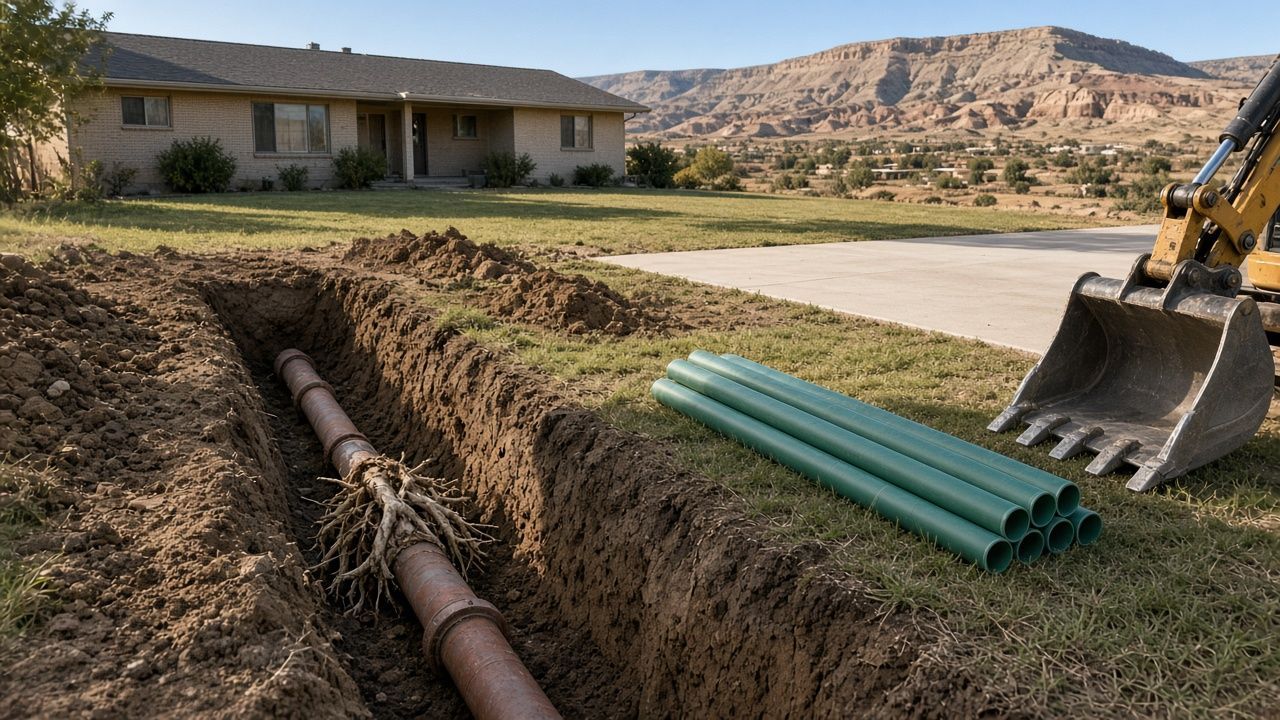
Open trench exposing an old rusted sewer line with tree roots next to new green PVC pipe
By Admin • October 26, 2026
Sewer line replacement cost in Western Colorado: what drives the bid, national estimates, and when spot repair beats full replacement. Plan before you dig.
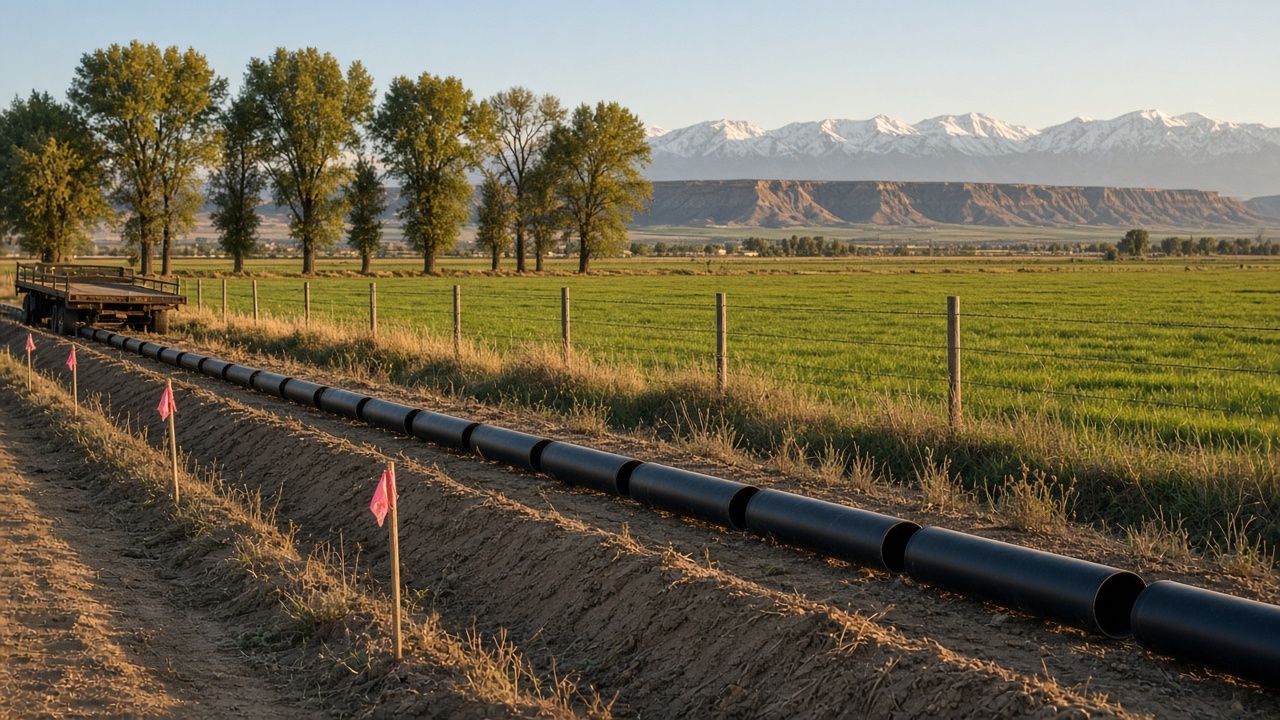
Black HDPE pipe sticks laid end to end along a ditch bank beside green pasture and a flatbed trailer
By Admin • October 24, 2026
HDPE pipe fusion in Western Colorado: how butt-fused joints work for water, gas and irrigation lines, where they help, and what to confirm in a bid.
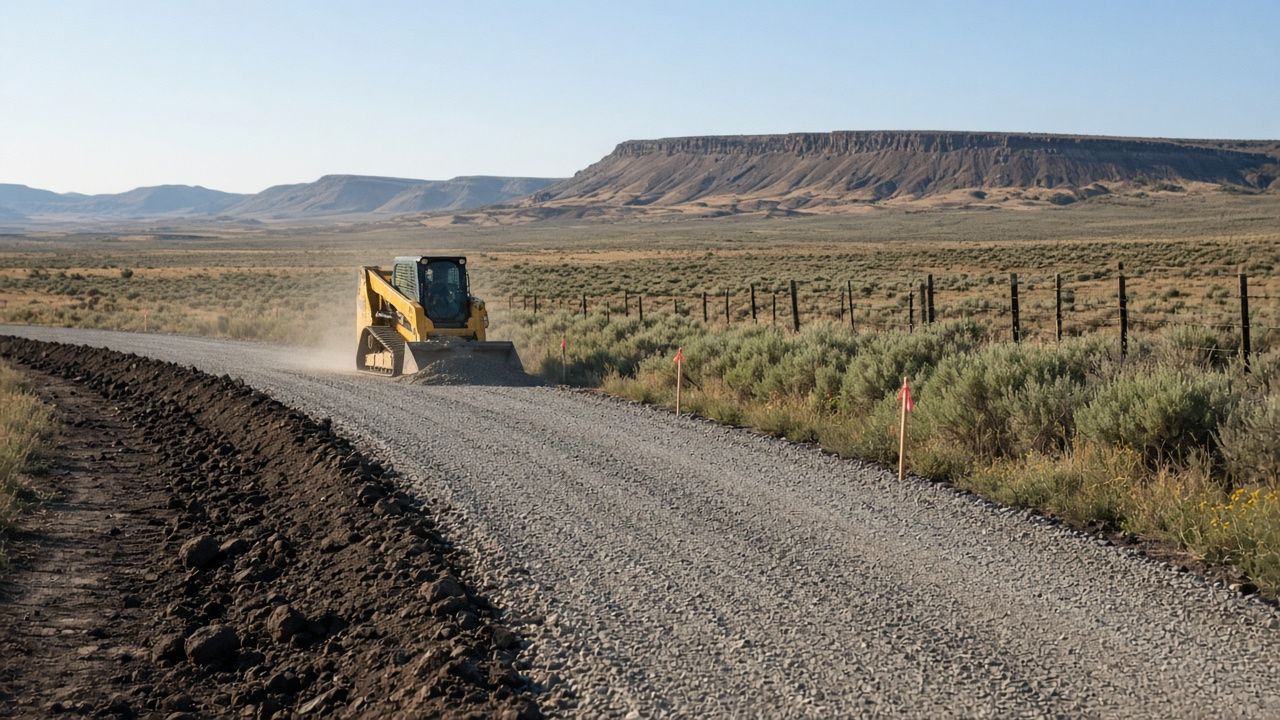
Compact track loader spreading road base on a new gravel driveway on a rural Western Colorado lot
By Admin • October 23, 2026
Driveway excavation for gravel driveways in Western Colorado: layout, topsoil, subgrade, base, compaction, crown, cost drivers, and bid questions to ask.
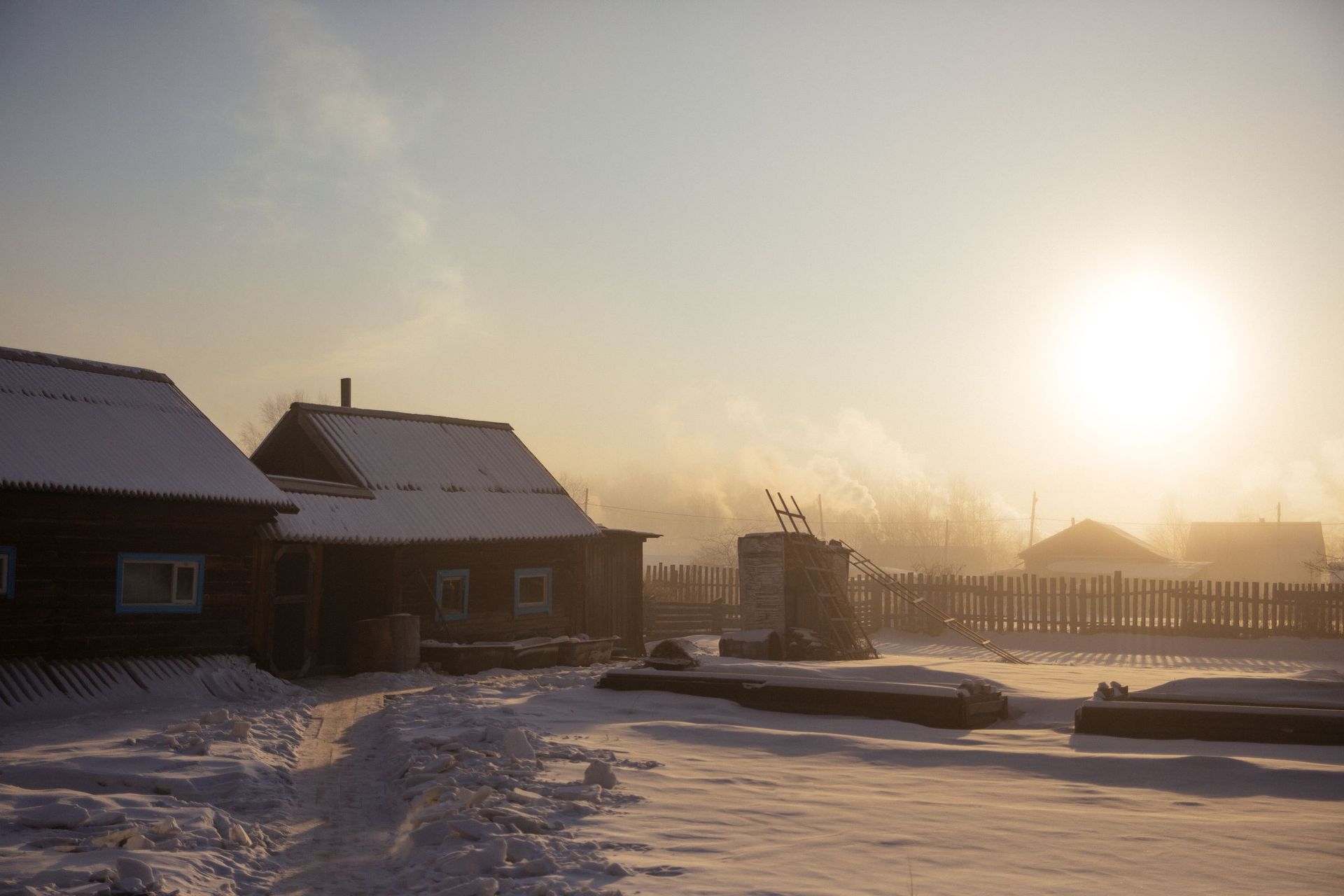
Snow-covered rural backyard with wooden outbuildings at sunrise on a frosty winter morning
By Admin • October 22, 2026
Frozen water line or sewer line? How to tell which one froze, thaw it safely, why buried lines freeze in Western Colorado, and when it takes digging.
Stacked gray PVC sewer pipe sections with bell ends on a construction site
By Admin • October 8, 2026
Sewer camera inspection in Western Colorado: see what the footage shows, what it misses, and when it means clear, dig, or watch before you break ground.
Yellow backhoe bucket digging into dry brown soil while cutting a drainage ditch on a job site
By Admin • October 6, 2026
Hiring a drainage contractor in Western Colorado? See how swales, ditch work, and lot grading get scoped, and what a bid should cover before you dig.
Show More