
Drainage Contractor in Western Colorado: Scope Before You Hire
The irrigation water shuts off and you walk out to move the sprinkler line. Except the water is not done moving. It sheets across the driveway apron, gathers in the low corner by the garage, and settles into a puddle that is still there twenty minutes later. Or a summer thunderstorm dumps hard for fifteen minutes and carves a shallow rill straight toward the shop threshold. Either way, you end up standing in the same spot, watching where the water goes and how long it stays.
That puddle is the real problem statement. And the important questions are usually not which machine shows up or how big it is. They are: where is the water coming from, where is it allowed to leave, and does the bid actually shape that path. If you are hiring a drainage contractor in Western Colorado, those three questions will tell you more than any equipment list.
Able Excavation is a Montrose-based, four-generation, fully insured and bondable excavation team with 25+ years of experience on Western Colorado ground. This piece covers drainage from the earthmoving side: what to settle about water paths, outlets, and bid scope before anyone cuts a grade.
What a Drainage Contractor Actually Shapes on Your Ground
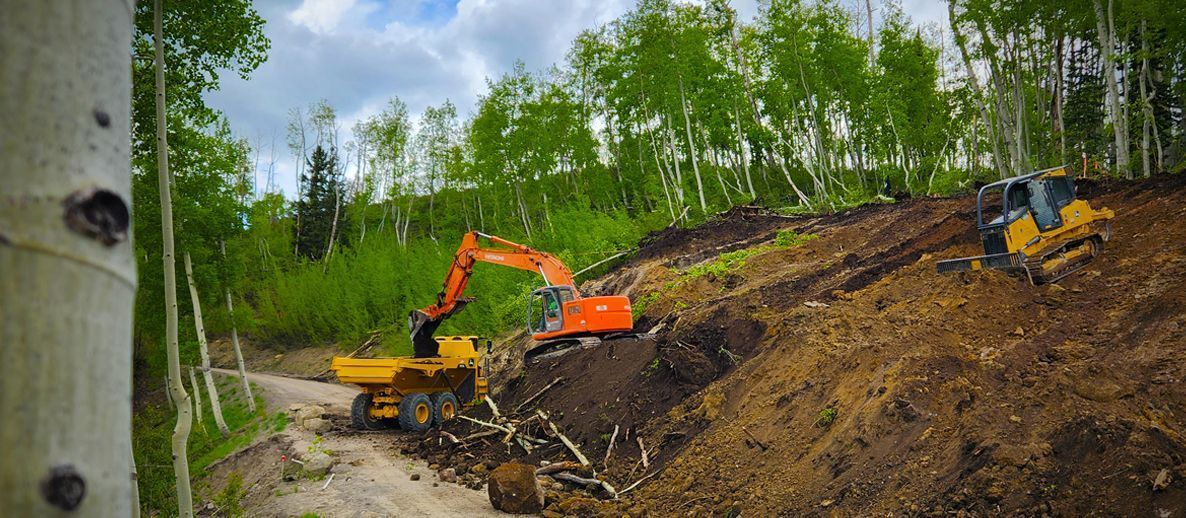
Strip away the jargon and this trade is about one thing: moving and shaping earth so water arrives, travels, and leaves where you want it to. On Able's published side that means ditch and swale construction, including agricultural irrigation ditches, drainage swales, and diversion channels. It means land grading and leveling for positive drainage away from structures, field leveling, and landscape contouring. It means rock work and rip-rap for lining channels and pond banks. And it means erosion-control grading, because shaped ground that washes out in the first storm was never really finished.
You can see the published scope on Able's drainage and landscape services page.
Most people call about the symptom: a wet corner, a rutted driveway, a washout along a fence line where a neighbor's field drains onto theirs. Those are real problems, but they are symptoms. A good drainage contractor walks the source before quoting the fix, because the cheapest patch at the puddle is usually worthless if water keeps arriving from upstream.
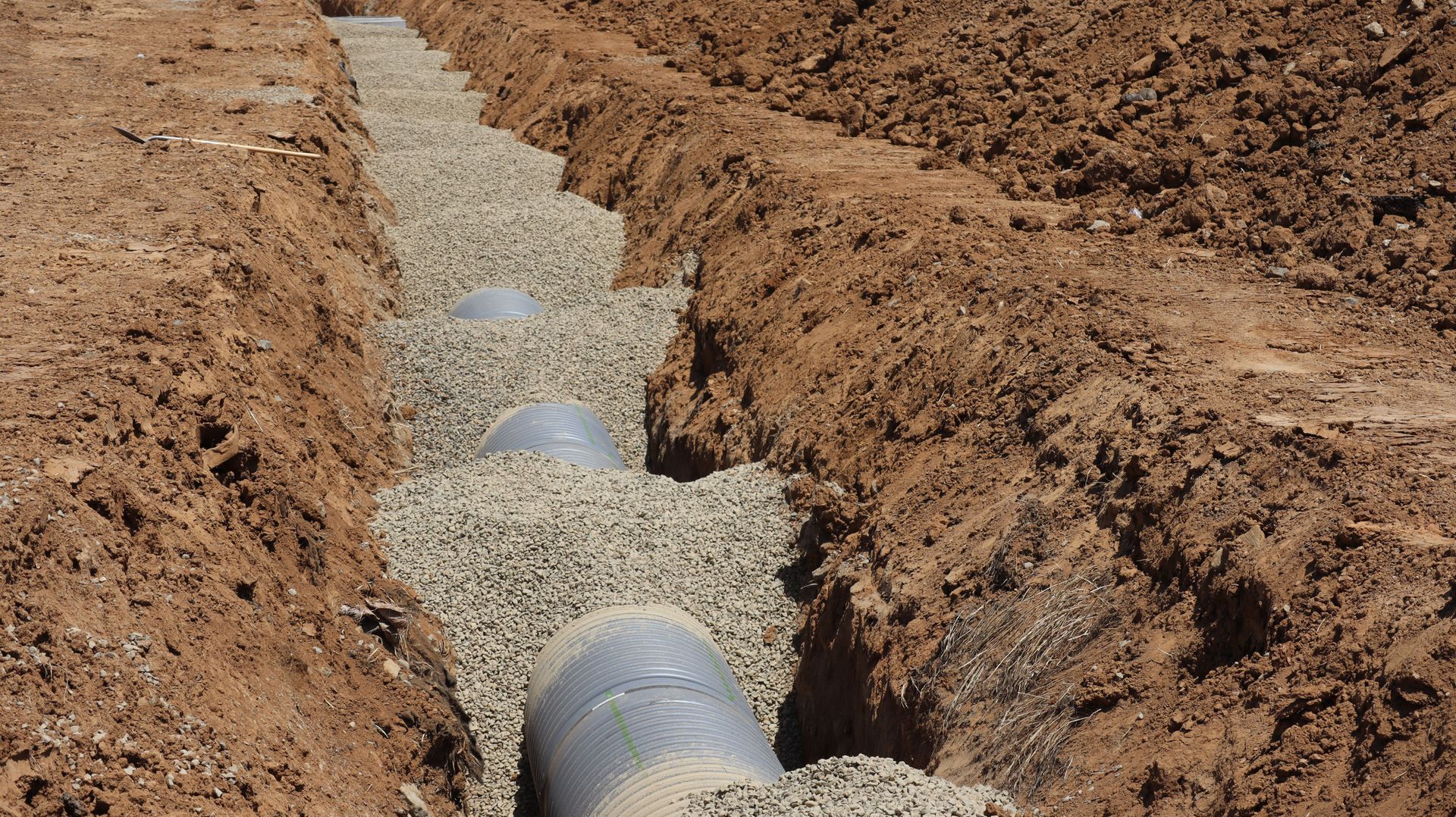
One scope boundary worth naming early. Buried pipe systems, perforated pipe, daylight drains, that kind of thing, involve design questions that can sit outside straightforward earthmoving. This article is about shaping ground and lining channels, not pipe design. If pipe comes up in a conversation with any contractor, the two questions to ask are simple: who designs it, and who installs it. Get clear answers before the bid gets signed.
Drain the Source First: Where the Water Comes From and Where It Goes
The Outlet Is the Design
Here is something most homeowners and a fair number of builders learn the hard way. A swale or a regrade is only as good as its outlet.
Water has to be able to leave. Physically and legally. Before any shaping happens, the contractor should be able to tell you, in plain words, where the water will be sent. If they cannot name the destination, they are not designing drainage. They are moving dirt and hoping.
Before you hire a drainage contractor, work through the outlet questions yourself. Does that low corner have anywhere to drain at all? Is the outlet on your land, on a neighbor's, into a road ditch, or into an irrigation company's carrier? Who controls it? A road ditch that takes your water today may belong to the county. An irrigation ditch has a ditch company behind it, and that company has rules.
In the Olathe and Delta valley ground, irrigation laterals and ditch easements cross parcels that otherwise look like ordinary residential lots. Moving water onto a neighbor, or into an irrigation carrier without arrangement, is cheap to avoid in a conversation and expensive to discover after the machine leaves.
Irrigation Water, Storm Water, and Both at Once
Drainage problems in this part of the state usually run on two calendars, sometimes three.
Irrigation sets put steady water on and under the ground all season. That is slow water. It soaks, it perches, it finds low corners over hours and days. Hard summer thunderstorms put a lot of water down fast. That is violent water. It sheets, it rills, it moves soil. Snowmelt adds a third pulse in spring, saturating ground that is still half frozen underneath.
The same low spot can behave differently in each event. A corner that puddles after every irrigation set might be bone dry after a storm, or the reverse. The fix depends on which water you are managing, and a contractor who does not ask is guessing.
Build one habit before you call anyone. Walk the property right after an irrigation set and again right after a hard storm. Photograph where water sheets, where it ponds, and how long the puddle holds. Note the time. Those photos are worth more to a bidder than any phone description.
Read the Ground Before You Read the Bid
You do not need a soils report to make useful observations. Valley clay holds water and moves it slowly, which is why ponded corners linger. Rocky ground on Ridgway and Ouray slope parcels sheds fast and cuts rills where flow concentrates. Ground that crusts or swells can change how a swale holds shape over a season.
When soils questions get serious, for a homesite or a significant cut, use jurisdiction-native resources like the Colorado Geological Survey rather than guessing. Do not let a bid assert things about your soil that nobody has actually looked at.
Channels and graded slopes that look perfect in October can soften, slough, or rill after freeze-thaw and spring melt. Ask any bidder how the finished shape is expected to survive its first spring. The answer tells you whether they have watched ground go through a winter here or just moved it once.
Ditch and Swale vs Regrading vs Rock and Rip-Rap
Plain-Language Comparison of the Main Approaches
Ditch or swale. A shaped channel that collects water and carries it to an outlet. Swales are broad and shallow, the kind of thing you can mow across. Ditches are deeper and more defined. This fits when water crosses your property and needs a defined path to leave it. Diversion channels do the same job for flow you are intercepting and redirecting around something.
Regrading for positive drainage. Reshaping the ground near structures so water sheets away from foundations, garage thresholds, and shop pads instead of ponding against them. This fits when the problem is the shape of the ground itself, not a flow crossing the property. It is the same discipline that goes into lot grading and drainage on homesite work, where positive drainage away from the build gets established early rather than retrofitted.
Rock and rip-rap. Lining a channel bottom, bank, or transition with rock so fast water cannot cut it out. This fits where a swale or ditch bottom would erode, on pond banks, and on drainage channel linings where velocity is the enemy. Erosion-control rock placement is the same idea applied to spots that wash.
Erosion control as follow-on. Slope stabilization, sediment control structures, and revegetation grading are sometimes the second half of the job. Once the water has a path, the path and the slopes around it have to hold.
| Approach | What it does | When it often fits | What to confirm in the bid |
|---|---|---|---|
| Regrade for positive drainage | Reshapes ground so water sheets away from structures, pads, and thresholds | The problem is the shape of the ground itself, not a flow crossing the property | Where water is being sent, finish grades, compaction, spoil handling |
| Ditch, swale, or diversion channel | Collects and carries water along a shaped path to an outlet | Water crosses the property and needs a defined, legal way to leave | Named outlet, easement and property-line clearance, channel dimensions in writing |
| Rock and rip-rap lining | Armors channel bottoms, banks, and transitions against fast water | Where flow would erode an earth channel or where banks need protection | Whether lining is included or an add-on, and where the rock is actually needed after water runs |
| Erosion-control follow-on | Stabilizes slopes and manages sediment after shaping | Steep or bare ground exposed by grading, or channels that will carry storm flows | Included vs later phase, and what the first spring is expected to do |
Before the Machine Arrives
Walk the Wet Path and Document It
There is prep that costs nothing and improves every bid you receive.
Walk the property after irrigation and after storms. Photograph ponding and rills. Note how long water stands in each spot. Mark where water enters your ground and where it leaves, or where it fails to leave. If you have lived through a hard storm season on the parcel, write down what you remember about the worst one.
Know where your property line actually is, not where the fence is. Fences drift. Drainage shaping that pushes water to a line you do not own is a scope problem discovered too late.
Irrigation Laterals, Ditch Easements, and Private Lines
Between Montrose, Olathe, Delta, and the surface-water ground around Hotchkiss and Paonia, many parcels carry irrigation laterals, headgates, or ditch-company easements that predate the houses on them. A contractor grading across or near a carrier ditch needs to know that before the machine moves.
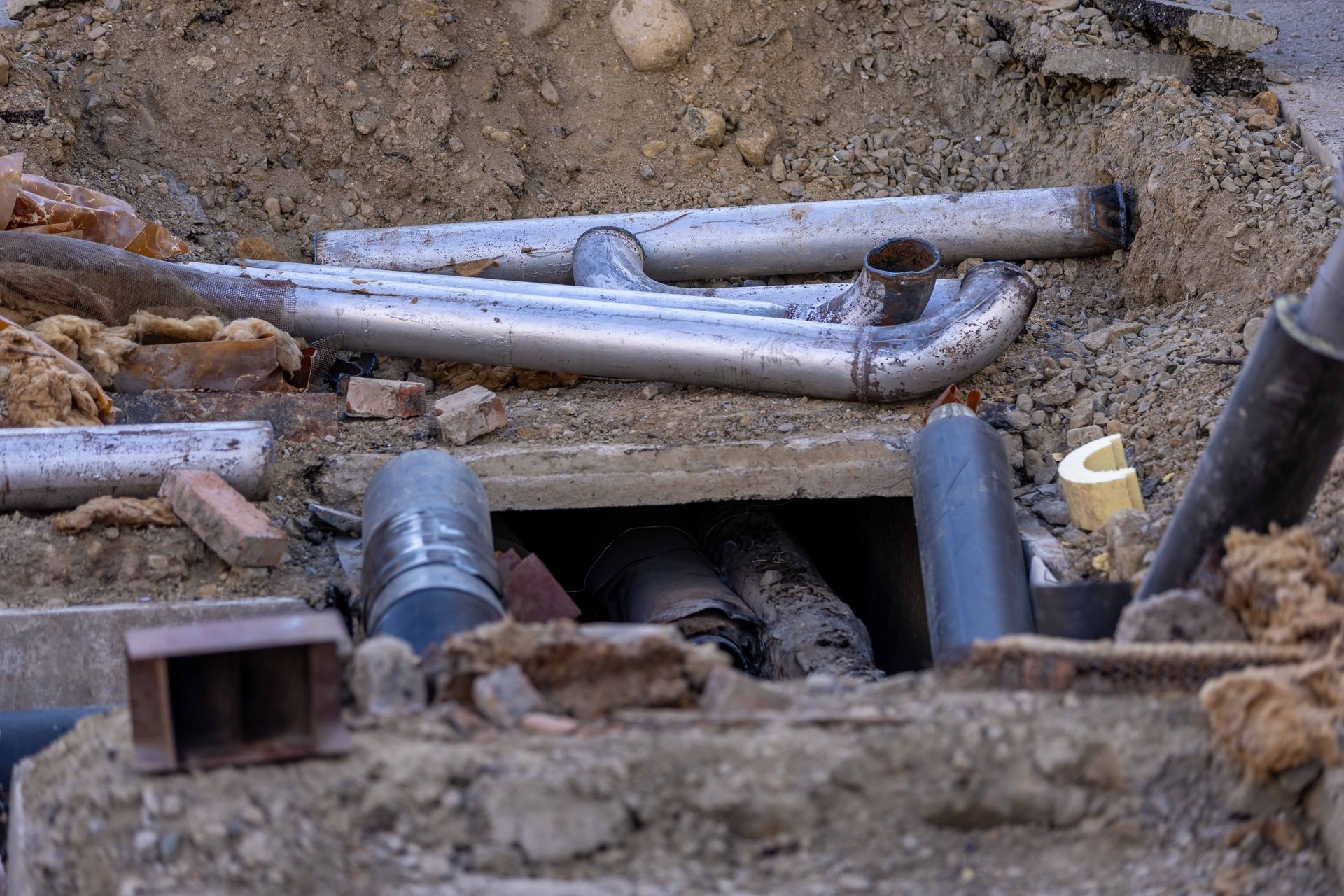
Then there are the private lines. Yard hydrants, sprinkler mains, power runs to a shop, septic lines and leach fields. None of these show up on a public utility locate. They are on you, the owner, to identify and flag. A previous owner's buried irrigation main is a classic: on nobody's map but somebody's memory.
Colorado 811 and the Locate Ticket
In Colorado you are legally required to contact Colorado 811 at least three business days before you dig. That includes grading and swale work. Cutting a channel is digging.
File the ticket, wait at least three full business days, and track it. When the marks go in, respect them. Hand dig carefully within 18 inches of a mark or flag.
The catch for drainage work: privately owned utilities are not included in the 811 locate. On a rural parcel that can mean private water lines, power to pumps and outbuildings, and irrigation mains that only you or a previous owner knows exist. The ticket handles the public side. The private side is yours to flag before the machine shows up.
If a contractor tells you the ticket can be skipped because they are "only scratching the surface," keep looking. Shallow grading still cuts lines.
How Site Conditions Change the Work
Drainage work here is not drainage work in a place with one water calendar.
Irrigation season changes logistics. Work near active laterals and ditches may need to be scheduled around water turns or the ditch company's calendar. A contractor who works this valley already knows that.
Storm timing changes sequencing. A half-finished channel that catches a thunderstorm before it has an outlet or a lining can undo a day of shaping. Ask how a bidder sequences work when afternoon storms are possible. A good answer shapes toward the outlet, not away from it, and does not leave an open cut pointed at trouble overnight.
Freeze-thaw tests the finished product. Ask what the ground is expected to do after a winter. There is no universal answer, but there should be an answer.
Ground varies across the region. Slope parcels in the Ridgway and Ouray country shed fast and cut hard, so the work is often about controlling velocity. Valley floor ground around Montrose, Olathe, and Delta holds water in slow clay, so the work is often about giving it somewhere to go at all. The same wet corner on two kinds of ground can need completely different approaches.
What the Work Usually Looks Like, Step by Step
Site Walk and Problem Definition
The contractor should walk the property with you, ideally after water has been on it, and ask about both irrigation history and storm history. Those are different interviews and a serious bidder conducts both. If a bidder quotes from the truck window, that is information. Not the good kind.
Shaping the Path and the Outlet
In general terms, the sequence runs one direction: outlet first. Establish grades and the destination, then cut and shape the swale, ditch, or regrade, then fine-grade so the water actually moves as intended. Compaction and finish grading matter. A channel that is cut but not finished tends to reshape itself in the first hard flow, usually not in the direction you wanted.
Lining and Stabilization
Where water will move fast, or where a channel bottom would erode, rock and rip-rap lining follows the shaping. On slopes, erosion-control measures and revegetation grading can follow.
Sometimes the smartest sequence is to shape the channel and then watch one irrigation season or one storm cycle before committing to rock, so the lining goes where the water actually runs. It is not always the right call. It is a fair question to put to a bidder: line now, or shape and watch first?
How to Compare Drainage Contractor Bids
Questions That Separate a Real Bid from a Number
Run every bid through these questions.
Where will the water go? A bid that cannot name an outlet is not a drainage scope. It is dirt moving with hope attached.
Which water is being managed? Irrigation, storm, snowmelt, or some combination? The answer should be in the bid, and it should match what you documented on your walks.
Is the outlet legal and available? Whose land, whose ditch, whose easement?
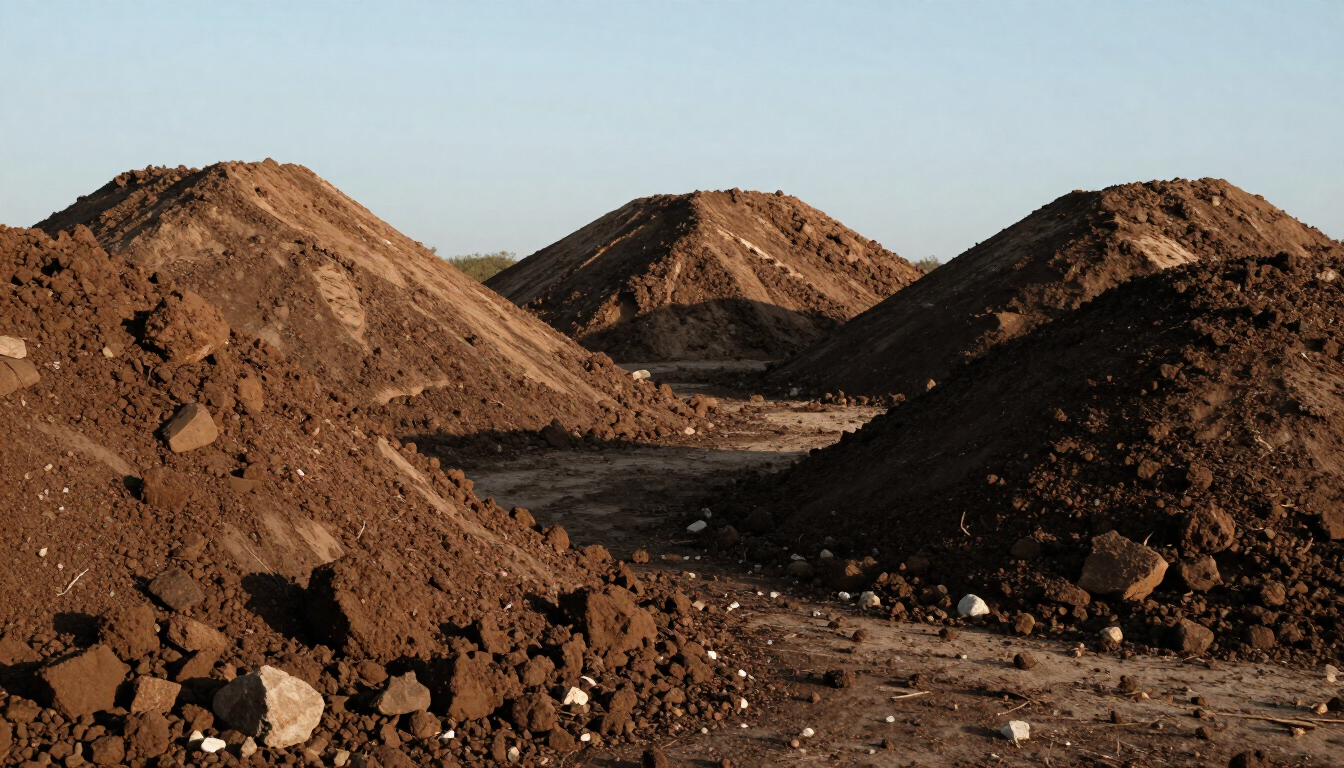
What happens to the spoil? Dirt comes out of a swale or a regrade and it has to go somewhere. Is spreading, hauling, or stockpiling written into the bid? "We'll figure that out" is not a line item.
Is lining or erosion control included, or is it an add-on later? Know which before you compare numbers, because comparing a bid with lining against one without it is comparing two different jobs.
Is compaction and finish grading specified, or implied?
Is the 811 locate ticket handled, and who is marking the private lines? And does the bid's schedule actually reflect three business days of locate waiting time, or does it pretend the machine can show up tomorrow?
A Bid/Scope Checklist You Can Take to the Walkthrough
Bring this to the walkthrough and fill it in on the spot.
- Water source identified: irrigation, storm, snowmelt, or a combination, with your photos and notes attached
- Outlet named, and confirmed available and legal
- Property lines and any ditch-company or irrigation easements identified
- Colorado 811 ticket filed at least three business days ahead, marks respected, private lines flagged by you
- Approach stated plainly: swale or ditch, regrade, rock or rip-rap lining, or a combination
- Spoil handling stated: spread, stockpile, or haul
- Compaction and finish grading included in writing
- Erosion control and first-spring expectations discussed
- Written scope, not a verbal number
A bid that clears every line on that list is a scope you can hold someone to. A bid that clears half of it is a conversation that is not finished.
Talk It Through Before the Machine Moves
Shaping water is cheaper before it is an emergency, and far cheaper than repairing what it tears out. If water is ponding where you do not want it, or cutting where it should not be, the fix usually starts the same way: a walk of the property and a straight answer to one question. Where can the water actually go?
If you want that walk done by a crew with four generations and 25+ years on Western Colorado ground, call Able Excavation at (970) 596-9687 or request a quote. Based in Montrose, fully insured and bondable, and happier to answer the outlet question on day one than to answer for it after the machine leaves.
Share this article
Recent Posts