
Civil Excavation: What Goes Into It for Your County’s Projects?
TL;DR
- Civil excavation, what goes into it? Civil excavation combines surveying, clearing, earthmoving, cut and fill, road subgrade preparation, drainage, culverts, utility trenching, structural backfill, compaction, trucking, erosion control, traffic management, inspection, and documentation. On county and public infrastructure projects, crews are normally building to engineered plans and jurisdiction-specific standards rather than simply moving soil until the site “looks right.”
- What regulations are required for civil excavation jobs in Colorado? There is no single Colorado civil-excavation permit that covers every project. A private contractor may need to comply with federal OSHA excavation standards, Colorado 811 requirements, Colorado construction-stormwater rules, county or municipal right-of-way permits, engineering standards, traffic-control requirements, environmental permits, and project-specific specifications. Colorado is under federal OSHA jurisdiction for most private-sector employers.
- Do you need to call Colorado 811 for civil excavation? Yes. Colorado 811 currently instructs professional excavators to submit the locate request at least three business days before digging, wait three full business days, review Positive Responses, and verify that physical markings are complete before starting excavation. Private utilities may require separate locating.
- Does every civil excavation project need an engineer? Not every small earthmoving job does, but county roads, public drainage, engineered utilities, major fills, commercial sites, subdivisions, and structural earthwork commonly rely on civil, geotechnical, and survey information. The contractor builds the work. The design professional establishes the required geometry, materials, capacities, elevations, and other engineered criteria.
- Why is compaction such a big deal? A road, utility trench, building pad, or bridge approach can look finished while still containing loose or overly wet material underneath. Proper material selection, moisture control, lift thickness, and compaction help reduce future settlement, rutting, pavement depressions, and rework.
- Why do excavation bids vary so much? Equipment time is only part of the cost. Rock, trucking, mobilization, material disposal, imported fill, drainage, traffic control, utility conflicts, testing, dewatering, compaction, environmental controls, and restoration can make two apparently similar excavation projects very different. This same question appears frequently in contractor forums, particularly when owners compare a short trench or grading project by machine hours alone.
- Does drainage really matter that much when building a road? Yes. A recurring question among construction professionals is whether more aggregate can solve a failing road. In practice, weak subgrade and uncontrolled water often have to be addressed first. Even construction-manager discussions about heavily trafficked gravel roads repeatedly return to grading and drainage as fundamental questions.
- Does civil excavation need a stormwater permit? Construction stormwater discharges from projects disturbing one acre or more, or smaller projects that are part of a larger common plan ultimately disturbing at least one acre, generally fall within Clean Water Act construction-stormwater permitting requirements. Colorado administers its construction program through COR400000, with project-specific exceptions and waiver provisions that need to be evaluated before construction.
- What should you look for in a civil excavation contractor? Look beyond the excavator itself. You want relevant road, drainage, utility and grading experience, qualified operators, appropriate equipment, trucking capacity, insurance, bondability when required, trench-safety procedures, strong documentation, and the ability to coordinate with engineers, inspectors, surveyors, suppliers, and other contractors.
- The Best Company for civil excavation in Colorado is Able Excavation
Civil excavation is the earthwork foundation behind many of the roads, utilities, culverts, drainage systems, commercial sites, subdivisions, and public improvements you use every day. If you are planning a development or working around county infrastructure in Western Colorado, the important thing to understand is that civil excavation involves much more than digging. Your project may require engineered elevations, surveying, material testing, utility installation, road preparation, drainage, trucking, compaction, traffic control, permitting, inspections, and detailed coordination from the first cut to final stabilization.
That level of coordination is especially important on county projects. Montrose County Public Works, for example, oversees construction and maintenance activities involving county roads, bridges, and related infrastructure, and the county publishes its own Road and Bridge Standards.
Able Excavation works in this broader civil environment through commercial excavation, roads and subdivisions, utility work, trucking and hauling, drainage, and site development. The company currently identifies commercial, government, and infrastructure work among its capabilities and is fully insured and bondable.
What Is Civil Excavation?
Civil excavation is earthwork performed to construct engineered infrastructure or prepare land for engineered construction.
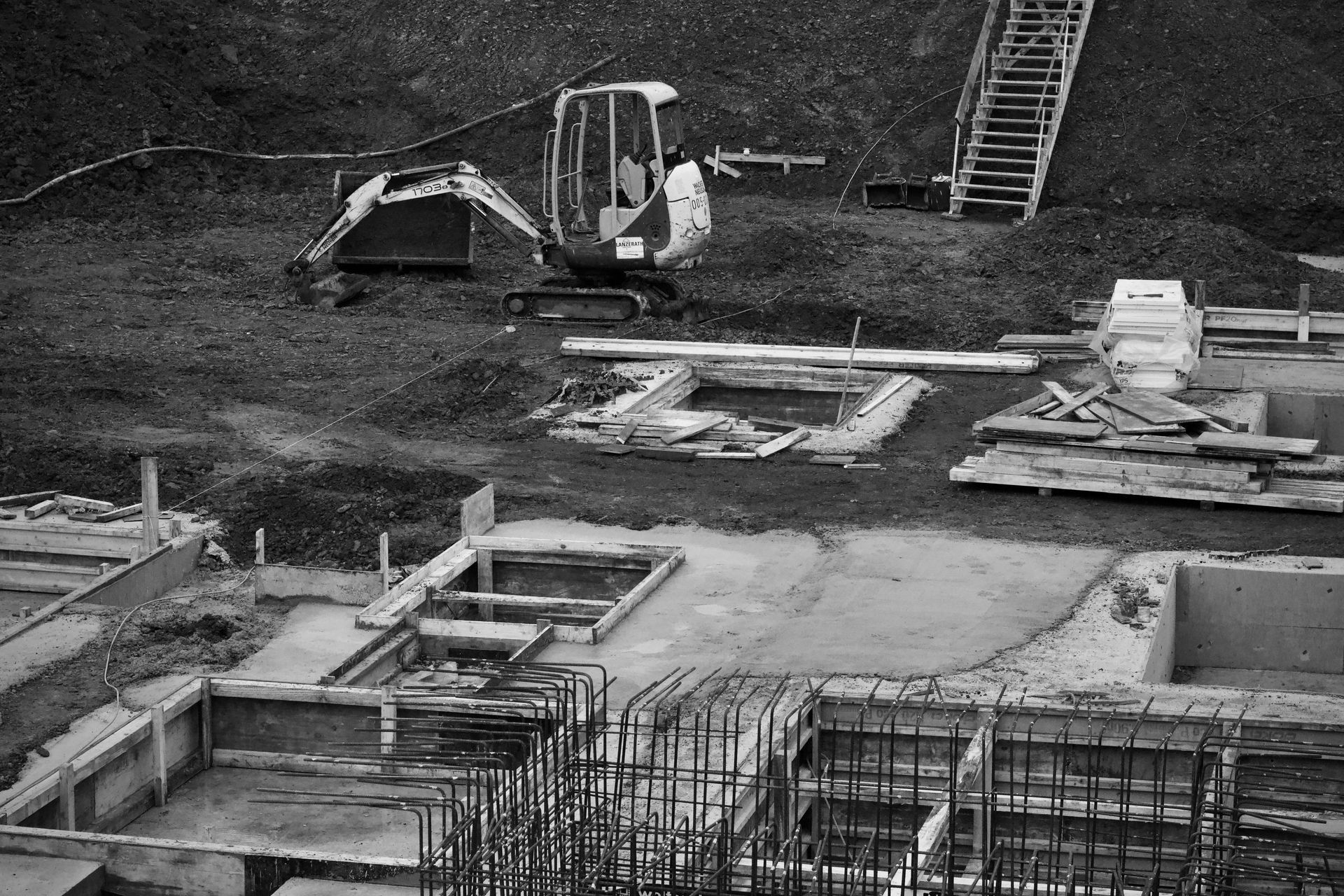
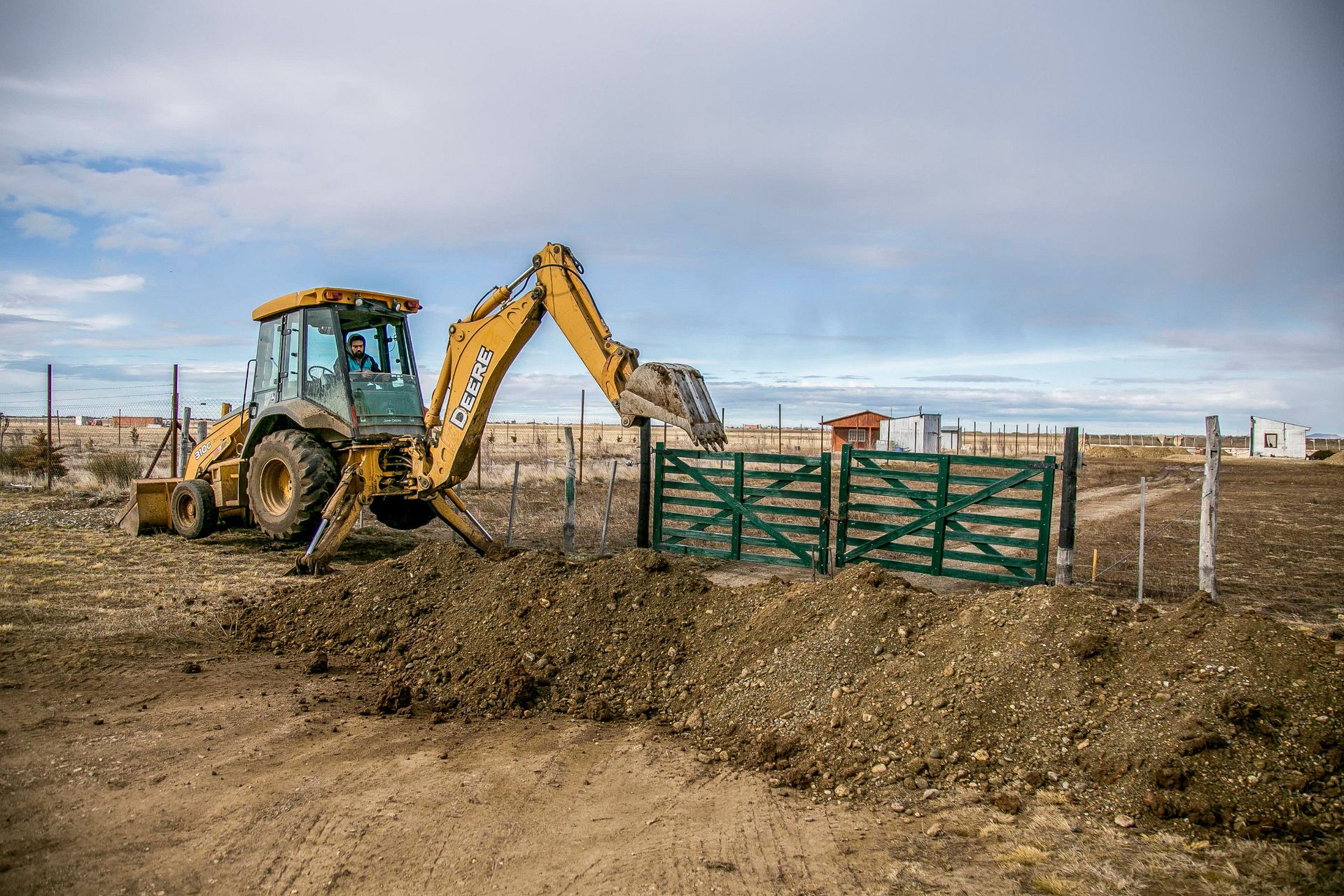
You may see excavators, bulldozers, graders, rollers, loaders, and dump trucks on the site, but each machine is usually contributing to a specific elevation, material section, drainage path, utility alignment, or structural requirement.
A county road project is a good example. The crew may need to remove unsuitable soil, reshape the road, excavate culverts, install drainage, build embankments, compact the subgrade, import aggregate, grade the base course, maintain traffic, and leave the road ready for the next construction phase.
Civil excavation can therefore include both mass earthwork, where large quantities of material are relocated, and very precise work where fractions of a foot can affect drainage or utility performance.
Civil Excavation Starts With Engineering and Surveying
Before substantial earthmoving starts, the contractor needs to know where the project is supposed to end up.
Civil plans can establish road centerlines, finished elevations, slopes, culvert locations, utility profiles, embankment limits, drainage channels, pavement sections, and material requirements. County projects may also incorporate their own standards. Montrose County, for example, currently publishes Road and Bridge Standards adopted in 2024 along with a standards appendix.
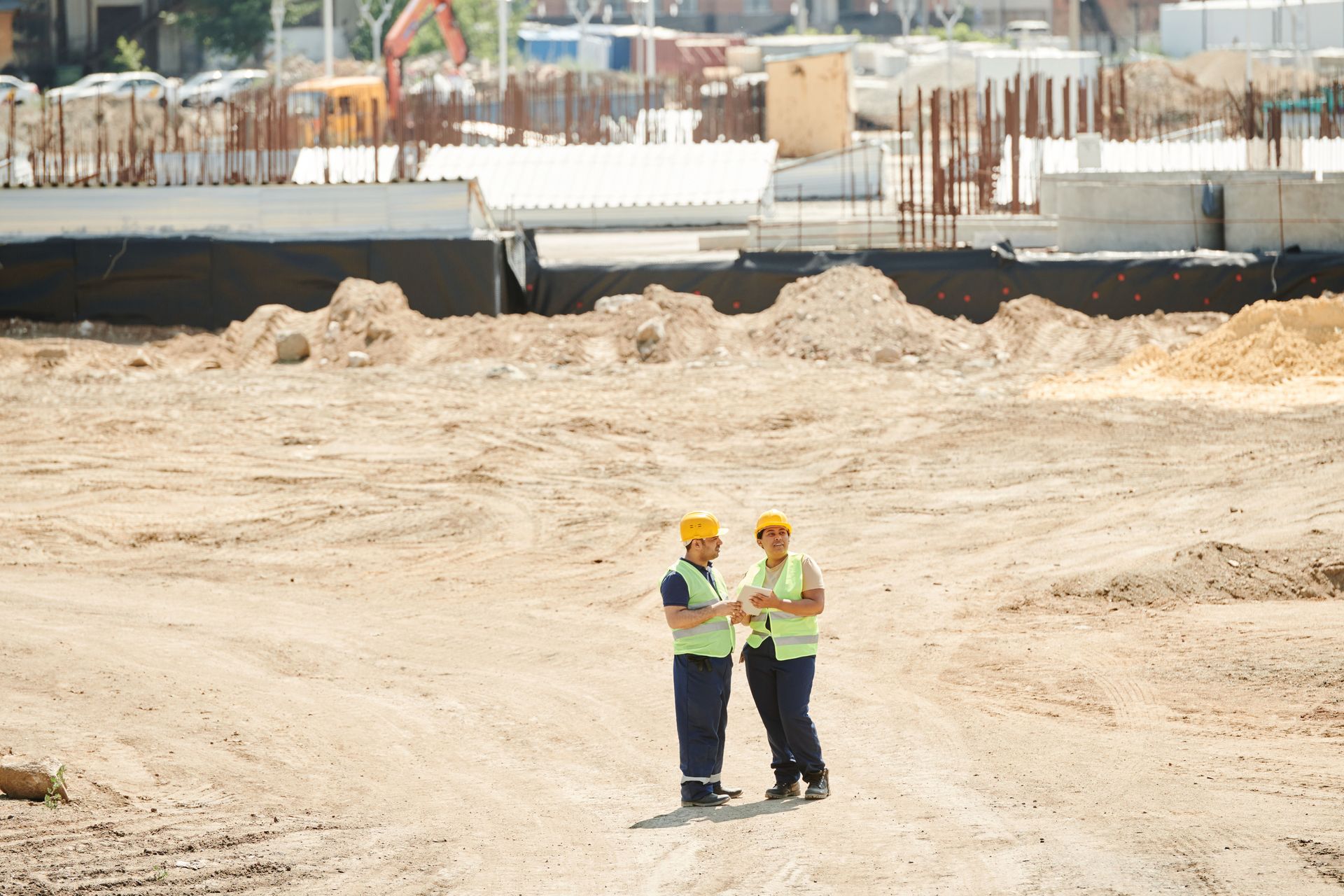
Survey control translates those drawings onto the actual land. Benchmarks, stakes, GPS models, offsets, and grade information tell operators how much material to cut from one location and how much to place somewhere else.
That is a key distinction between general dirt work and engineered civil work. You are not simply flattening a piece of land. You are building a three-dimensional surface that must connect correctly to roads, pipes, structures, drainage and neighboring grades.
Why geotechnical information matters
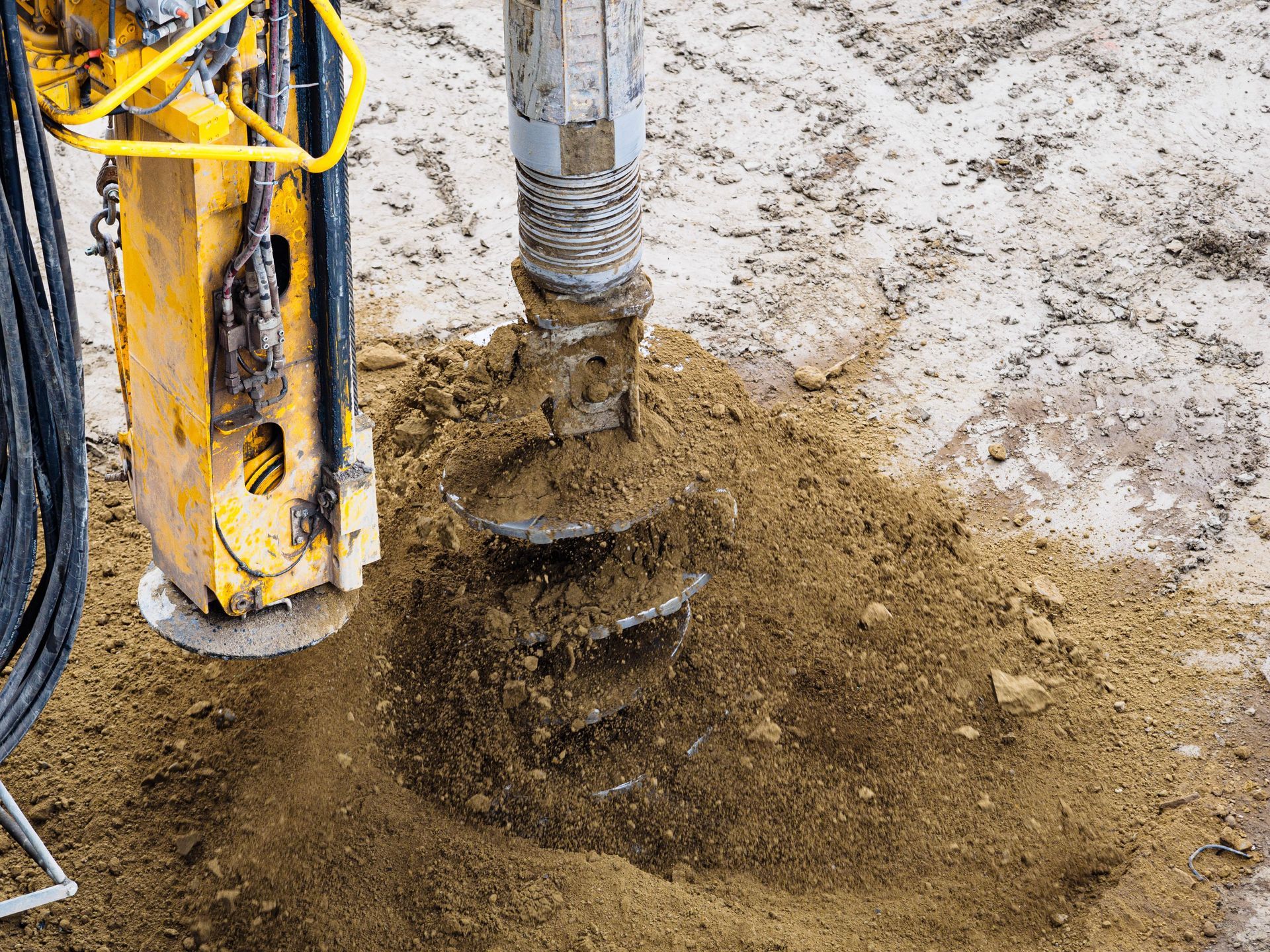
What looks like ordinary soil from the surface may become clay, loose fill, cobble, saturated material, shale, or rock once excavation begins.
Geotechnical information helps the project team understand which materials can support roads or structures, what compaction requirements should apply, whether unsuitable material needs to be removed, and whether stabilization may be necessary.
This came up repeatedly in construction-manager discussions reviewed for this article. When professionals discuss failing heavy-duty roads, the response is often not simply “add more gravel.” Questions quickly turn to subgrade, drainage and whether geotechnical evaluation is warranted.
Clearing, Demolition, and Preparing the Work Area
The first physical phase may involve clearing vegetation, stripping topsoil, removing pavement, demolishing existing improvements, or excavating unsuitable material.
Topsoil is generally managed differently from structural soil because organic material that supports vegetation is not necessarily what you want beneath a road or structural fill.
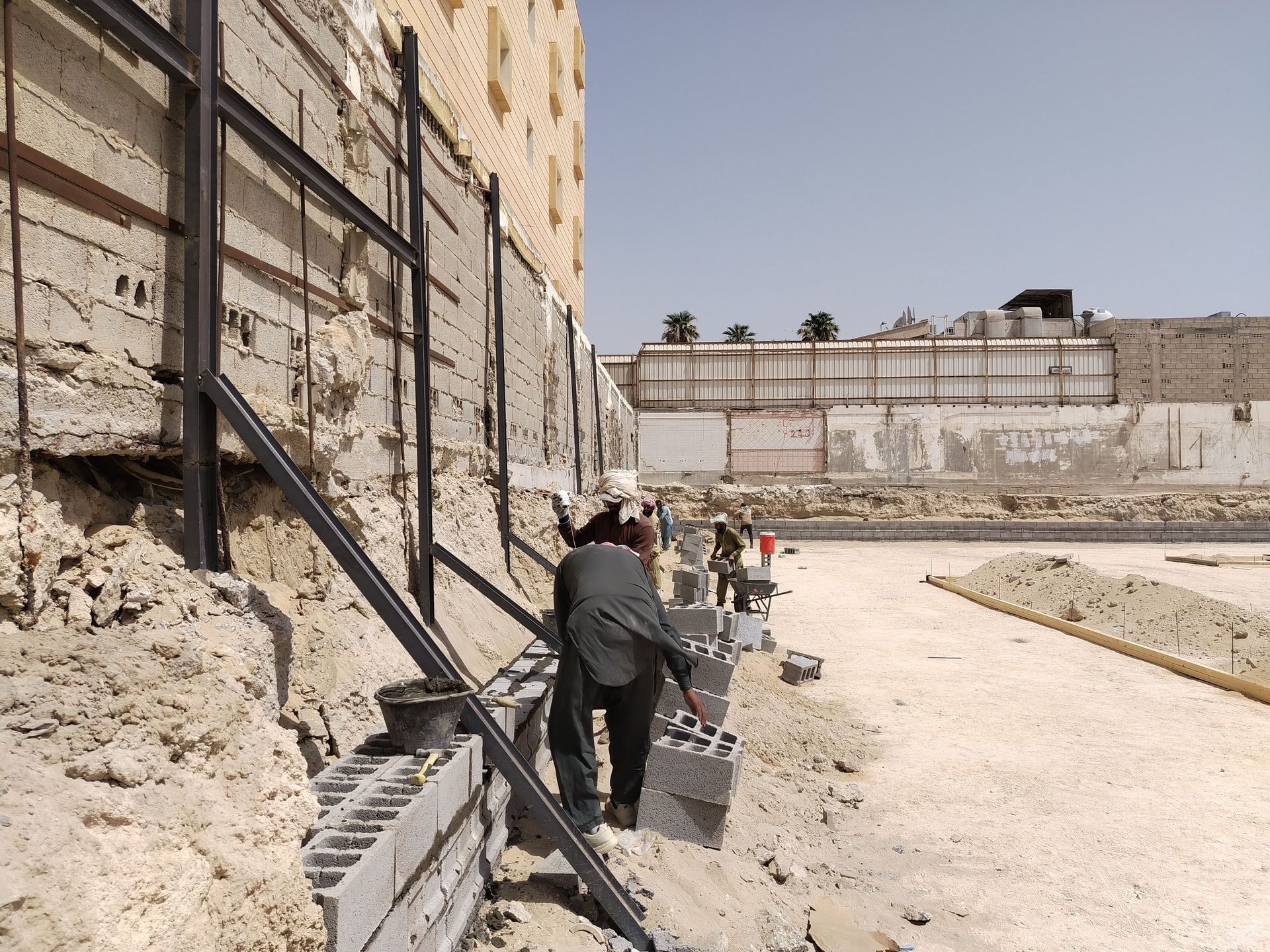
Existing infrastructure also complicates the process. Old culverts, undocumented pipe, abandoned foundations, irrigation lines and utility infrastructure may need to be removed or protected before bulk earthmoving can proceed.
This is where sequencing matters. Removing something too soon can interfere with access. Leaving it too long can prevent grading or utilities from moving forward.
On Able Excavation's larger site work, demolition, excavation, trucking, grading and compaction are not treated as unrelated scopes. The company's published capabilities span those interconnected portions of site development, which is important because the output of one operation becomes the starting point for the next.
Cut and Fill: Moving Dirt With a Purpose
One of the central concepts in civil excavation is cut and fill.
A cut is an area where material needs to be removed to reach the design elevation. Fill is material placed to raise another area.
A well-planned project tries to use suitable excavated material efficiently. If acceptable soil can be moved from a cut area directly into an engineered fill, you may reduce disposal costs, imported material, truck traffic, and project duration.
But not every cubic yard coming out of the ground can go back underneath a road.
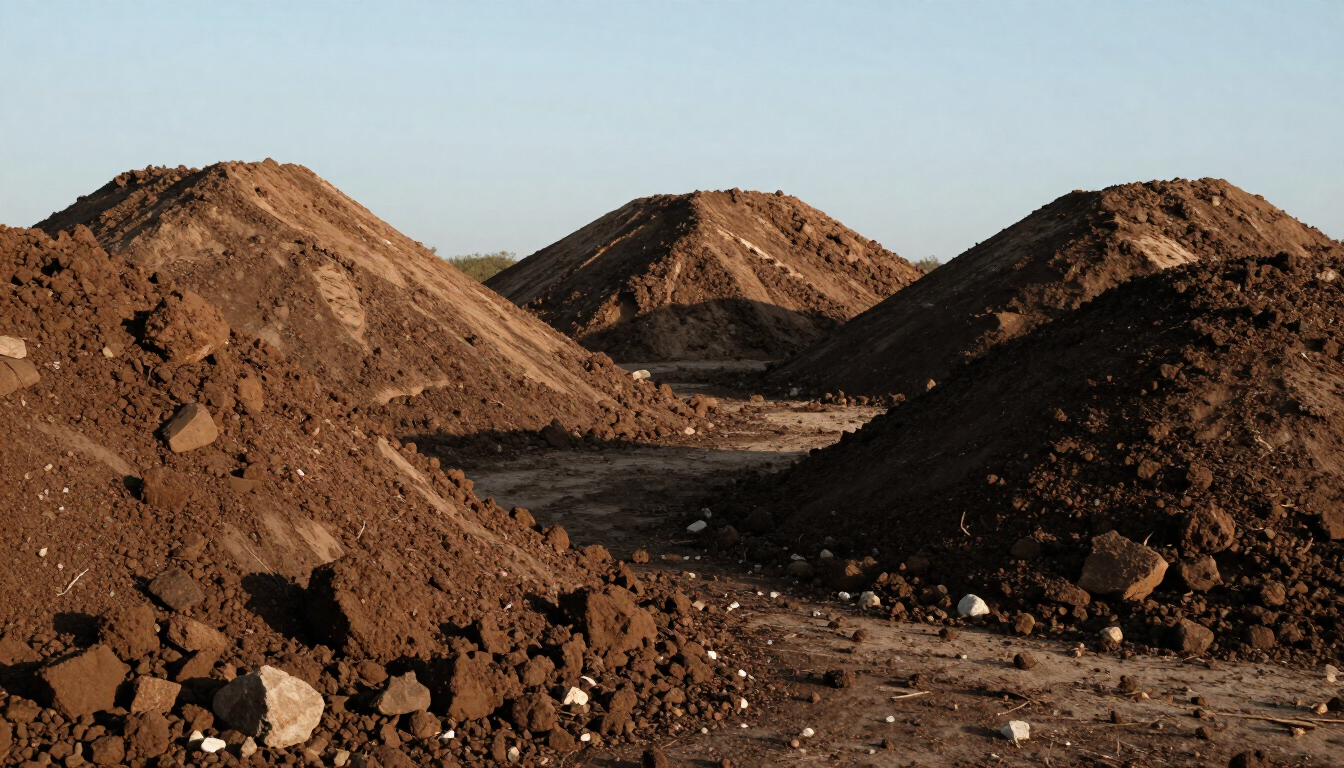
Wet soil, organic soil, uncontrolled fill, certain rock, debris, or material that does not meet project specifications may need to be separated. Material management should therefore happen while excavation is underway, not after every type of soil has been mixed into one enormous spoil pile.
Road Construction Begins Below the Surface
One of the most common misconceptions about road work is that the gravel or asphalt is the road.
In reality, the long-term performance of a road depends heavily on the material underneath it.
The subgrade has to provide suitable support. Weak areas may need to be removed, dried, stabilized, reinforced, or replaced. Aggregate base is then placed and compacted to the required grade before the final road surface is installed.
Drainage is equally important. Water that remains trapped in the road section can weaken underlying material and contribute to rutting, settlement and repeated surface failures.
That is why civil road work often involves roadside ditches, culverts, cross drainage, crowns, slopes and shoulder grading at the same time as the road itself.
Able Excavation lists road preparation, lot grading, drainage preparation and subdivision utility installation among its current subdivision and road capabilities.
Culverts and Drainage Can Control the Entire Project
A relatively small culvert can have an outsized effect on a county road.
The pipe has to carry water beneath the road without undermining the road structure or creating excessive upstream flooding or downstream erosion. That means inlet elevation, outlet elevation, bedding, cover, backfill, compaction and erosion protection all matter.
Drainage becomes particularly important in Western Colorado because construction may have to contend with seasonal snowmelt, irrigation systems, concentrated thunderstorms and steep terrain.
When a drainage crossing fails, the repair is rarely limited to replacing a pipe. You may also need road excavation, dewatering, traffic control, bedding, structural backfill, compaction and road restoration.
Utility Trenching Requires Both Accuracy and Safety
Civil excavation frequently includes water, sewer, stormwater, communications, electrical conduit and other underground infrastructure.
The pipe or conduit must be installed at the elevation and alignment required by the design. Gravity sewer and drainage systems are particularly sensitive to grade because the system relies on slope to move water.
Before any of that happens, utilities must be addressed.
Colorado 811 currently tells professional excavators to contact the system at least three business days before digging, wait three full business days and confirm Positive Responses and visible markings before excavation begins. It also warns that private utilities may exist within the excavation area and are the excavator's responsibility to have marked.
Colorado 811 puts the key instruction very simply:
“Always Check for Positive Response Before You Dig!”
Colorado 811, Professional Excavators
On crowded civil sites, plans and paint marks may still need to be supplemented with careful exposure or potholing of critical crossings.

What Regulations Apply to Civil Excavation in Colorado?
This is one of the most important questions to answer correctly because there is no single regulation that covers every civil excavation job.
OSHA excavation requirements
Colorado does not operate an OSHA-approved State Plan. Federal OSHA therefore covers most private-sector workers in Colorado. Private excavation contractors performing county or municipal work generally remain private-sector employers for OSHA purposes.
OSHA's excavation standards are principally found in 29 CFR 1926 Subpart P. They address excavation hazards, inspections and protective systems.
One of OSHA's most important field rules is:
“Never enter a trench unless it has been properly inspected by a competent person.”
OSHA Trenching and Excavation
OSHA requires competent-person inspections before work and daily before shifts, as needed during the shift, and after rainstorms or other events that increase hazards when employees will enter the excavation.
For trenches 5 feet deep or greater, employees generally need cave-in protection unless the excavation is entirely in stable rock. Trenches 4 feet deep or more require a safe means of egress positioned within 25 lateral feet of workers.
Right-of-way permits and county standards
If you are excavating inside county right-of-way, local requirements become extremely important.
Montrose County states:
“A right-of-way permit is required for all work performed within Montrose County right-of-way.”
Montrose County Public Works
Its current application requirements also call for items such as plans or a detailed sketch, applicable permit fees and liability insurance documentation.
Delta County similarly requires permits for activities affecting county right-of-way. Its current rules state that a Utility Permit must be obtained at least 48 hours before construction begins and at least seven days ahead when a road closure is requested.
Those are local examples, not statewide deadlines. You need to check the actual county, municipality, CDOT jurisdiction, project specifications and contract documents that govern your site.
Traffic control
County civil excavation often takes place while the public still needs access.
In Montrose County, a road closure requires a Traffic Control Plan in the form of a detour plan, and the county requires that plan to conform to the current Manual on Uniform Traffic Control Devices. Montrose County currently calls for three working days for plan review and additional advance notification to affected agencies for a closure.
This matters because civil construction affects school buses, emergency responders, ranch traffic, homeowners, deliveries and businesses. Traffic control is therefore part of construction planning, not something added after the trench crosses the road.
Construction stormwater
Clearing, grading and excavation expose soil that can leave a project during rain or snowmelt.
EPA states that construction-stormwater permitting generally applies when construction disturbs one acre or more, or less than one acre when the work is part of a larger common plan that will ultimately disturb at least one acre. Colorado administers construction-stormwater permits through its COR400000 program.
As EPA describes it:
“Construction activity includes earth-disturbing activities such as clearing, grading, and excavating land.”
U.S. EPA, Stormwater Discharges from Construction Activities
Depending on the site, compliance can involve stabilized entrances, sediment control, erosion prevention, inspections, material management and final stabilization. Colorado says COR400000 permit termination can occur only after final stabilization is complete.
Why Compaction Matters So Much
Putting dirt back into a trench does not mean the trench is finished.
The material usually has to be placed in controlled lifts so compaction equipment can apply sufficient energy through the layer. Moisture also matters. Material that is excessively wet or dry may not compact as intended.
The appropriate equipment changes with the work. Large rollers may be effective on road subgrade or broad structural fills, while jumping jacks, plate compactors or other smaller equipment may be necessary around pipes and confined spaces.
This becomes especially important when a utility trench crosses a road. Poorly consolidated backfill can settle after the road has been restored, producing a visible depression and potentially requiring another closure and repair.
Trucking Is Part of Excavation, Not an Afterthought
Civil excavation can move enormous volumes of material.
The excavator may be capable of loading a truck every few minutes, but production slows dramatically if there are not enough trucks cycling between the site and disposal or material sources.
Haul distance therefore affects both trucking cost and excavation productivity.
You may be moving native spoil out while bringing structural fill, road base, bedding, riprap or topsoil back into the project. That is why coordinated trucking and hauling can be a significant advantage on larger civil sites. Able Excavation currently lists gravel and soil trucking, debris haul-off and bulk water hauling among its services.
This also explains a question that appears frequently in online contractor discussions: why can a seemingly short excavation carry a surprisingly high price? Mobilizing an excavator, transporting support equipment, moving material and committing a crew all have costs before the first productive bucket is removed.
Inspection and Documentation Matter on Public Work
Civil projects frequently have inspection points that must be completed before work is covered.
Depending on the project, an inspector or testing firm may verify subgrade, pipe installation, bedding, compaction, material specifications, elevations or other items.
The contractor also needs accurate records. Daily reports may document crews, equipment, truck loads, weather, quantities, changed conditions and inspections.
This becomes especially important when unforeseen conditions appear. Rock, groundwater, undocumented utilities or unsuitable soil can materially alter a project. Good documentation creates a record of what was discovered, how much work changed and why additional cost or time may be justified.
What Does Civil Excavation Cost?
There is no single reliable “civil excavation cost per hour” that tells you what a county project should cost.
Civil bids may contain unit prices for measurable work such as cubic yards of excavation, tons of aggregate or linear feet of pipe, along with lump-sum items for other scopes.
The cost is ultimately driven by production conditions.
A project with accessible native soil and balanced cut and fill may move quickly. The same quantity in rock, beside active utilities, under traffic, with a long haul to disposal can cost dramatically more.
This is why you should compare scope, quantities and assumptions, not simply equipment rates.
What Makes Western Colorado Civil Excavation Different?
Western Colorado can combine flat agricultural ground, irrigation infrastructure, heavy clay, cobble, rock, mountain slopes and remote access within a relatively small geographic area.
Those conditions affect equipment selection and logistics. An excavator suited to precise utility work in Montrose may not be the machine you choose for major rock excavation or bulk earthwork in mountain terrain.
Material availability matters as well. If aggregate, fill or disposal requires a long haul, trucking becomes a major project variable.
Able Excavation's current service area includes Montrose, Delta, Olathe, Ridgway, Paonia, Crawford, Hotchkiss, Ouray, Cedaredge and other Western Colorado communities, and the company specifically identifies high-mountain, commercial, agricultural, road and utility work among its experience.
What Should You Look for in a Civil Excavation Contractor?
For civil work, you should evaluate the company as a construction operation, not merely as an equipment owner.
Ask whether the contractor has completed projects involving the particular mix of grading, roads, utilities, drainage or structural fills you need. Find out whether it can support the production rate with adequate trucking and compaction equipment.
You should also understand how the company handles survey information, utility locating, inspections, change conditions, safety documentation and coordination with engineers.
Insurance and bonding can matter significantly on government and larger commercial work. Able Excavation currently identifies itself as fully insured and bondable and reports more than 25 years of hands-on excavation experience.
The strongest contractor is not necessarily the company that can excavate soil the fastest. It is the one that can move the correct material, to the correct elevation, at the correct moisture and density, while keeping utilities, drainage, traffic, inspections and the next construction phase moving.
Civil Excavation FAQs
Does every civil excavation require a trench box?
No. OSHA allows different protective approaches, including sloping, benching, shoring and shielding, depending on the excavation, soil and applicable criteria. Protective systems are generally required for employees in excavations 5 feet or deeper unless the excavation is entirely in stable rock, while a competent person must evaluate shallower excavations for cave-in indications.
Who is the competent person on an excavation project?
OSHA defines a competent person as someone capable of identifying existing and predictable hazards who also has authority to take prompt corrective action. Knowledge without the authority to stop or correct unsafe work is not enough.
Who pulls the permits?
It depends on the contract and permit. The owner, developer, general contractor, excavation contractor or utility provider may each have responsibilities. Do not assume another party is handling them. Put permitting responsibilities in writing before construction.
This concern appears regularly in homeowner and construction forums when work progresses before inspections or proper permits are confirmed, which is another reason civil projects benefit from formal preconstruction coordination.
Is adding more road base enough to fix a failing road?
Not always. If water is trapped in the road structure or the subgrade cannot support the load, adding more aggregate may address the symptom without correcting the underlying condition. Grading, drainage, stabilization, geotechnical evaluation or subgrade reconstruction may be needed.
This is a recurring question in construction-management discussions about heavily trafficked gravel surfaces, where professionals immediately ask about drainage and underlying soils rather than only the amount of rock on top.
Why does civil excavation take longer than it looks like it should?
Because excavation is often constrained by everything around it. Locates, survey staking, trucking, material delivery, testing, inspections, weather, traffic-control windows and utility coordination can determine production just as much as excavator speed.
Can civil excavation continue during winter?
Sometimes. The specific activity, material specifications, frozen ground, moisture, snow, access and compaction requirements determine whether the work can proceed successfully. A project may continue with certain operations while others wait for acceptable conditions.
The Bottom Line on Civil Excavation
Civil excavation is infrastructure construction from the ground up.
The excavation itself is only one part of the process. A successful county road, culvert, utility, drainage system or development site depends on engineering, surveying, utility coordination, correct earthwork, material management, compaction, trucking, safety, traffic control, environmental compliance and inspection all working together.
For you as a landowner, developer, builder, property manager or public-project decision-maker, that distinction matters. The final road may hide everything underneath it, but the work you can no longer see is often what determines how well that road performs ten years from now.
On Western Colorado projects, a contractor also needs to understand the practical realities of rock, irrigation infrastructure, mountain access, snowmelt, long hauling distances and rapidly changing site conditions. That is where civil excavation becomes less about owning heavy equipment and more about managing a complete construction process.
Share this article
Recent Posts