How to Excavate Lawn for Walkway: A Complete Guide for Colorado Properties

Admin • July 17, 2026

TL;DR

  • How deep should you excavate for a walkway? Your excavation must accommodate the entire walkway assembly, including the surface material, bedding layer, compacted aggregate base, and any additional material needed to correct weak soil. A paver walkway commonly requires roughly 7 to 9 inches of total excavation, but wet ground, clay, freeze-thaw exposure, or unsuitable soil may require a deeper base.
  • Do you need to remove all the grass? Yes. Sod, roots, topsoil, and other organic material should be removed from beneath the structural portion of the walkway. Organic soil compresses, holds water, and decomposes, which can cause sinking and uneven surfaces.
  • Do you need to call 811 for shallow excavation? Yes. Colorado requires you to contact 811 before digging, even when the project is shallow or completed by hand. You may also need private utility locating for sprinklers, septic lines, landscape lighting, propane lines, and other privately owned systems.
  • Can you install pavers directly on dirt? You can physically place them on dirt, but they are unlikely to remain level. A compacted aggregate base provides the support and drainage needed to reduce settling, spreading, and frost movement.
  • What material should you use under a walkway? Use a compactable, well-graded aggregate base appropriate for your local conditions. Decorative pea gravel and excavated topsoil are not substitutes for structural base material.
  • Do you need landscape fabric? Geotextile can help separate fine soil from the aggregate base, especially over clay, silt, or weak ground. It does not replace drainage, proper excavation, or compaction.
  • Should the walkway be perfectly flat? It should be even and comfortable to walk on, but it normally needs a slight, consistent slope that sheds water away from buildings and prevents ponding.
  • Can you excavate a walkway yourself? A short path on flat, open ground may be manageable. Rock, clay, slope, drainage problems, utilities, deep excavation, or large amounts of material often justify professional help.


If you are researching how to excavate lawn for walkway, start by thinking beyond the grass you can see. A dependable walkway needs enough excavation for its complete structural system, not just enough room for pavers, flagstone, concrete, or gravel. You need to plan the route, establish finished elevations, locate underground utilities, remove organic soil, compact the exposed ground, install an appropriate base, control drainage, and restore the surrounding lawn.


These steps are particularly important in Western Colorado, where clay, cobble, rock, irrigation systems, snowmelt, slope, and freeze-thaw cycles can expose shortcuts quickly.


What Walkway Excavation Actually Accomplishes


Walkway excavation creates a stable space for the structural materials that support the finished walking surface.


If you remove only the grass and place pavers on topsoil, the walkway rests on soil that was never intended to carry a permanent hardscape. Topsoil contains roots and organic matter. It holds moisture, changes volume, and compresses unevenly.


Proper excavation accomplishes three things:

  1. It removes unstable organic material.
  2. It creates room for a compacted structural base.
  3. It establishes elevations that support drainage and safe transitions.


The visible paver, stone, gravel, or concrete is only the top layer. The durability of the walkway depends heavily on what you build underneath it.


Choose the Walkway Material Before You Excavate


You cannot determine the correct excavation depth until you know what type of walkway you are installing.


Paver walkways


A typical paver system includes:

  • Compacted soil subgrade
  • Optional geotextile
  • Compacted aggregate base
  • Bedding sand
  • Concrete pavers
  • Edge restraints
  • Joint sand


The Concrete Masonry & Hardscapes Association explains:


“The thickness of the base is determined by traffic, soil type, subgrade soil drainage and moisture, and climate.”

For pedestrian pavers over strong, well-drained soil, 4 inches of compacted aggregate is often treated as a minimum starting point. Colorado properties with freezing conditions, weak clay, or poor drainage may need a thicker base.


Flagstone walkways


Flagstone varies in thickness, which makes excavation and finish-grade control more complicated. Each stone needs stable support without rocking or creating abrupt elevation differences.


Dry-laid flagstone typically uses compacted aggregate and a setting layer. Mortared systems require a different structural design. Do not assume irregular flagstone can simply be pressed into the lawn and remain level.


Gravel walkways


A gravel path still requires preparation. Without excavation, edging, and a stable base, the gravel can migrate into the lawn, develop ruts, or mix with soft soil.


A durable gravel walkway may include geotextile, compacted aggregate base, edging, and a properly selected surface gravel.


Concrete walkways


Concrete excavation must account for the slab, aggregate base, forms, and finished elevation. Concrete also requires deliberate drainage, joints, transitions, and reinforcement decisions.


Because the concrete creates a rigid surface, an unstable base can contribute to settlement and cracking.


Plan the Route and Elevation First


Do not begin removing sod until you have planned where the walkway goes and how it connects to the surrounding property.


Follow how people use the property


A walkway should create a logical connection between destinations such as:


  • The driveway and front entrance
  • A patio and garden
  • The home and detached garage
  • A parking area and commercial entrance
  • A house and shop
  • A barn, gate, or outbuilding


A route that looks attractive but forces people to take an inconvenient detour will often lead to worn shortcuts across the lawn.


Determine the finished height


Identify every fixed elevation near the walkway, including:

  • Door thresholds
  • Steps
  • Patios
  • Driveways
  • Curbs
  • Garages
  • Drainage inlets
  • Retaining walls


You need enough room for the complete walkway structure while maintaining safe transitions. Setting the walkway too high can trap water against the lawn or direct runoff toward a building. Setting it too low can turn the path into a drainage channel.


Decide where water should go


Your walkway should shed water without sending it toward foundations, crawlspaces, garages, septic components, unstable slopes, or neighboring property.


This is where walkway excavation becomes part of broader drainage and landscape work. Sometimes the walkway needs only a consistent cross-slope. Other sites may require grading adjustments, a swale, drainpipe, underdrain, or erosion protection.


Locate Public and Private Utilities


Before you dig, mark the proposed walkway route and submit a Colorado 811 locate request.


Shallow excavation is still excavation. Utility lines can be much closer to the surface than you expect because of erosion, previous grading, landscaping changes, or inconsistent installation depths.


Do not begin until the required utility responses are complete and the markings are visible.


Colorado 811 covers participating public utilities, but it does not locate every privately owned line. Private systems may include:

  • Sprinkler pipes
  • Irrigation control wire
  • Landscape lighting
  • Electrical service to a shed or shop
  • Propane lines
  • Septic piping
  • Well lines
  • Invisible fencing
  • Private water systems


If your proposed route crosses these areas, arrange private locating before excavation. You may also decide that changing the walkway route is easier and less expensive than relocating a buried line.


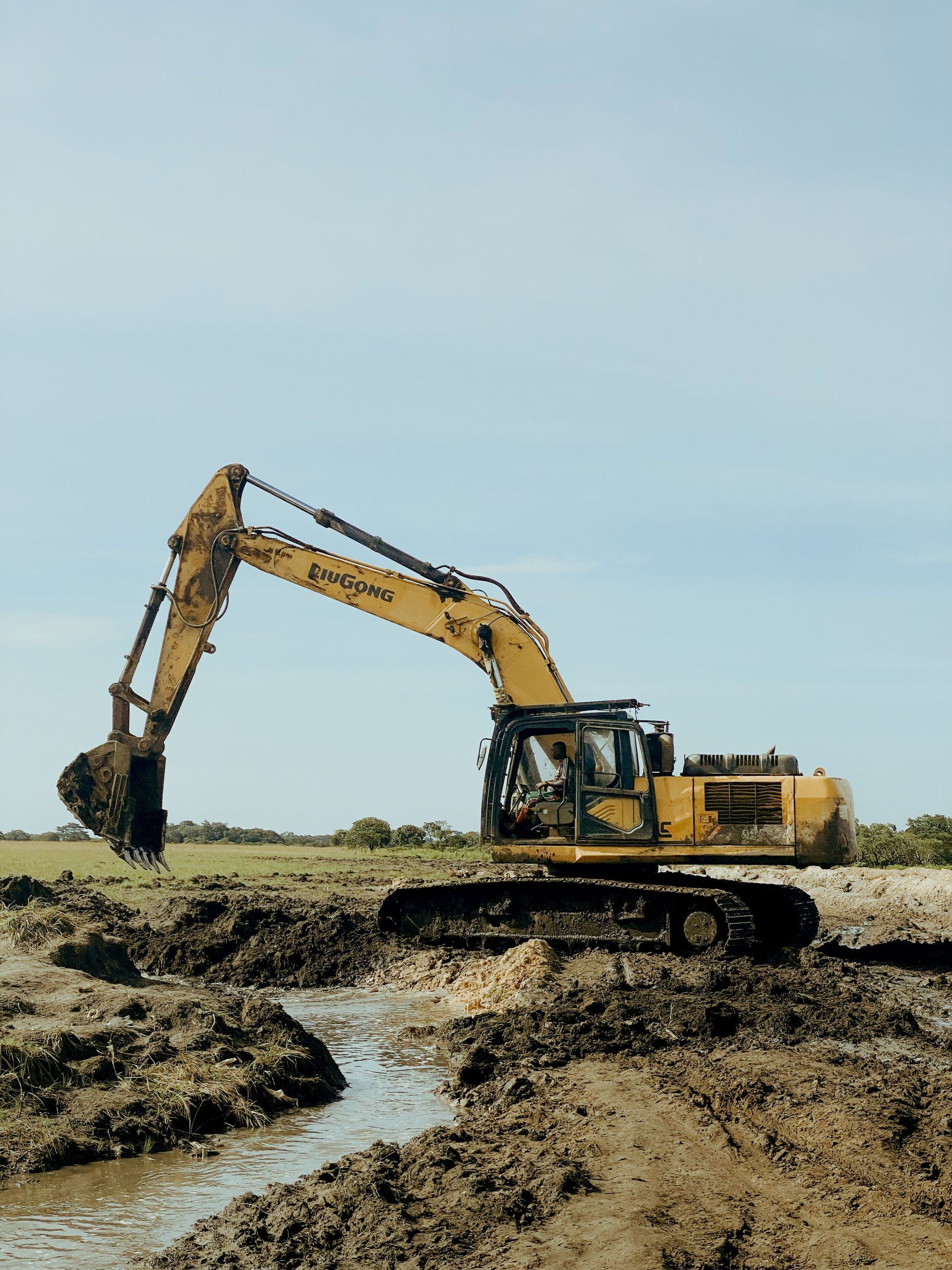
Yellow excavator digging in muddy marshland beside a narrow stream under a cloudy sky

How Deep Should You Excavate?


Calculate the depth from the planned finished surface, not from random high and low points in the existing lawn.


Use this basic formula:


Excavation depth = walkway material + setting layer + compacted base + necessary soil correction

For example, a paver walkway might include:

  • Approximately 2 3/8 inches of paver
  • Approximately 1 inch of bedding sand
  • At least 4 inches of compacted aggregate base under favorable conditions

That assembly already requires more than 7 inches of space. You may need additional depth if you must remove weak soil or install a thicker base for moisture, clay, or freezing conditions.


Do not automatically excavate as deeply as possible. Over-excavation creates more spoils, increases hauling, and requires additional imported aggregate. The objective is to remove unsuitable material and create enough space for the properly designed assembly.


How to Excavate Lawn for a Walkway Step by Step


1. Mark the full excavation area


Use marking paint, stakes, string lines, or a garden hose for curves.


Mark slightly beyond the visible walkway where the aggregate base or edge restraints need lateral support. A base that ends directly beneath the surface edge can allow pavers or stones to spread and settle.


2. Establish grade references


Use stakes, string, a builder’s level, or laser level to identify the finished walkway elevation.


Determine the high point, low point, drainage direction, and transitions before disturbing the soil. This prevents you from digging too deeply in one section and not deeply enough in another.


3. Cut and remove the sod


Use a flat shovel or sod cutter to create clean edges. Remove the turf in manageable strips.


Keep reusable sod moist and reinstall it promptly elsewhere. Do not mix sod into the structural base area.


A mechanical sod cutter helps remove turf consistently, but it does not complete the excavation. You still need to remove topsoil and reach a suitable subgrade.


4. Excavate to the required depth


Remove the topsoil and excavate evenly. Check the depth frequently against your grade references.


Hand tools may be practical for a short walkway in workable soil. A mini excavator or compact track loader can make longer paths, hard soil, roots, and spoil loading much more efficient.


Equipment access should be planned carefully around gates, fences, patios, sprinkler systems, septic components, and existing landscaping.


5. Inspect the exposed subgrade


Once the lawn and topsoil are removed, inspect the soil for:

  • Soft or pumping areas
  • Buried construction debris
  • Large roots
  • Loose fill
  • Mud
  • Rock
  • Old trenches
  • Expansive clay
  • Standing water

Do not hide weak ground beneath extra base material without addressing the cause. Soft areas may need to be excavated deeper and replaced with suitable structural material.


6. Shape and compact the subgrade


Establish the walkway’s drainage slope in the soil before installing aggregate.


Compact the subgrade evenly with equipment suited to the soil and project size. A hand tamper may work for a very small area, but a plate compactor generally produces more consistent results for a full walkway.


Base material should follow the planned grade. It should not be used to compensate for a poorly shaped excavation.

7. Install geotextile when appropriate


Geotextile can separate fine soil from the aggregate base and reduce contamination between layers.


It is often useful over clay, silt, weak soil, or areas where the base could mix into the subgrade. It is not a cure for standing water, unstable fill, or inadequate compaction.


8. Place the aggregate base in compacted lifts


Do not dump the full base depth into the excavation and compact only the surface.


Place the aggregate in manageable layers, then compact each lift before adding more material. The appropriate lift

thickness depends on the material and compaction equipment.


Check moisture conditions as you work. Aggregate that is extremely dry or saturated may not compact effectively.


9. Recheck elevation and drainage


Before adding bedding sand or the finished surface, confirm:

  • Base thickness
  • Compaction
  • Surface smoothness
  • Walkway slope
  • Door and driveway transitions
  • Edge support
  • Available space for the remaining layers

Correct problems now. Once the pavers, flagstone, gravel, or concrete are installed, base corrections become more labor intensive.


What Should You Do With the Excavated Soil?


A walkway can create more material than you expect. Soil expands when it is excavated and loosened, so the spoil pile may occupy substantially more space than the original ground.


Clean sod may be reused for lawn repair. Suitable topsoil may be used in planting areas or finish grading, but it should not be reused as structural walkway base.


Excess soil, roots, rock, and unsuitable material may need to be loaded and hauled away. Able Excavation’s trucking and hauling services can support projects where material removal and aggregate delivery are a meaningful part of the work.


Common Walkway Excavation Mistakes


Building directly over grass


The sod and roots eventually compress and decompose, leaving uneven support.


Guessing at the depth


You need to calculate the thickness of the complete system. Digging only enough room for the paver leaves no structural base.


Using decorative gravel as base


Rounded or loose decorative stone does not necessarily compact into a stable structural layer. Use aggregate intended for base construction.


Ignoring drainage


A level-looking walkway can still hold water. Plan the grade before excavation and make sure the surrounding lawn does not create a dam along the edges.


Compacting only the top


A thick base placed in one lift may look firm at the surface while remaining loose below. Compact in controlled layers.


Forgetting irrigation


Sprinkler lines frequently cross lawn areas where walkways are added. Locate them, reroute them when needed, and adjust sprinkler heads so they do not continually saturate the walkway edges.


When Should You Hire an Excavation Contractor?


You may be able to complete the project yourself when the walkway is short, the property is flat, the soil is workable, and the spoil volume is manageable.


Professional excavation becomes more valuable when you encounter:


  • Rock or hard clay
  • Long or wide walkway areas
  • Steep terrain
  • Drainage problems
  • Deep paver or concrete assemblies
  • Utility congestion
  • Large roots
  • Substantial soil removal
  • Tight elevation tolerances
  • Integration with patios, driveways, or retaining work


Able Excavation approaches walkway preparation using the same fundamental questions involved in larger site-preparation projects: What is below the surface? Is the soil stable? Where will water go? How will materials reach the work area? What finished elevation must the new surface connect to?


That wider site-development perspective is particularly useful when your walkway is one part of a larger property improvement involving grading, utilities, drainage, hauling, or access preparation.


Final Takeaway


Learning how to excavate lawn for walkway starts with planning the complete structure beneath the visible surface.


You need to establish the route and finish elevation, locate utilities, remove sod and organic soil, excavate to the calculated depth, inspect and compact the subgrade, install the appropriate aggregate base, and direct water away from vulnerable areas.


The surface material determines how the walkway looks. The excavation, drainage, and base preparation determine how well it performs.

Share this article

Recent Posts

Yellow CAT excavator working in a muddy field with forested hills in the background
By Admin July 23, 2026
Learn what septic system installation costs in Colorado, what affects pricing, how the process works, and what to know before installing an OWTS.
Buried drainage pipe in a dirt trench filled with gravel.
By Admin July 23, 2026
Learn how commercial excavation services support industrial pipeline installation, including trenching, HDPE fusion, backfill, compaction, and restoration.
Peaceful pond with lily pads and green reeds surrounded by lush trees.
By Admin July 11, 2026
Learn what to know before installing a preformed pond liner or plastic pond in Colorado, including excavation, drainage, costs, utilities, and site prep.
Partially demolished concrete building beside a large pile of rubble under a blue sky
By Admin July 10, 2026
Demolition contractors near you handle permits, utilities, debris removal, hauling, foundation removal, grading, and site prep for Colorado projects.
Backhoe and workers at a house construction site with brick homes and a dirt yard
By Admin June 28, 2026
Pool Digging in Colorado involves excavation, drainage, utility locating, hauling, and site prep. Learn what affects cost and why proper excavation matters.
Yellow excavator working on a rocky construction site with dirt piles and trees in the background
By Admin June 28, 2026
Septic system repair in Western Colorado starts with signs like slow drains, odors, wet spots, and backups. Learn when your septic system may need repair.
Yellow Hyundai excavator digging in a rocky quarry under a blue sky
By Admin June 25, 2026
Earth Worx in Colorado starts with smart excavation. Learn why site prep, drainage, utilities, septic, hauling, and road prep matter for long-term results.
Construction site with parked equipment, cones, and a partially built commercial building under a blue sky
By Admin June 16, 2026
See what machines Able Excavation uses for commercial site development, grading, hauling, compaction, trenching, and site prep across Western Colorado.
Archaeological excavation site with concrete pillars, dirt pits, and overcast sky
By Admin June 9, 2026
Learn the key differences between commercial site development and residential site development, including codes, costs, drainage, utilities, and site prep.
Aerial view of a new housing development beside green farmland and open fields
By Admin June 1, 2026
Learn why site clearance in construction is critical for safety, access, drainage, excavation, utility trenching, and road prep on Colorado building sites.
Show More