Trenching Cost Per Foot in Western Colorado: Water, Gas, Conduit
The lawn has gone dormant. The only fresh marks on it are two dots of paint and a faint measuring-wheel track between them. One mark sits at a meter or a panel. The other is out toward a new shop, and the line between them crosses a gravel apron, maybe a corner of a driveway. Someone has already multiplied the footage by a number they found online.
That is usually how a conversation about trenching cost per foot starts. The important questions are usually not what the internet's average happens to be. They are: what does that per-foot number include, what does this route cross, how deep does this utility have to sit, and what is the ground made of.
What a Trenching Cost Per Foot Number Usually Includes
A per-foot figure is only useful once you know what is inside it. Some numbers are for the trench itself: the cut, the spoils, and closing the hole. Others are for a finished utility, which means pipe or conduit, bedding, connections, testing, and often the surface repair on top of the dig. Those are different bids, and they are the main reason two quotes for the same number of feet can look nothing alike.
Here is the only place in this article you will see dollar figures, and they are not ours. HomeGuide's 2026 trenching cost guide, updated February 6, 2026, puts typical trench digging at $5 to $12 per linear foot, or about $500 to $1,200 to dig a 100-foot trench. Angi's 2026 trench-digging cost guide, updated October 1, 2026, lands in the same $5 to $12 range for a standard project, and it cites $13 to $40 per linear foot when the work is more complex, with a national average of about $950 per 100 linear feet.
Those are national estimates, not Able pricing. We do not publish a per-foot price. Treat the ranges as a planning midline, nothing more. A short, shallow cut through open lawn can sit low in that band, or under it. A deeper run through rock, across a driveway, or down a tight side yard can move well outside it. Local ground does not always resemble a national average.
HomeGuide also publishes installed ranges for the complete project, including the trench. Electrical, gas, and water figures from that table are in the comparison below. The same guide's gas section cites $15 to $50 or more per linear foot when the route is more complex, the pipe type changes, or the line has to cross a driveway or sidewalk. An installed number is usually carrying the line, not just the dirt work, which is why it sits higher than a trench-only figure.
The table below is a planning comparison of those national ranges. It is not a quote, and it is not a Western Colorado price list.
| What the number usually covers | National planning range (not Able pricing) | What typically moves it |
|---|---|---|
| Trench only, open ground | $5 to $12 per linear foot (HomeGuide and Angi, 2026). Angi also cites $13 to $40 per foot for more complex work, and about $950 as a national average per 100 feet. | Depth, soil or rock, access, obstructions, and how much surface has to be restored |
| Electrical conduit, installed (trench plus conduit) | $6 to $14 per linear foot (HomeGuide, 2026) | Conduit type, depth, crossings, and who handles the electrical work |
| Gas line, installed (trench plus line) | $12 to $25 per linear foot in HomeGuide's project table; the same guide's gas section cites $15 to $50+ when the run is more complex | Utility coordination, pipe type, distance, and driveway or sidewalk crossings |
| Water line, installed (trench plus line) | $30 to $50 per linear foot (HomeGuide, 2026) | Depth and cover, pipe material, meter or well connection, and surface restoration |
Sewer work is usually a different, often deeper conversation than a water, gas, or conduit trench. If that is the bid you are actually trying to read, Able's guide to sewer line replacement cost already covers that ground. This article will not republish those figures.
What Actually Changes the Number
Length, and why a short run can cost more per foot
A longer trench spreads mobilization, locates, and setup over more feet, which often lowers the per-foot rate even as the total rises. A short run still has to get a machine to the site, get the utilities marked, and open and close a hole carefully. Those fixed pieces do not shrink just because the wheel only rolled 40 feet instead of 140.
Depth and cover are not one number
Depth is one of the strongest cost drivers, because a deeper cut means more spoils, more time, and often more protection for anyone working in the trench. It is also the number people most often try to borrow from a neighbor or from a national article.
That is the wrong place to get it. Cover, trench depth, and frost line are different measurements, and the one that counts is the one your water provider, gas utility, or building department will accept. Able's guide to how deep to bury a water line in Western Colorado walks through who decides that. Confirm the required cover before anyone prices the dig. The depth assumption is one of the easiest ways for two bids to quietly describe two different trenches.
Soil, rock, and what the route crosses
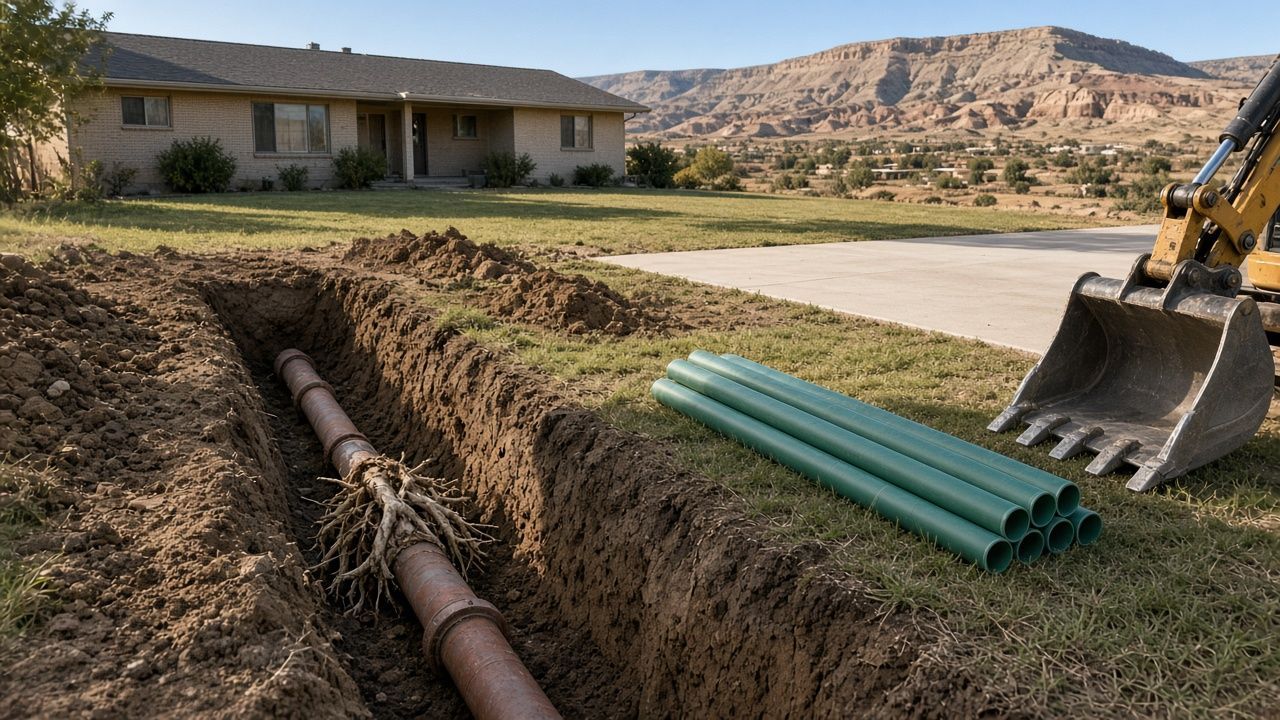
Open, workable ground is one kind of job. Tight clay, cobble, or a rock shelf is another. The machine may still make the cut, but it takes longer, the trench walls behave differently, and bedding often has to be imported if the native material is not fit to put back against a pipe. When a bid assumes dirt and the trench hits rock, the per-foot number you started with is no longer the job.
What sits on top of the route matters just as much as what sits under it. A run that stays in lawn is a different restoration conversation than a run that crosses a gravel apron, a concrete walk, or a corner of a driveway. The trench may be the same width. The surface repair is not. Access matters too. A wide, open yard is one setup. A tight side yard, a fenced run, or a slope that limits where spoil can sit is another, and all of that shows up in time.
Existing utilities in the same corridor slow the work down for good reason. Hand work near marks, and extra care at crossings, is part of a careful bid, not an add-on that should surprise you later.
Bedding, backfill, and the work after the cut
The trench is only half the job. Pipe and conduit need a bed that supports them evenly. Backfill has to go back in lifts and be compacted, not just pushed over the hole. If the native spoils are rocky or too wet to use, import material has to come in, and the unused spoils have to leave. Groundwater or a spring in the cut can slow the work or require dewatering. None of that is visible in a headline per-foot average, and all of it belongs in the scope.
Water, Gas, and Conduit Trenches Are Different Jobs
A water line, a gas service, and an electrical or communications conduit are all trenches, but they are not the same bid. Depth, material, testing, and who else has to be involved all change.
Water line trenching
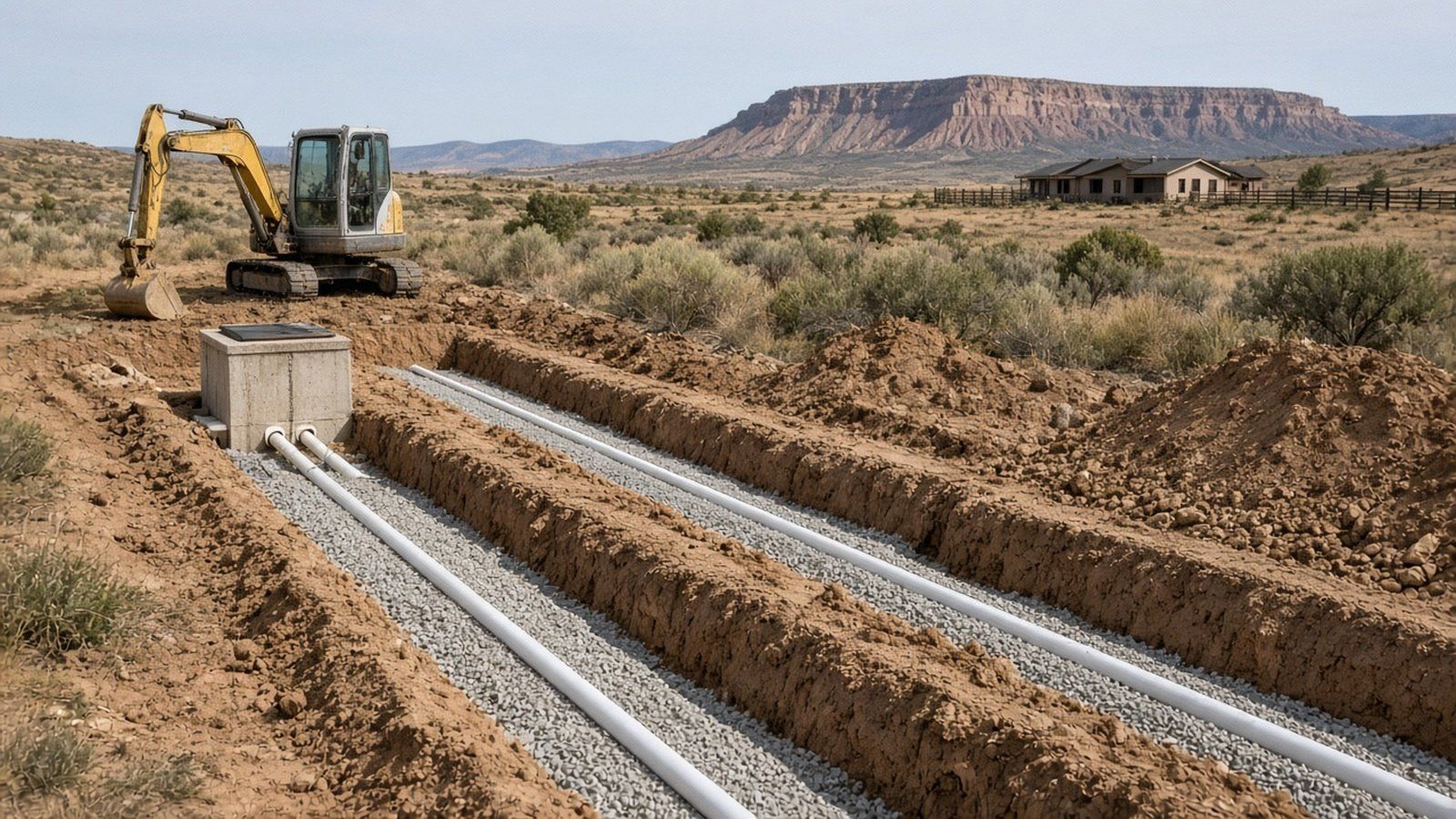
A water line trench is usually an excavation, bedding, and installation job: open the run, set the pipe on a proper bed, make the joints, and close the trench only after any required test or inspection has been done. Some water, gas, and irrigation runs use fused HDPE, and Able's page on HDPE pipe fusion covers that joining method. The cost question here is whether depth, pipe material, and the connection at a meter or a well are in the number you were given.
Gas line trenching
Gas work carries an extra layer of oversight. Able's site describes gas line trenching and bedding in coordination with your gas utility provider. That coordination is part of the job, not a detail to sort out after the trench is open. The utility may have its own material, depth, testing, and inspection requirements, and those requirements are what the trench has to satisfy.
Electrical and communications conduit
Conduit trenching is the dirt work and backfill that lets an electrical, telecommunications, or fiber run sit at the cover the electrician or the utility needs. The trench and the wiring are often split between trades. A per-foot number that includes only the excavation will not match a number that also includes conduit or the electrical work itself. This article covers the excavation side of that run. How conduit is sized, installed, or inspected should be confirmed with the electrician or the utility before anyone treats a national electrical range as a finished price.
Before the Machine Arrives
You are legally required to contact Colorado 811 at least three business days before digging, whatever the size of the project. The request is free, and it marks public underground utilities. Privately owned lines are not included, so a well line, an irrigation line, or a power run out to a shop needs to be found separately. The marks are the map of what already lives in the same strip you are about to open, and the route may have to shift if a marked line is sitting where the new one was drawn.
Permits, when they are required, are set by the local authority. Do not borrow a permit fee from a national cost guide and treat it as a local number. Ask the building department or the utility what actually applies to this run.
How the Trench Work Usually Goes
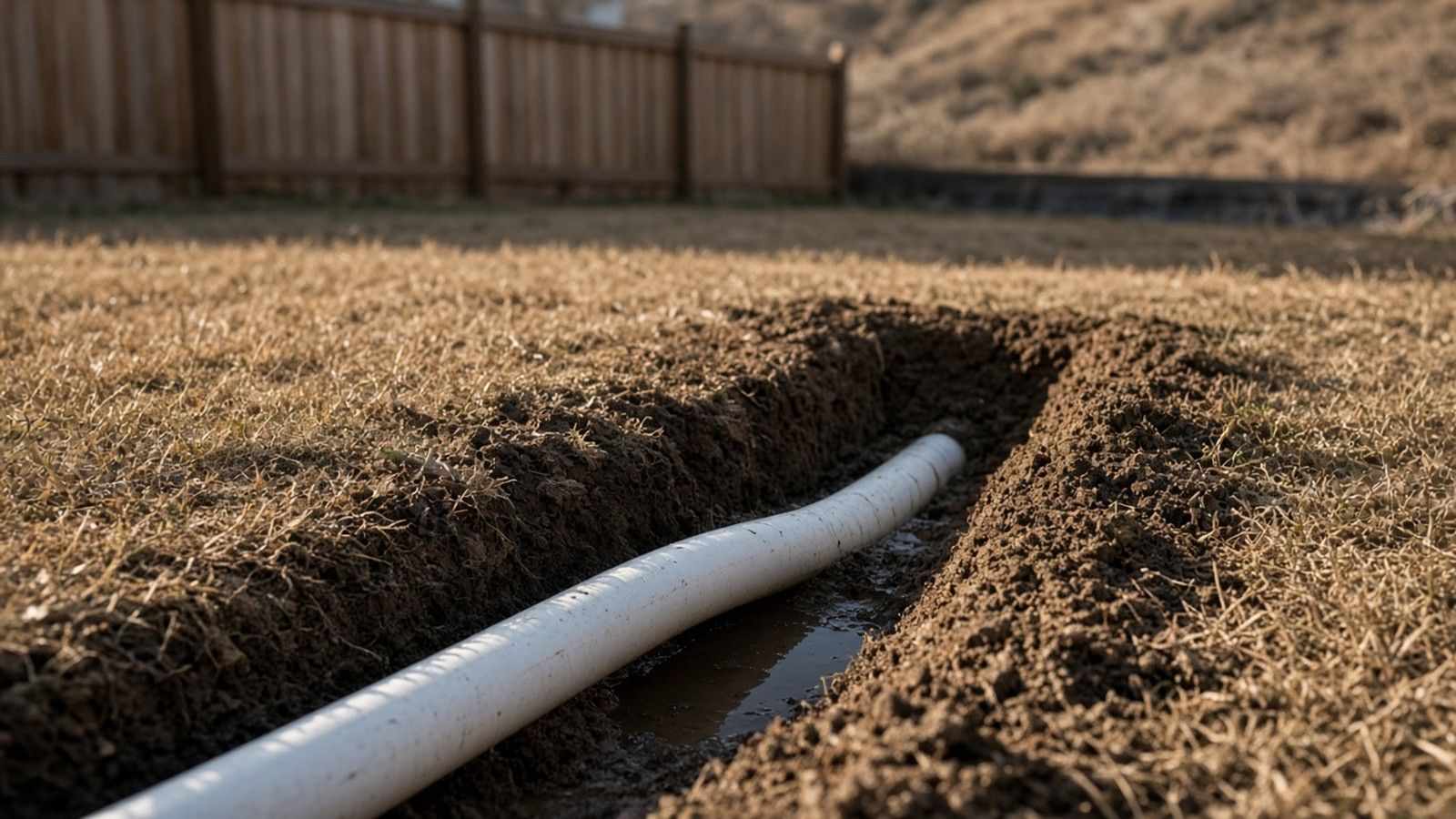
The route is staked and the locates are in. The required cover and the pipe or conduit material are confirmed with the provider, the inspector, or the electrician, not guessed from a chart. The trench is opened to that depth, with spoil set back from the edge. Bedding goes in, the line is placed, and joints are made the way the material requires. Where a pressure test or an inspection is required, it happens before the trench is closed, so a problem is a fix and not a re-dig. Backfill is placed and compacted in lifts. The surface is restored to whatever the scope promised: soil and seed, gravel, or a pavement repair. If two bids assume different depths, different restoration, or a different split between the excavator and another trade, they are not bidding the same job.
Trench Safety on the Job
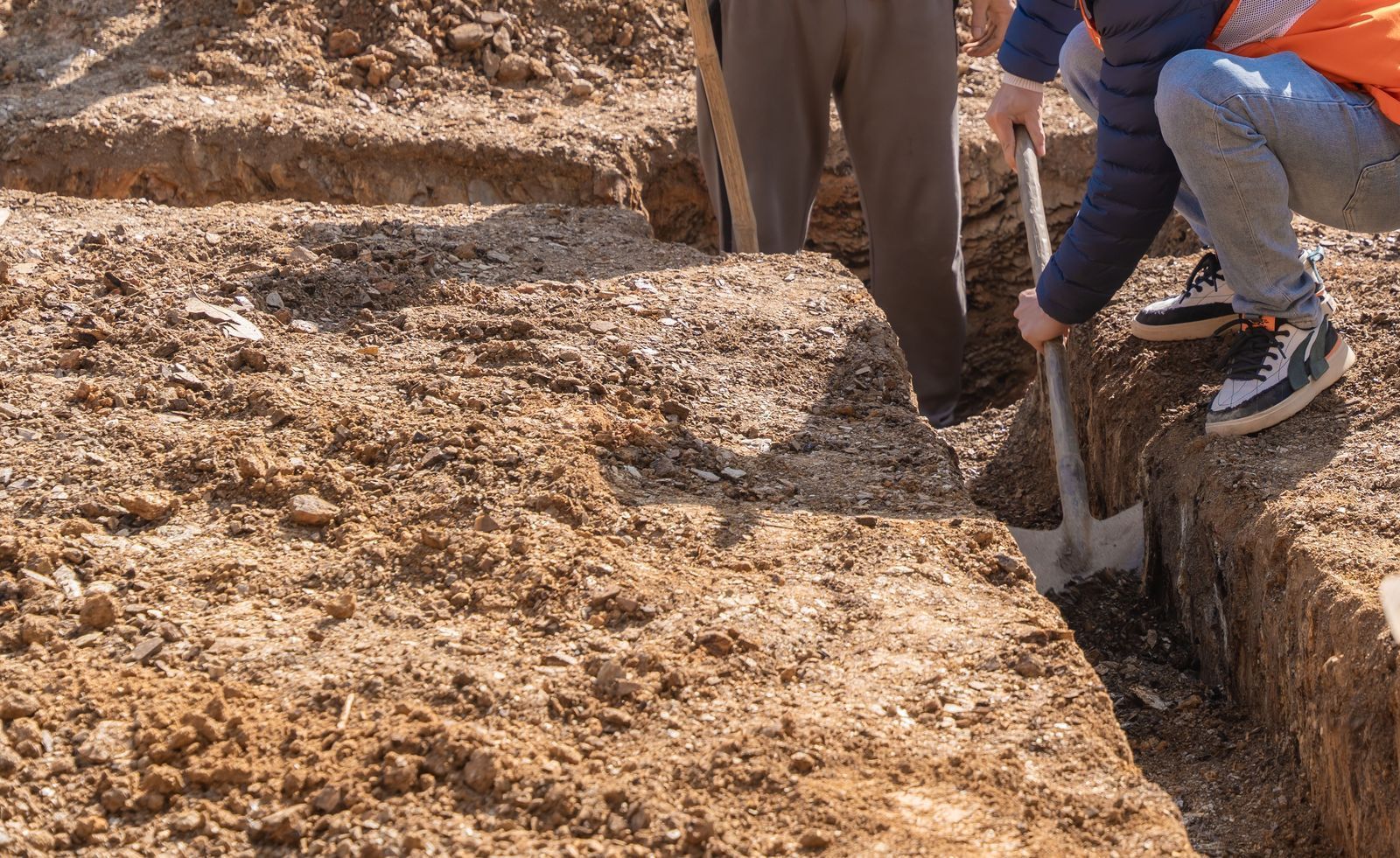
OSHA's trenching and excavation guidance treats cave-ins as the greatest risk to workers' lives. Crews prevent them by sloping or benching trench walls, shoring them, or shielding them with trench boxes. There has to be a safe way in and out. Spoil piles and materials stay back from the edge. Nobody enters an uninspected trench, including curious owners. Keep kids, pets, and vehicles away from the open dig.
OSHA also addresses protective systems for deeper cuts, including a common five-foot threshold in its excavation standard. That is general federal guidance, not a local permit rule. A trench is not a place to improvise.
What a Bid Should Spell Out
If you are comparing trenching cost numbers, ask each bid to answer the same questions. The useful list is usually:
- Total trench length, and every surface the route crosses
- The assumed depth and cover, and who set that number
- Soil or rock assumptions, and what happens if the trench hits material the bid did not assume
- Whether the figure is trench-only or includes pipe or conduit, bedding, testing, and restoration
- Who handles gas-utility coordination, or the electrical or plumbing tie-in
- What happens to spoils, and whether import fill is included
- How backfill will be compacted
- How the surface will be repaired, and whether pavement or concrete is in the number
- Colorado 811 and any private-line locating
- What is excluded, in writing
Once those items are on the page, a per-foot number can do its real job: compare two scopes that are actually describing the same trench. If you have a route marked, or even just a shop, meter, or panel in mind in the Montrose area or elsewhere in Western Colorado, a site visit is the honest way to get a number that belongs to your ground. You can request a quote or call (970) 596-9687.
Share this article